






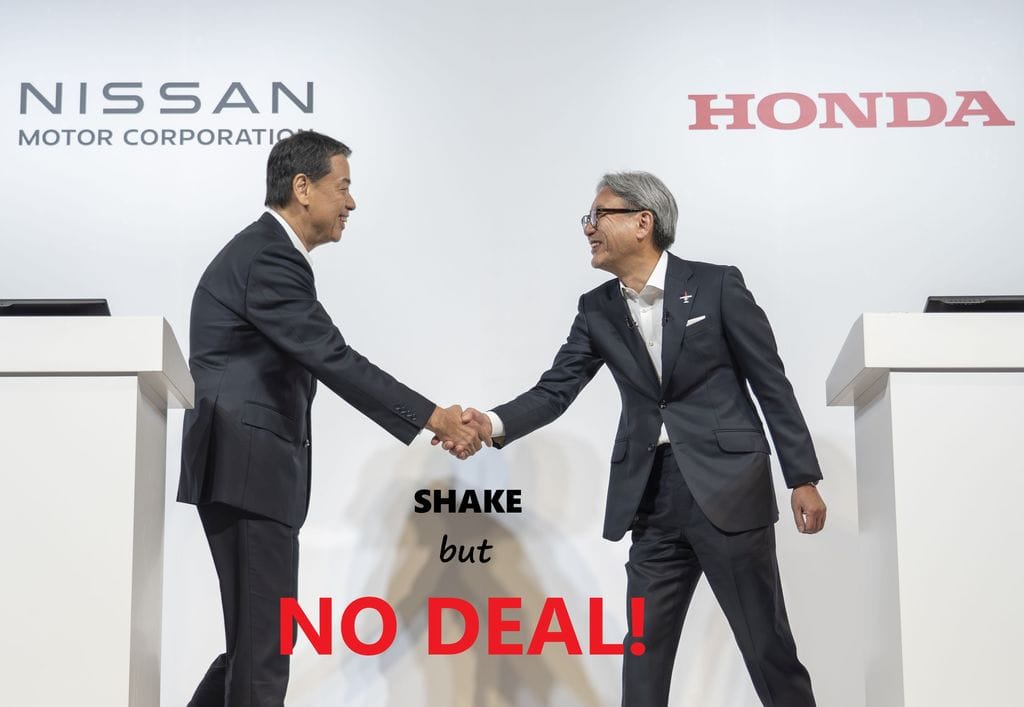
Nissan Motor has withdrawn from its proposed merger with Honda Motor, ending plans to combine the two brands under a single holding company by 2026, Bloomberg reported.
The collapse of the deal follows seven turbulent weeks of negotiations that failed to resolve deep-seated mistrust between the rivals, as noted by Nikkei.
Media reports that Honda had floated the idea of a full acquisition, which met strong opposition within Nissan, have further underscored the breakdown in talks.
Although spokesmen for both companies have stated that the reports are not based on official announcements, they confirmed that a framework for ongoing negotiations will be revealed as planned, albeit delayed until mid-February.
The initial merger discussions, which surfaced in December 2024, came at a time when Honda’s market value was more than four times that of Nissan.
At that stage, Honda had insisted that Nissan undertake a major restructuring to address chronic issues such as an outdated product line-up, excessive dealership incentives, and shaky leadership.
Nissan’s financial difficulties were laid bare in November 2024 after a 94 per cent plunge in first-half net sales forced the company to slash jobs, reduce production capacity, and cut its annual profit forecast by 70 per cent.
French carmaker Renault, which holds a 36 per cent stake in Nissan, has expressed concern over the deal and is seeking a premium for its shares. Mitsubishi Motors, which has reportedly opted out of joining the alliance, said it would make its final decision once Honda and Nissan reach a new agreement later this month.
In a related development, two sources claimed Nissan is now seeking new partners including tech companies.
One of the sources said Nissan was now receptive to Taiwan company Foxconn’s overtures.
Foxconn, which makes Apple iPhones, has been keen to grow its electric vehicle manufacturing venture and had approached Nissan last year for a tie-up. Nissan had then rejected the offer as it was in the midst of negotiations with Honda.
Nissan and Honda are two of Japan’s most significant auto manufacturers, and their inability to finalise a tie-up has raised concerns about the sector’s ability to consolidate and remain competitive, particularly in the face of growing challenges from international rivals and the rapid rise of electric vehicles.
While the implosion has shaken investor confidence, the broader impact on Japan’s auto industry may not be as seismic in the long term.
Toyota, as the No. 1 automaker by sales globally, continue to demonstrate robust performance and resilience.
Industry analysts believe that the auto sector is likely to adjust and find alternative paths to collaboration or restructuring without a merger between Nissan and Honda.