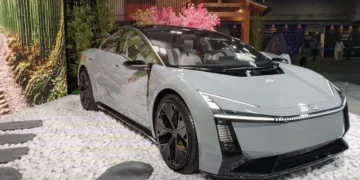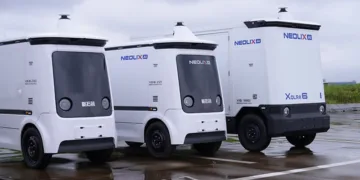

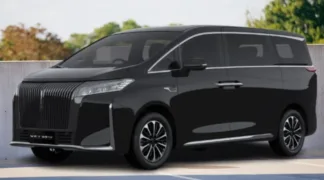
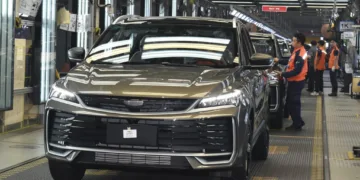
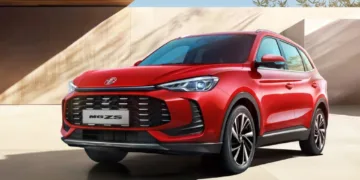


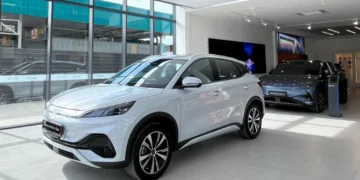




US automakers are pressing Congress to make restrictions on Chinese connected vehicles permanent, even as proposed legislation could potentially catch companies with substantial Chinese shareholdings, including Mercedes-Benz.
The Alliance for Automotive Innovation called on House and Senate leaders on September 3 to permanently prohibit Chinese connected vehicles and related hardware and software from being sold, imported or manufactured in the US before the current congressional session ends.
Alliance president and CEO John Bozzella said Chinese carmakers were expanding rapidly in Europe, Australia, Southeast Asia, Mexico and South America, raising economic and national-security concerns for the US.
The organisation represents much of the American auto industry, with members including Ford, General Motors, Toyota, Volkswagen, Hyundai, Honda, Stellantis, BMW and Mercedes-Benz.
Congress is considering the Connected Vehicle Security Act of 2026, introduced in April by Republican Senator Bernie Moreno and Democratic Senator Elissa Slotkin.
The bill seeks to keep Chinese vehicles and key connected technologies out of the US market through restrictions on manufacturing, imports and sales. It builds on existing Commerce Department rules covering vehicle connectivity hardware and software linked to China.
The Senate Commerce Committee advanced the bill in July with bipartisan support, although it has yet to become law.
The Alliance also wants lawmakers to limit the Commerce Department’s ability to grant individual exemptions.
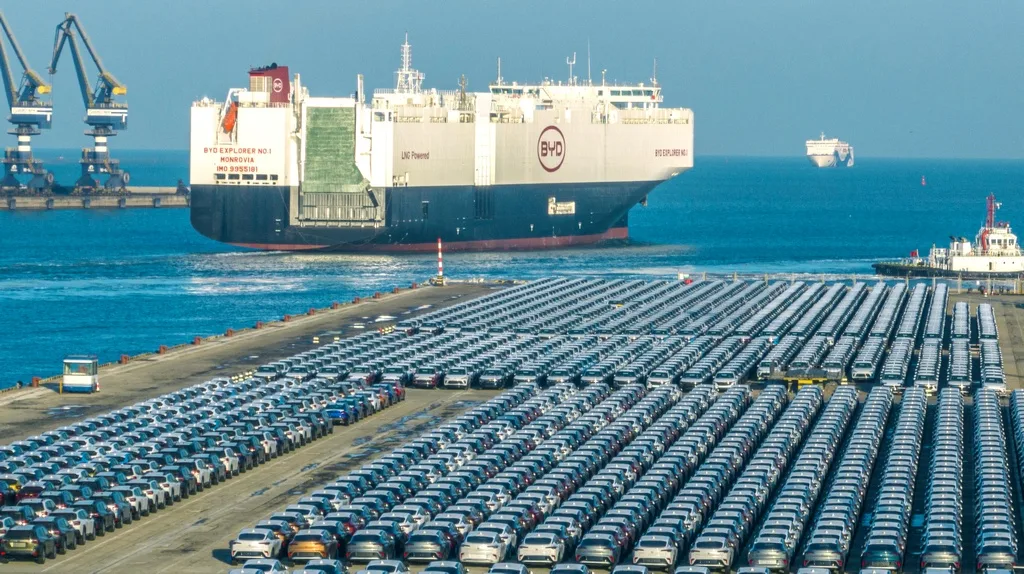
Reuters reported that a previously undisclosed Alliance letter sent in July asked legislators to block specific authorisations for Chinese carmakers including BYD, Chery and SAIC Motor, along with other companies it described as receiving Chinese government support. The letter has not been made public by the Alliance.
One unresolved issue is how broadly the legislation would apply.
Senate Commerce Committee chairman Ted Cruz said Mercedes-Benz could be caught by a clause setting a 15% threshold for Chinese ownership, unless lawmakers revise the bill.
Mercedes‑Benz’s shareholder figures explain the concern. China’s BAIC Group holds 9.98% of its voting rights, while Chinese investor Li Shufu holds another 9.69% through Tenaciou3 Prospect Investment Limited, taking their combined holdings to 19.67%.
Mercedes-Benz is itself an Alliance member, highlighting the difficulty of distinguishing between Chinese-owned carmakers and global manufacturers with significant Chinese investors.
The proposed measures are not specifically aimed at electric cars. They cover connected vehicles, software, hardware and ownership links, meaning battery-electric, plug-in hybrid, hybrid and combustion-engined models could all potentially fall within their scope.
China has opposed the move. Its embassy in Washington told Reuters that the country had removed manufacturing-market barriers for foreign investors and remained open to international carmakers.
The Alliance wants the restrictions embedded in federal law before the current Congress ends, rather than leaving them dependent on existing administrative rules.