









Nowadays if you haven’t heard of a car brand before, it’s generally safe to say it’s coming out of China. Such is the case with Kaiyi, which happens to be a sub-brand under Chery Auto.
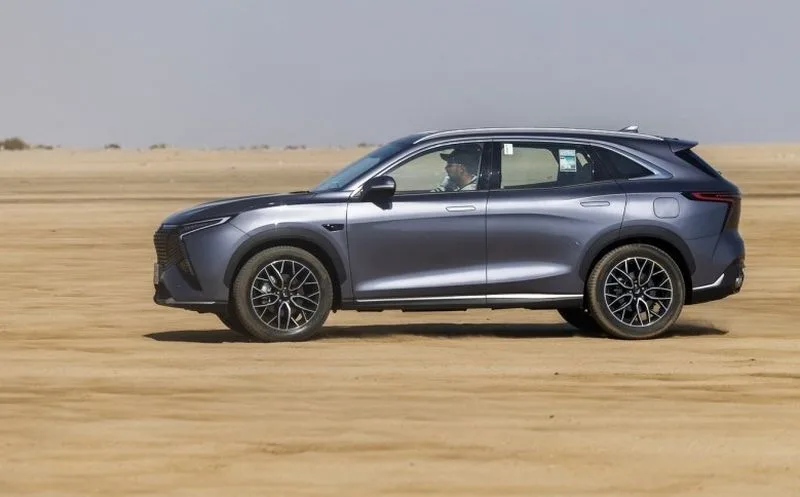
Kaiyi announced it has completed a two-to-three-month high-temperature endurance programme in Saudi Arabia, covering more than 50,000km across Jeddah, Riyadh, Dammam, Taif and Abha.
The route spanned coastal, desert and mountainous terrain to replicate typical Middle Eastern conditions of heat, humidity, sand and dust.
Core models — the X7, X3, X3 Pro and E5 — finished the trial without incident, with Kaiyi reporting consistent results for thermal management, durability, safety and ride comfort. (Note: Is BMW going to raise a stink over the model names? We will have to wait and see).
Kaiyi produces traditional combustion-engine vehicles alongside hybrid and electric offerings.
Testing combined prolonged solar exposure, urban driving and sustained climbs, with power delivery, cabin insulation and overall refinement monitored.

Air-conditioning performance was a key focus. In a desert test after 240 minutes of direct sun, the cabin exceeded 75°C at 42% humidity. Once the system was activated, outlet air dropped to 19°C within three minutes and the cabin cooled to 36°C with humidity reduced to 30%.
At five minutes, outlet air reached 16°C and cabin temperature 33°C; after 25 minutes, outlet air stabilised at 10°C and the cabin reached 23°C, maintaining 30% humidity.
The flagship X7, fitted with enhanced thermal management and insulation, recorded faster cooldown and steadier temperature control under identical conditions.
The programme also validated in-car technologies and hardware resilience. Voice control, panoramic imaging and driver-assistance functions were assessed alongside structural and electronic reliability during prolonged high-load operation. Kaiyi reported no heat-related degradation in chassis components or electronic control systems.
The company said the Saudi trials mark a milestone in its export strategy, positioning the Middle East as a regional hub.
Plans include deeper local partnerships, expanded aftersales support and model adaptations for regional requirements as Kaiyi accelerates its international rollout.