







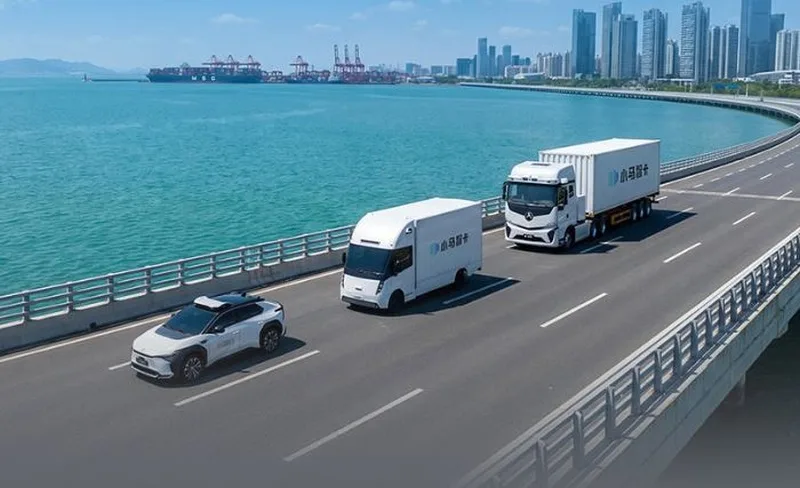
China wants vehicles equipped with autonomous-driving functions to enter wide-scale use by 2030 under a new five-year plan for its automotive industry.
The target forms part of China’s 15th Five-Year Plan for the intelligent connected new energy vehicle industry, issued by the Ministry of Industry and Information Technology (MIIT) and eight other government departments.
By 2030, new energy vehicles (NEVs) are targeted to account for 70% of new passenger-car sales in China. The corresponding target for commercial vehicles is 40%.
Autonomous driving is another major part of the plan. MIIT said vehicles with autonomous-driving functions should reach large-scale application, while highly automated driving products are expected to be operating on highways, urban expressways and some city roads by the end of the decade.
The wording stops short of promising widespread fully driverless cars. It instead covers vehicles equipped with automated-driving functions and specifies particular road environments for more advanced systems.
China has also set efficiency targets. Average passenger-car fuel consumption is targeted at around 3.3 litres per 100km by 2030, while average electricity consumption for battery-electric passenger cars is expected to fall to about 11.5kWh per 100km.
MIIT also wants labour productivity across the automotive sector to rise 15% from 2025 levels, while developing vehicle and component manufacturers capable of competing internationally.
The autonomous-driving target comes as China puts more of the regulatory framework in place.
In December 2025, MIIT granted conditional approval to the country’s first two L3 automated-driving production vehicles.
A Changan electric sedan was cleared for L3 operation on specified roads in Chongqing at speeds of up to 50kph, while an Arcfox electric sedan received approval for selected Beijing highways and expressways at up to 80kph.
Both remain road-access trials rather than unrestricted nationwide approval.
China followed that in July 2026 by publishing a mandatory national safety standard covering L3 and L4 automated-driving systems. GB 44721-2026 is due to take effect on July 1, 2027.
Among its requirements, automated-driving systems must achieve a safety level at least equivalent to a qualified and attentive driver performing the driving task. L3 systems must also monitor whether the driver is capable of taking control when required.
The wider five-year plan also calls for Chinese carmakers to improve their international operations and take a larger role in developing global automotive standards.
For China, the 2030 targets link two trends already reshaping its car market: continued electrification and the gradual move from driver-assistance systems towards regulated higher-level automated driving.