






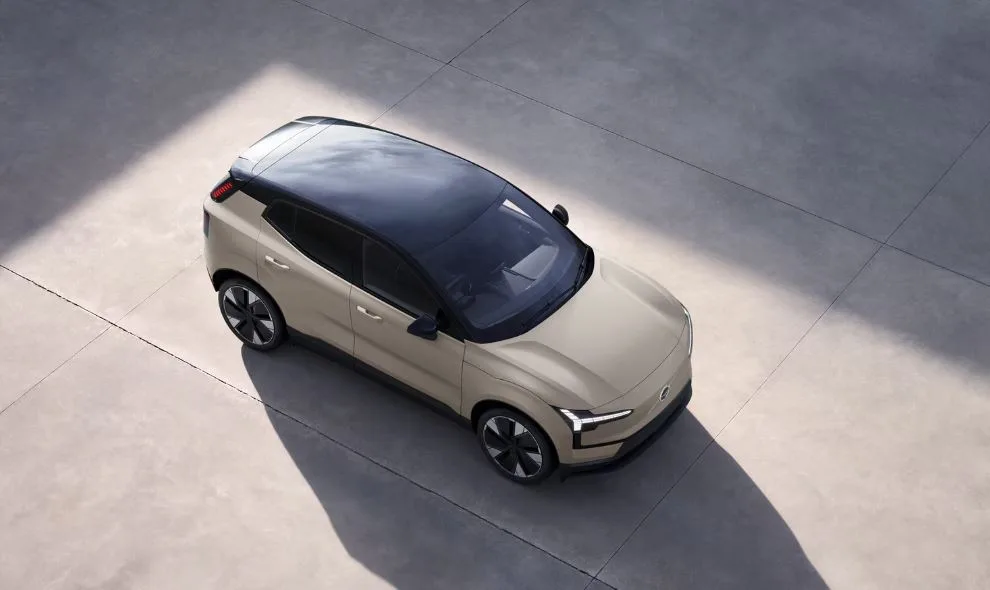
Volvo’s smallest electric SUV is now facing a growing battery-related safety action in multiple markets, with owners of certain Volvo EX30 versions told to temporarily stop charging above 70% while the company works on a permanent remedy.
In the UK, Volvo confirmed that 10,440 EX30s are potentially affected after its internal quality follow-up systems flagged a possible defect in a limited number of high-voltage battery cells supplied by China’s Sunwoda.
The affected cars spanned model years 2024 to 2026 and centred on the Single Motor Extended Range and Twin Motor Performance variants, which used the Sunwoda extended-range battery pack, according to UK publication Hypermiler.
Volvo has urged owners to cap charging at 70% state of charge for now, saying the measure “significantly reduces” the likelihood of the issue occurring, as it continues work with regulators ahead of a more formal notice.
The same guidance is now being echoed beyond the UK, including in Malaysia.
Volvo Car Malaysia said its advisory covers certain EX30 Single Motor Extended Range and Twin Motor Performance units produced and sold between 2024 and 2025, while stressing that not all EX30 variants are involved.
The company linked the action to a potential defect within specific battery cell modules that may overheat at high states of charge and, in extreme cases, pose a fire risk, adding that reported incidents remained “very low”.
CarNewsChina reported Volvo has begun a global recall action tied to Sunwoda-supplied batteries, and that the wider concern covered 33,777 EX30s built with Sunwoda cells, with roughly 0.02% of cells said to have overheated.
The Chinese publication said owners in markets including the UK, the US, Australia and South Africa are being instructed to keep charging to 70% while a comprehensive recall plan is prepared.
The matter gained urgency after an EX30 caught fire and was burnt out at a dealership in Maceió, Brazil last November.
In South Africa, the National Consumer Commission has announced a recall affecting 372 EX30s, including the same 2024 to 2026 single-motor extended range and dual-motor performance versions.
Volvo South Africa said the defect could, in rare cases, lead to overheating when charged to high levels, raising the risk of thermal runaway and a potential fire.
The timing also put fresh scrutiny on Sunwoda. Hypermiler noted that Geely, Volvo’s parent group, has filed a US$323 million (about RM1.3 billion) lawsuit against Sunwoda over alleged battery quality failures, although it did not explicitly link the claim to the EX30 case.