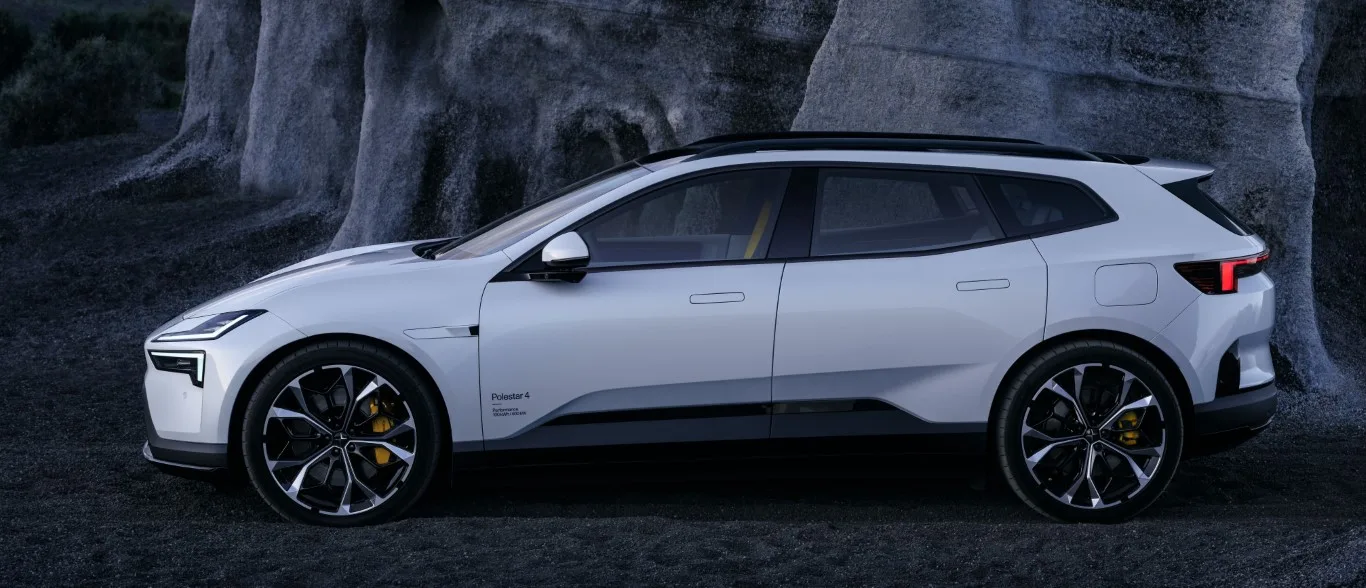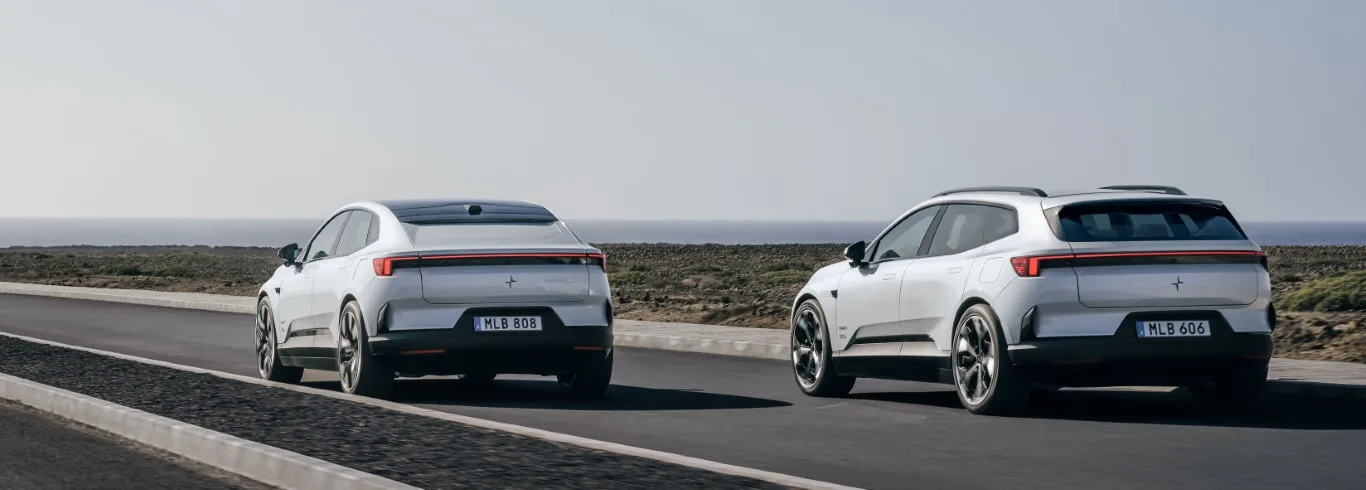







Polestar has expanded its 4 line-up with a more practical SUV version, adding more luggage room, extra rear headroom and one feature conspicuously missing from the original model: a rear windscreen.
The new Polestar 4 SUV will be sold alongside the existing Polestar 4 coupé rather than replacing it. While both share much of their running gear and cabin technology, the SUV gets a straighter roofline and more upright tailgate to create additional space.
That physical rear windscreen also means a conventional rear-view mirror is standard. The camera-based digital mirror introduced on the windowless Polestar 4 coupé remains available as an option, giving drivers an unobstructed view when the luggage compartment is fully loaded.
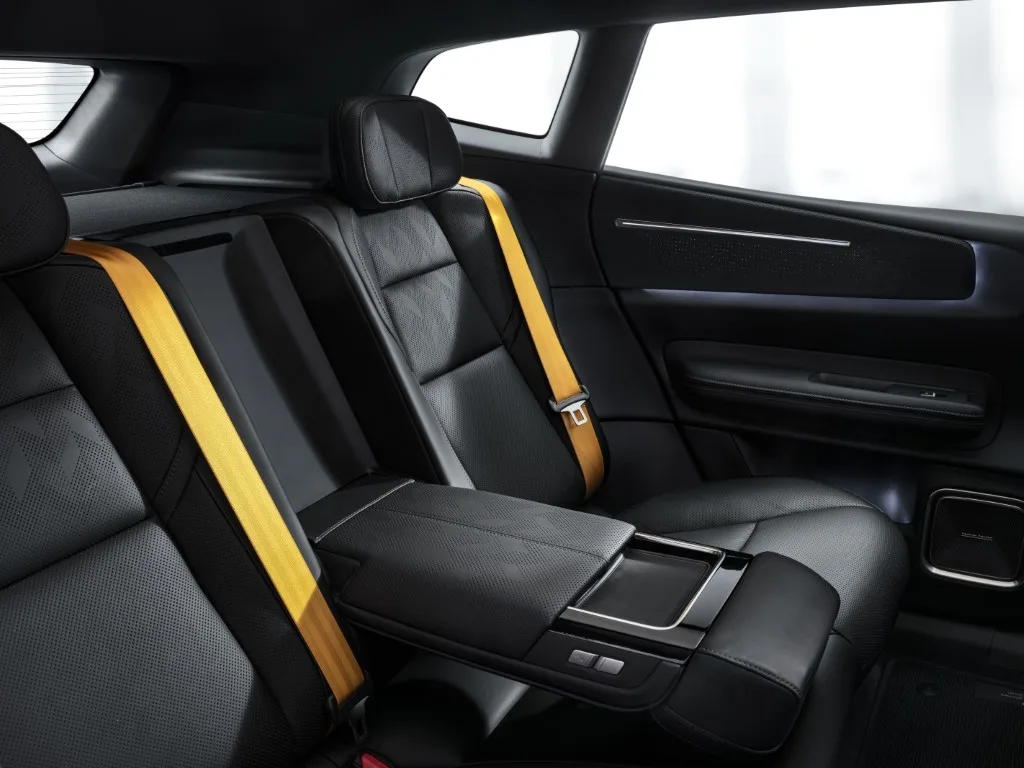
Rear passengers gain another 25 mm of headroom, while the panoramic glass roof is larger and now extends towards the tailgate. An electrochromic version is optional, allowing sections of the glass to be dimmed through the centre display.
Boot capacity is 530 litres measured to the rear seatbacks, or 655 litres when loaded to the roof. Folding the 60:40 rear seats increases rear cargo capacity to 1,665 litres. Add the 15-litre front compartment and total storage reaches 1,680 litres. Full-length roof rails provide a 100 kg dynamic roof-load rating.
The SUV retains the Polestar 4’s 100 kWh battery and comes with two powertrain choices.
The Rear motor version produces 200 kW (272 PS) and 343 Nm, driving the rear wheels. It does 0-100 kph in 7.3 seconds and has a targeted WLTP range of up to 630 km.
The Dual motor version adds all-wheel drive and doubles output to 400 kW (544 PS) and 686 Nm. Zero to 100 kph drops to 3.9 seconds, with WLTP range rated at up to 600 km. Both have a 200 kph top speed.
DC charging peaks at 200 kW, with a claimed 10-80% time of 30 minutes. Standard AC charging is 11 kW, while 22 kW capability is available as an option in relevant markets.
Polestar has also added vehicle-to-load capability, allowing the traction battery to supply up to 3.3 kW through a separate adapter. Users can set a minimum battery level so power output stops once the predetermined state of charge is reached.
A new Camping mode keeps functions such as climate control, entertainment and ambient lighting operating while the car is parked. Vehicle-to-load, USB-C ports and a 12-volt outlet can meanwhile supply camping equipment and other devices.
Google Gemini is being rolled out across Polestar markets as part of the infotainment system. It supports conversational voice interaction, follow-up questions, trip planning and real-time translation, going beyond the more command-based operation of Google Assistant.
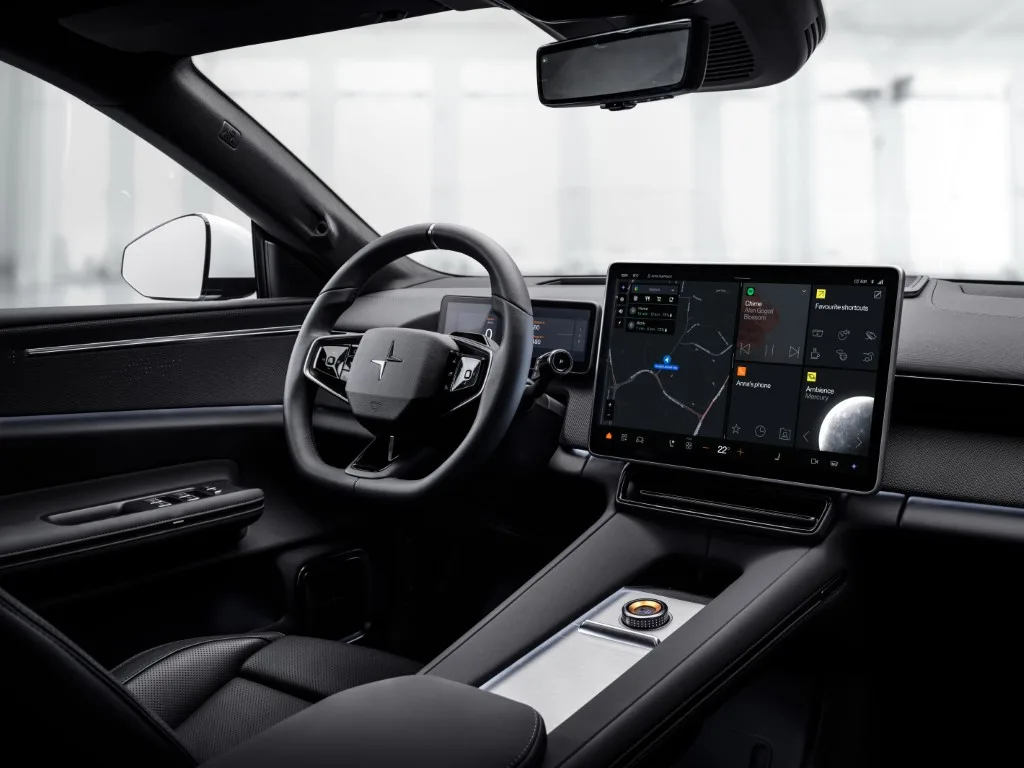
The SUV otherwise retains much of the Polestar 4 cabin, including its landscape-format centre display and separate driver screen. Main-screen shortcut widgets increase from six to nine.
An optional Harman Kardon system has 12 speakers and 1,320 watts with the Plus pack. Selecting the Nappa upgrade brings a 16-speaker, 1,400-watt version with four speakers incorporated into the front headrests.
A Performance pack is available for the Dual motor model, adding continuously controlled ZF dampers, Brembo brakes and 22-inch forged wheels with Pirelli P Zero tyres.
Polestar has also disclosed cradle-to-gate carbon footprints of 20.2 tonnes of CO2 equivalent for the Rear motor model and 21.1 tonnes for the Dual motor. The battery cells are produced using renewable electricity, while recycled and renewable-energy-produced aluminium is used in the vehicle.
Prices start at SEK634,000 (about RM266,300) for the Rear Motor, SEK664,000 (RM278,900) for the Dual Motor and SEK764,000 (RM321,000) for the Dual Motor with Performance Pack.
Production is under way in Busan, South Korea. The SUV is the latest addition to what Polestar describes as its best-selling model line, with first customer deliveries scheduled for the fourth quarter of 2026.