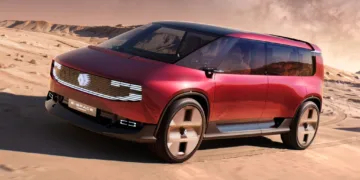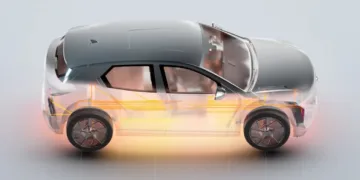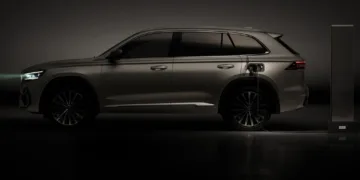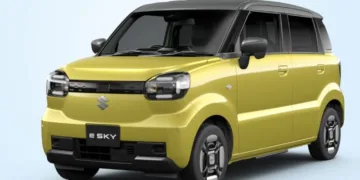








Chinese carmakers have taken nearly a quarter of the UK new-car market as plug-in vehicles also made a sharp advance, underscoring how quickly established brands are being squeezed in one of Europe’s biggest markets.
Chinese brands accounted for about 24% of UK registrations in September, up from 16% in March, according to analysis by The Car Expert based on final Society of Motor Manufacturers and Traders (SMMT) data.
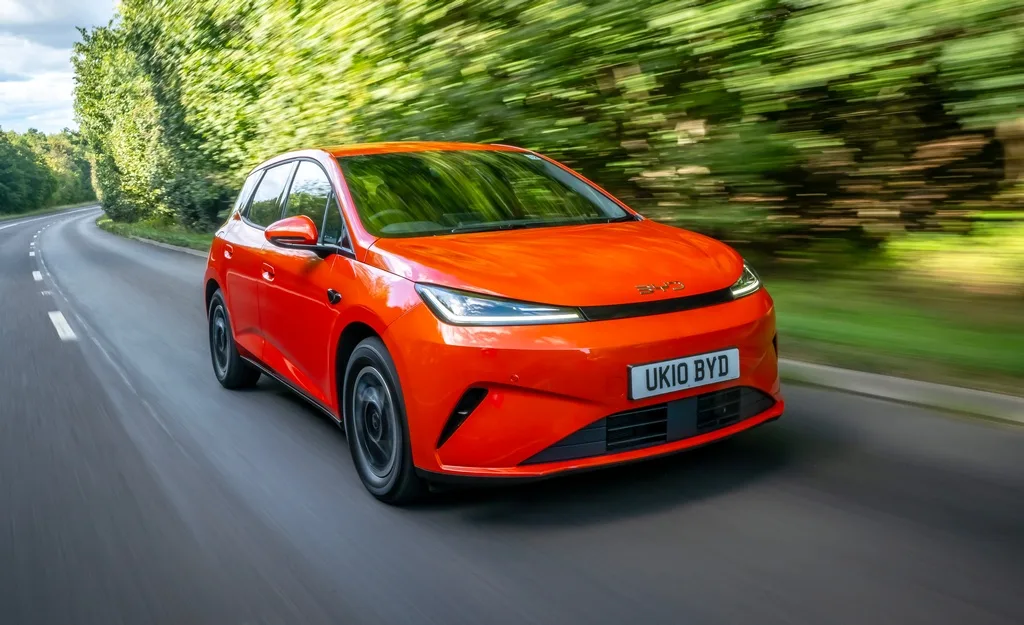
BYD was the country’s second-biggest individual marque in September with 20,140 registrations and a 5.75% share. The Car Expert said Omoda and Jaecoo would rank second if treated as a combined operation, behind Volkswagen.
The shift coincided with another strong month for electrified vehicles. Battery-electric vehicle registrations rose 36.3% year on year to a record 99,201 units, giving BEVs a 28.3% share. Plug-in hybrids jumped 55.5% to 59,571 units, or 17%.

Together, BEVs and PHEVs accounted for 45.3% of September registrations, compared with about 36% in March. Petrol registrations fell 6.7%, while conventional hybrids slipped 4.3%.
The UK market as a whole grew 12% to 350,536 vehicles, its strongest September since 2017. The Jaecoo 7 was the month’s best-selling model, strengthening the presence of Chinese manufacturers beyond the EV segment alone.
For South-East Asian buyers, the Chinese expansion is already familiar. PwC said Chinese manufacturers increased their Asean-6 market share from about 11% in 2025 to 15.7% in the first half of 2026. Electrified vehicles, including hybrids, meanwhile reached 32% of regional sales.
Malaysia, Thailand, Indonesia and other regional markets have seen a rapid influx of Chinese brands, putting pressure on Japanese and European manufacturers that long dominated the region. PwC said traditional market leaders were already facing mounting competitive pressure as localisation and electrification accelerated.
The Chinese strategy has echoes of Sun Tzu’s The Art of War: avoid attacking an opponent where it is strongest and instead exploit gaps where resistance is weaker. Chinese carmakers have done that with aggressive pricing, rapid model roll-outs, electrified powertrains and segments where established manufacturers were slow to respond.
South-East Asia has already seen the effect. Britain now appears to be entering the same phase.