




British buyers are increasingly comparing cars by range, charging speed, equipment and price rather than defaulting to familiar badges, a change Vehicle Data Global (VDG) says is weakening the grip of Britain’s traditional market leaders.
The automotive data specialist argues that electrification has accelerated an “Amazon-style” approach to choosing a car. Battery capacity, range, charging performance, screens, driver-assistance systems, warranties and finance terms can all be compared online, giving unfamiliar brands a chance to compete before a buyer reaches a showroom.
The change is visible in the registration numbers. Ford led Britain in 2015 with 335,267 cars, but registered 118,998 in 2025, a fall of about 65%. Volkswagen, third in 2015, became the 2025 market leader, although its volume was still about 20% lower than a decade earlier.
VDG said Vauxhall’s registrations fell by around 70% over the same period, taking it from second place to 13th.
Britain’s biggest marques have also lost some of their collective grip. The five leading brands accounted for about 44% of registrations in 2015, compared with roughly 32% for the top five in 2025.
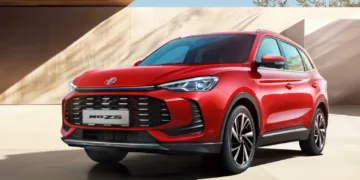
Chinese manufacturers have entered that more fragmented market with competitive pricing and plenty of standard equipment.
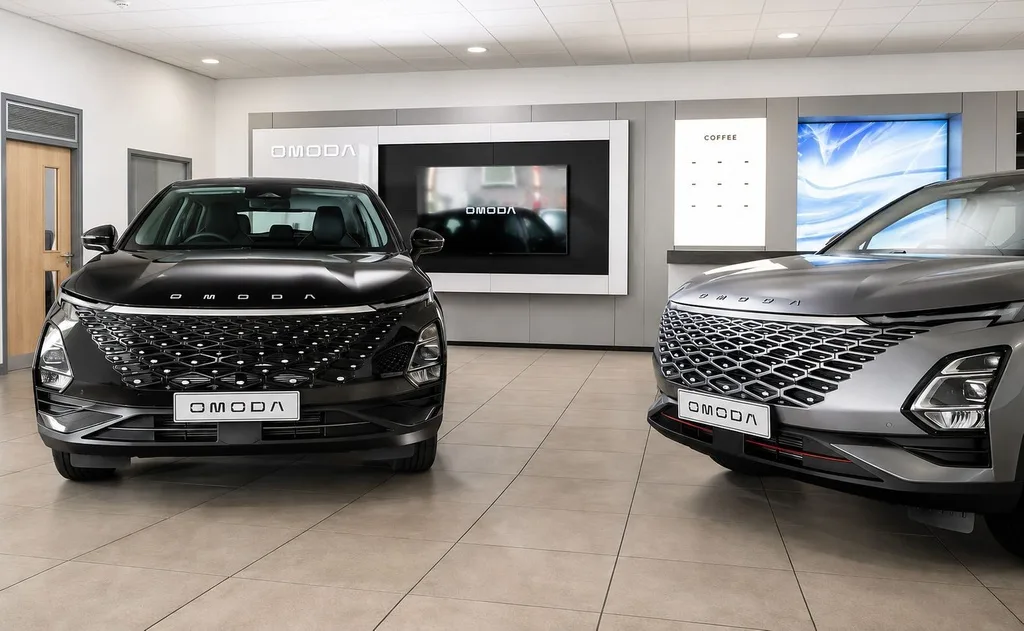
Omoda and Jaecoo provide a striking recent example. The Chery-owned sister brands passed 100,000 UK sales in August, less than two years after Omoda arrived. Their combined share reached almost 5.7% in July.
Those sales are not purely electric. Their ranges cover petrol, hybrid, plug-in hybrid and battery-electric models. Electrification nevertheless fits VDG’s argument particularly well because EV buyers have a clear set of specifications to compare.
VDG operations director Ben Hermer said this favours manufacturers that include more technology as standard instead of reserving desirable equipment for optional packages. A recognised badge can therefore find itself competing against a cheaper newcomer offering more on paper.
Britain is also more open to China-built EVs than the European Union, which currently applies additional countervailing duties of 7.8% to 35.3% on battery EVs imported from China.
VDG does not consider the established manufacturers finished. They retain advantages in residual values, used-car operations, parts supply and logistics, while some newcomers may struggle to build sustainable scale.
What has changed is how cars make the shortlist. Brand history still counts. Increasingly, though, specifications get an unfamiliar badge through the door.