







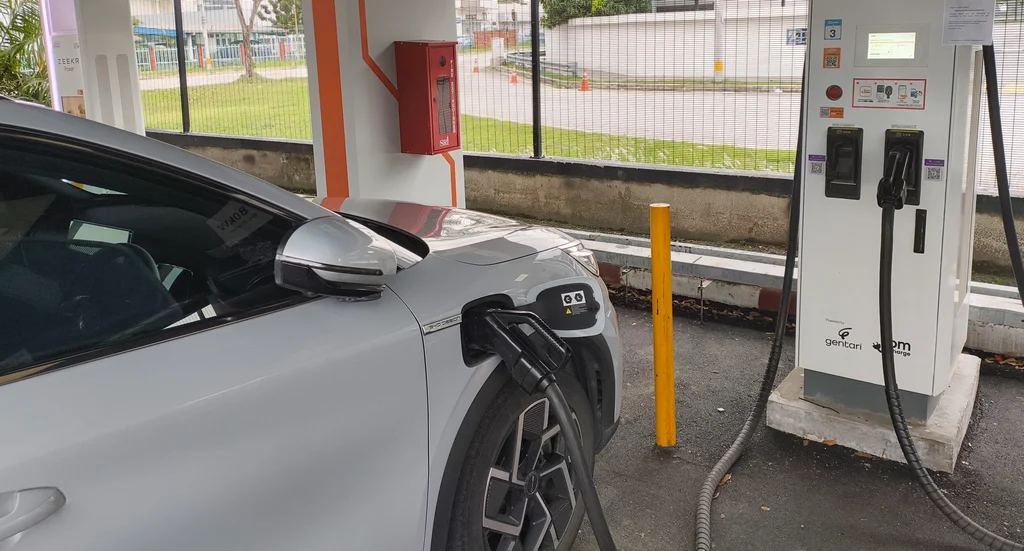
Malaysia is studying a charge tied to each electric vehicle sale, with the money earmarked for more public chargers.
Investment, Trade and Industry Minister Datuk Seri Johari Abdul Ghani raised the idea during the Dewan Negara’s question session earlier today. The question followed Senator Datuk Leong Ngah Ngah’s request for an assessment of Malaysia’s readiness for EV growth.
Johari said no decision had been made. He said the government faced limits in financing a nationwide charging network on the scale seen in China and could not rely solely on vehicle manufacturers or distributors to fund it.
He cited RM3.3 billion in revenue forgone under the tax holiday for imported completely built-up EVs. Eligible vehicles entered Malaysia without import duty, excise duty or sales tax between 2022 and the end of 2025.
That policy helped establish the market. Johari’s assessment, however, was that the charging investment expected from industry had not followed.
Public access remained inadequate, particularly for people living in apartments and People’s Housing Programme developments where installing a private charger may not be possible.
He maintained that electric vehicles were part of Malaysia’s transport future, but said broader adoption depended on a denser nationwide public network.
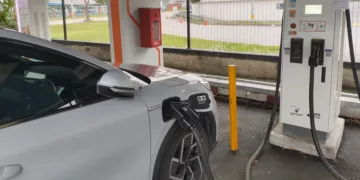
Local tech news site SoyaCincau disputed Johari’s claim that charging investment was lacking, pointing to continued expansion by ChargEV, Gentari, JomCharge, DC Handal and Tesla. It argued that operators were willing to invest where sites made commercial sense.
The real obstacle, it said, was Malaysia’s approval process, which can stretch highway charger deployment to about 14 months compared with three to four months in Thailand and Indonesia.
It cited completed chargers that remained inactive for months or years, arguing that a new levy would achieve little unless approvals and grid connections were also accelerated.