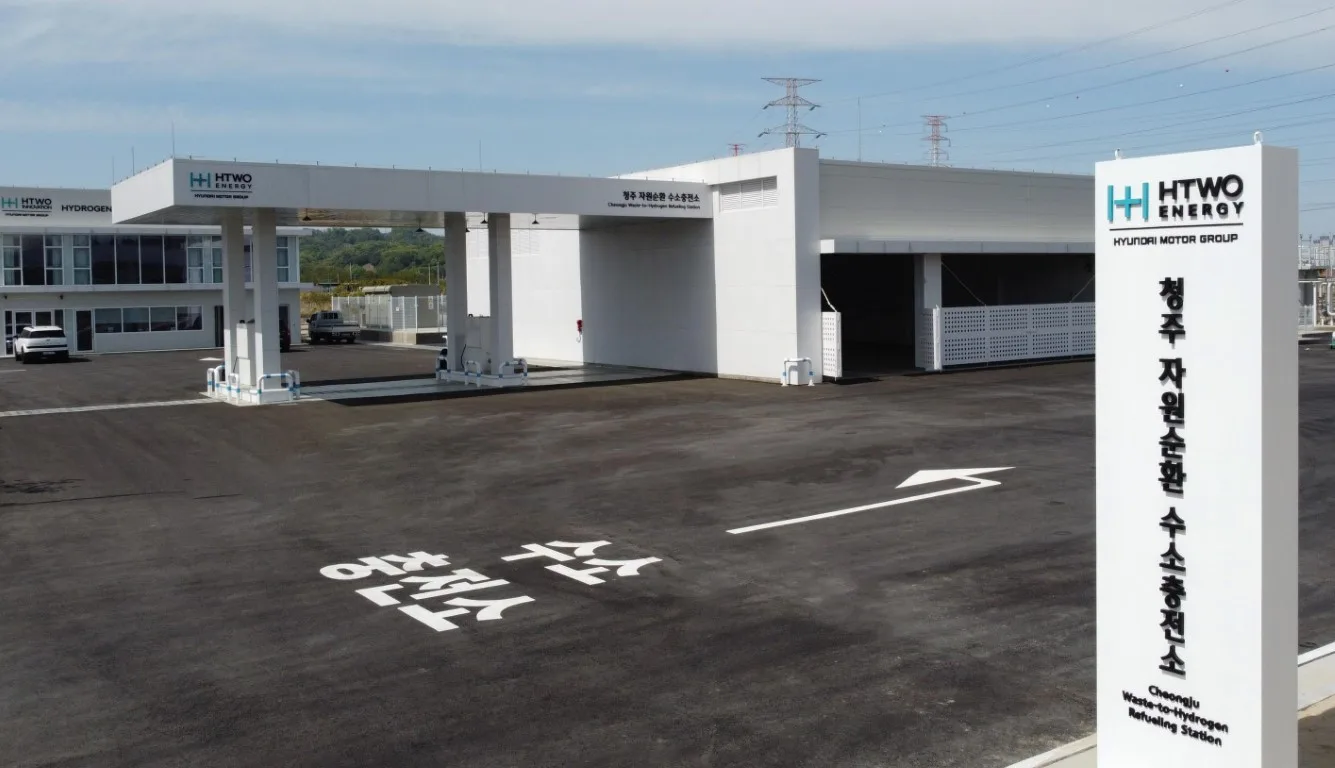







Hyundai Motor Group has begun producing hydrogen from wastewater sludge at a new plant in Cheongju, South Korea, supplying fuel for its Nexo fuel cell cars, hydrogen buses and other local applications.
HTWO Energy Cheongju can make about 500kg of hydrogen a day. Hyundai says that is enough for roughly 100 latest-generation Nexo fuel cell electric vehicles or 30 hydrogen buses.
The facility is Hyundai Motor Group’s first company-operated site combining waste-to-hydrogen production, storage and vehicle refuelling in one location. It takes biogas recovered from locally generated sewage sludge, removes contaminants and upgrades it into biomethane.
That gas is then reacted with steam to produce hydrogen. Carbon dioxide released during the process is captured, purified and converted into liquid form for industrial use instead of being discarded.
Hydrogen made in Cheongju is compressed and stored at the plant before being supplied to vehicles or distributed for other uses.

Keeping production close to demand should also reduce the transport cost associated with hydrogen delivered from coastal production centres.
Hyundai plans to raise output to two tonnes a day by 2030 as Cheongju expands its organic-waste processing infrastructure. The city sits near the centre of the Korean peninsula and is being developed as an inland hydrogen transport and distribution base.
Cheongju was selected for South Korea’s Hydrogen City Creation Project in 2025. The city is also expanding refuelling and related infrastructure as part of its hydrogen programme.
The site includes the Hydrogen Academy, an exhibition area explaining Hyundai’s HTWO hydrogen business and the process used to turn waste into fuel.

Hyundai is pursuing similar projects outside South Korea. Its Hong Kong plan would use landfill gas to produce hydrogen for tour buses and airport shuttles, while a project under development in Indonesia is intended to convert landfill biogas into hydrogen.
The Indonesian scheme could also provide a reference for waste-to-hydrogen projects elsewhere in Asean, where landfill gas and organic waste remain widely available but are often underused as energy sources.
The Cheongju plant could also reduce reliance on hydrogen trucked over long distances from larger production hubs elsewhere in South Korea.