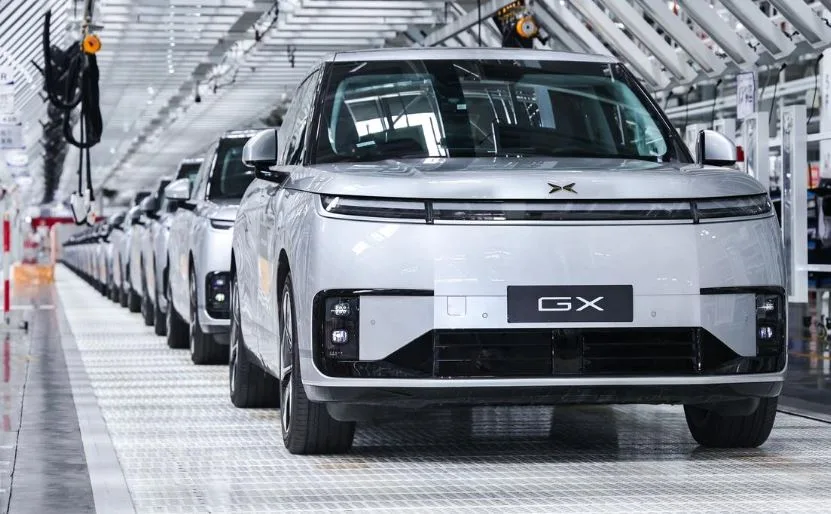







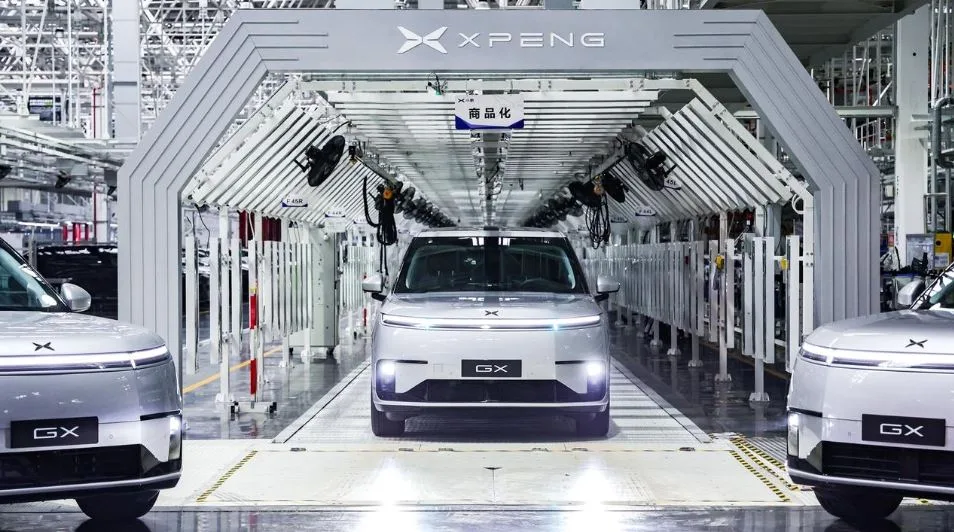
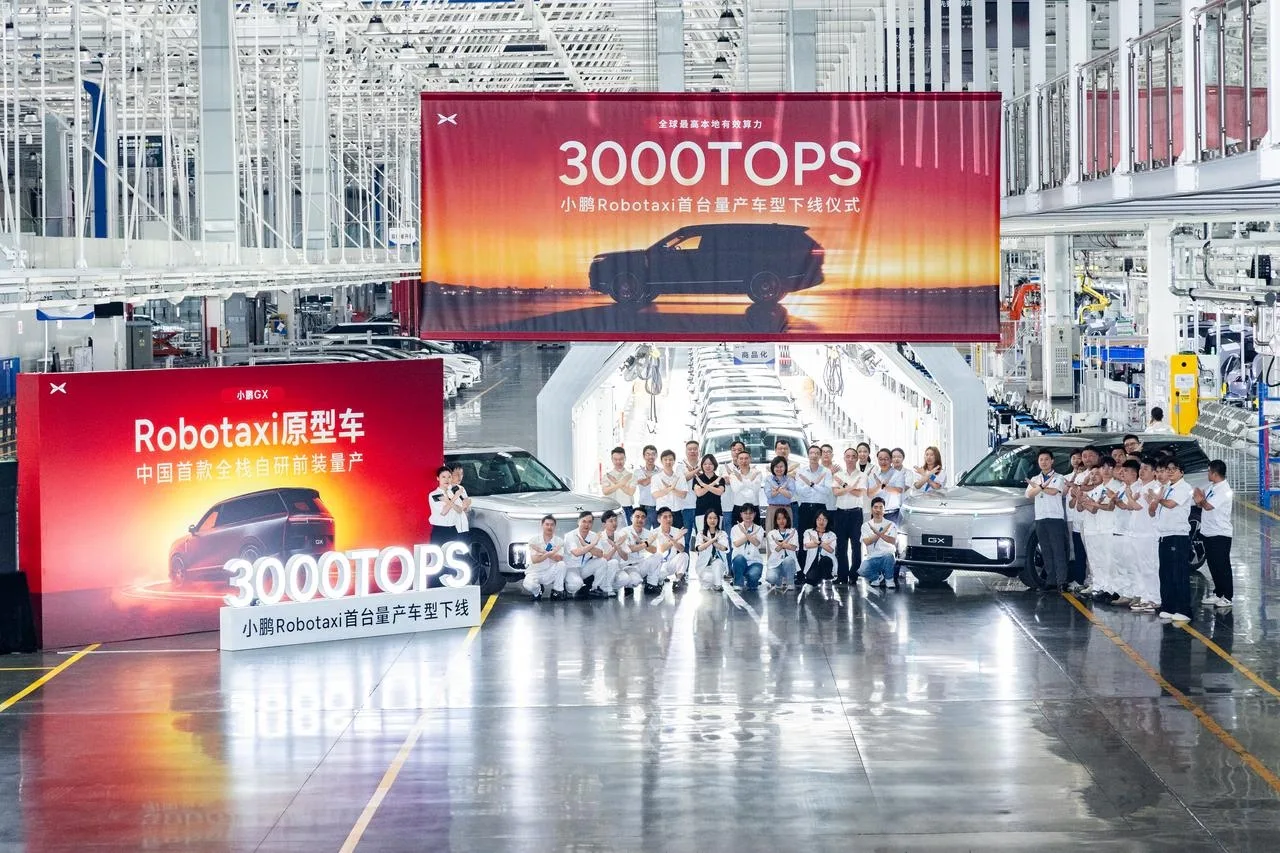
XPeng has started mass production of its first robotaxi in Guangzhou, moving its autonomous-driving programme from test fleets into factory-built vehicles.
The new model is built on the XPeng GX platform and engineered to L4 autonomous-driving standards. XPeng said it is China’s first production-ready robotaxi developed through full-stack in-house work, covering the vehicle, software, chips and AI model.
The robotaxi uses four XPeng-developed Turing AI chips, giving it a combined 3,000 TOPS of effective onboard computing power. XPeng said the car does not use lidar or high-definition maps, instead relying on a vision-based system and its VLA 2.0 end-to-end model.
XPeng said the system cuts response latency to under 80 milliseconds by removing the language-translation step used in older Vision-Language-Action systems. The company also said the architecture helps the car adapt across cities and, eventually, across borders.
The cabin is built for paid rides, not private ownership. It gets privacy glass, comfort-focused seats, rear entertainment screens and voice control for media and in-car settings.
XPeng received a Guangzhou road-testing permit for intelligent connected vehicles in January, then set up a dedicated robotaxi business unit in March.
Pilot operations are planned for the second half of 2026, with XPeng targeting fully autonomous operation without an on-site safety officer by early 2027.
Reuters reported that XPeng expects to build several hundred to several thousand robotaxis over the next 12 to 18 months.
Amap is set to become XPeng’s first ecosystem partner for the robotaxi SDK.
XPeng is treating the robotaxi as part of a bigger bet on physical AI. The same VLA 2.0 model also supports its IRON humanoid robot and flying-car work, showing how XPeng wants one AI foundation to stretch across cars, robots and aircraft.