







BMW is expanding its partnership with Germany’s Solarwatt to make its upcoming Neue Klasse EVs part of a home energy system, starting with the new iX3 and i3.
The system would allow owners to use the car battery as extra home storage, especially for households with solar panels. Instead of simply charging the EV from the wall, the car can store surplus solar energy and feed electricity back into the home when needed.
The rollout is planned for late 2026 in Germany, Austria and the Netherlands, using the BMW Wallbox Professional and the Solarwatt Manager home energy management system.
BMW said the Wallbox Professional can charge the vehicle and return energy to the home, while the Solarwatt system manages the flow between the car, solar panels, home battery and household appliances.
For BMW, this is the next step after its first commercial Vehicle-to-Grid offer in Germany, which has been available since March 2026. Vehicle-to-Home, or V2H, is narrower in scope but easier for many owners to understand: the car becomes part of the house’s power setup.
The arrangement is aimed mainly at homeowners with photovoltaic systems.
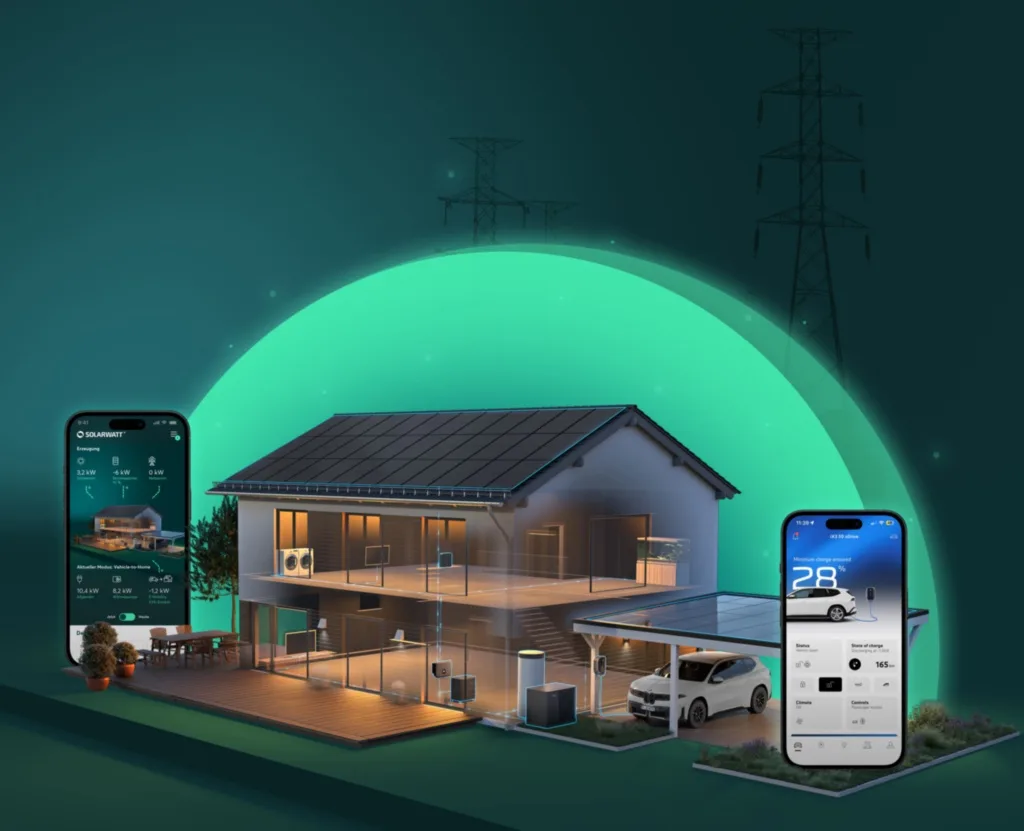
When solar panels produce more electricity than the house needs, the excess can be stored in the car.
The Solarwatt Manager can also use solar forecasts and dynamic electricity tariffs to decide when charging or discharging makes the most sense.
Owners would control settings through the My BMW App and Solarwatt Home app.
BMW and Solarwatt have worked together since 2013.
In 2021, they launched a home storage system using battery-module components related to BMW Group EVs. Since 2025, the follow-up Solarwatt Battery vision has been sold with housing and design by BMW Designworks USA.
The new BMW i3, the second Neue Klasse model, also supports bidirectional charging functions including Vehicle-to-Load, Vehicle-to-Home and Vehicle-to-Grid, according to BMW’s earlier model announcement.
With this development, BMW is no longer treating the EV as a standalone product. With the Neue Klasse, the car is being pushed into the household energy chain, where its battery can help cut grid use and improve solar self-consumption.