











Polestar and the University of Oxford are trying to answer a wonderfully awkward question: can driving pleasure be measured, or is it just something you feel through the seat of your pants?
The Swedish EV brand has teamed up with the SDG Impact Lab at Oxford for a pilot study looking at how the brain and body react when people drive a high-performance Polestar. The study runs from March 9 to July 31, with vehicle testing planned at Gotland Ring in June.
The work brings together engineering science and experimental psychology. Six senior Oxford Innovation Fellows, all pursuing doctoral degrees, will study physiological, cognitive and behavioural responses behind the wheel.
In plain English, they want to see whether excitement shows up clearly in brain activity, biometric data and driving behaviour.
It is an interesting move for an EV maker. Electric cars have already made quick acceleration easy. The harder job is giving drivers something memorable beyond a strong 0-100kph number and a synthetic soundtrack.
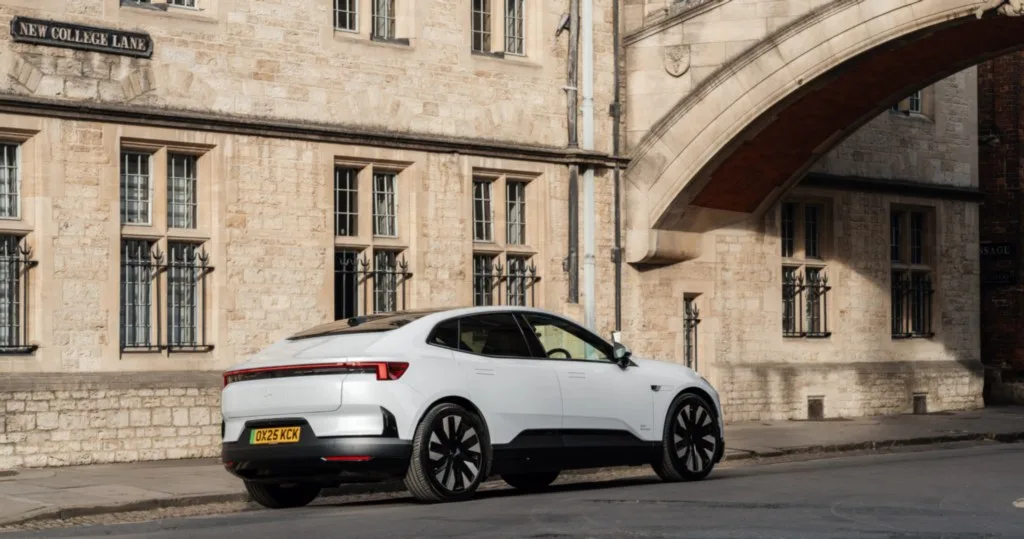
That is where Polestar 5 comes in. The four-door electric GT sits on Polestar’s Performance Architecture, a bonded aluminium platform that Polestar says is designed to improve body control, energy absorption and torsional rigidity. Polestar’s official materials also describe the Polestar 5 as an F-segment electric performance four-door GT.
Results from the Oxford study are due to be presented in autumn 2026, with Polestar also planning a four-part content series in the third quarter of the year.
The research may sound quirky, but the question is real enough: in the EV age, what makes a car fun?