




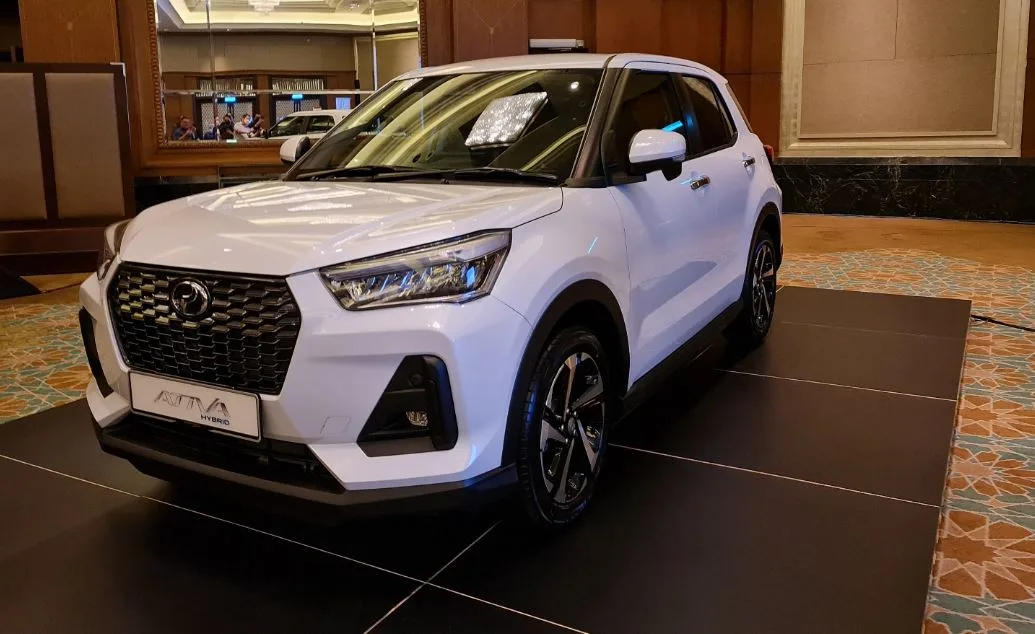
Perodua intends to locally produce the Ativa Hybrid, with timing and pricing still being worked out.
Perodua president and CEO Datuk Seri Zainal Abidin Ahmad said the company was going through the details before making a fuller announcement.
The plan would take the Ativa Hybrid beyond its earlier subscription-only pilot programme and closer to being sold like a regular Perodua model, although final specifications have not been announced.
The plan is linked to Daihatsu’s Local Production and Sales Demonstration Project of Hybrid Vehicles for Malaysia, which has been selected under Japan’s FY2024 Global South subsidy programme for large-scale demonstration projects in Asean.
Perodua is reported to have received about 1.5 billion yen (more than RM37 million) to support the use of Japanese hybrid technology in Malaysia.
Daihatsu said it would work with Perodua, its local joint-venture partner, to manufacture and sell hybrid vehicles in Malaysia using Daihatsu’s hybrid technology, production knowledge and quality-control systems.
This is more than a local-assembly exercise. Daihatsu and Perodua also want to test whether hybrids can be a cleaner, lower-fuel-use choice for Malaysian buyers, especially as the country’s EV charging network is still patchy outside key areas.
The project would help both companies find out whether Perodua can maintain the required production quality in Malaysia, whether buyers accept hybrid pricing over a normal petrol model, and how Malaysians actually use electrified vehicles.
Daihatsu said the project represents the first local production of a Daihatsu-developed hybrid vehicle. It would require investment in a local assembly line, new equipment, production steps specific to hybrid vehicles, quality-assurance systems and staff training.
The regular Perodua Ativa was launched in Malaysia in 2021 as the brand’s first turbocharged model. It uses a 1.0-litre turbocharged engine and CVT, and is related to the Daihatsu Rocky and Toyota Raize.
Perodua previously introduced the Ativa Hybrid through a limited subscription programme in 2022 under its EZ MOBI fleet arm. That pilot allowed selected users to evaluate the hybrid compact SUV while Perodua studied electrified-vehicle usage and ownership patterns.
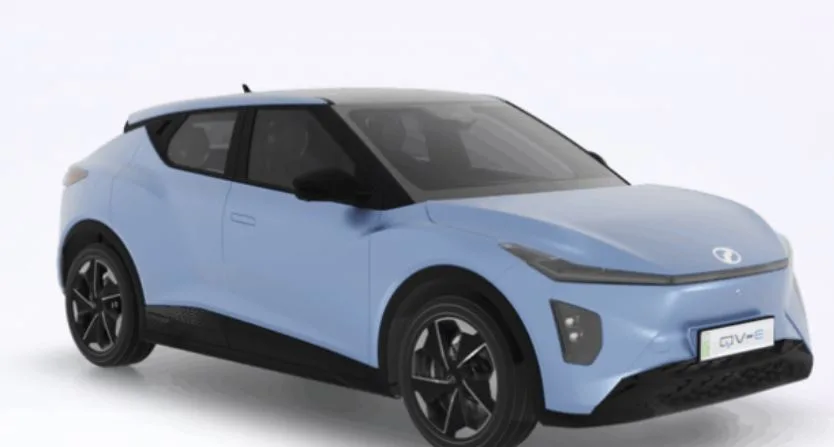
The hybrid plan now gives Perodua a second electrification track alongside the QV-E, its first battery EV.
The QV-E has also become a test bed for pricing, ownership models, supplier quality control and possible future infrastructure ideas such as battery swapping, but early demand appears modest, with 205 bookings and around 40 units registered at the time of the earlier update.
That explains why hybrids remain useful for Perodua. While the QV-E gives the carmaker a base for future EV development, including software, vehicle integration and other electric models, a locally produced Ativa Hybrid could reach buyers who are not ready for a full EV, home charging or the idea of a battery subscription model.
Zainal also indicated earlier that Perodua’s broader product plan includes the next Myvi and two more EVs, while a hybrid Myvi has also surfaced as a possibility.