






Kia Europe has begun what it calls the first public trial of an electric-vehicle battery passport at “cell” level, aiming to bring live transparency to battery health and traceability across an EV’s life.
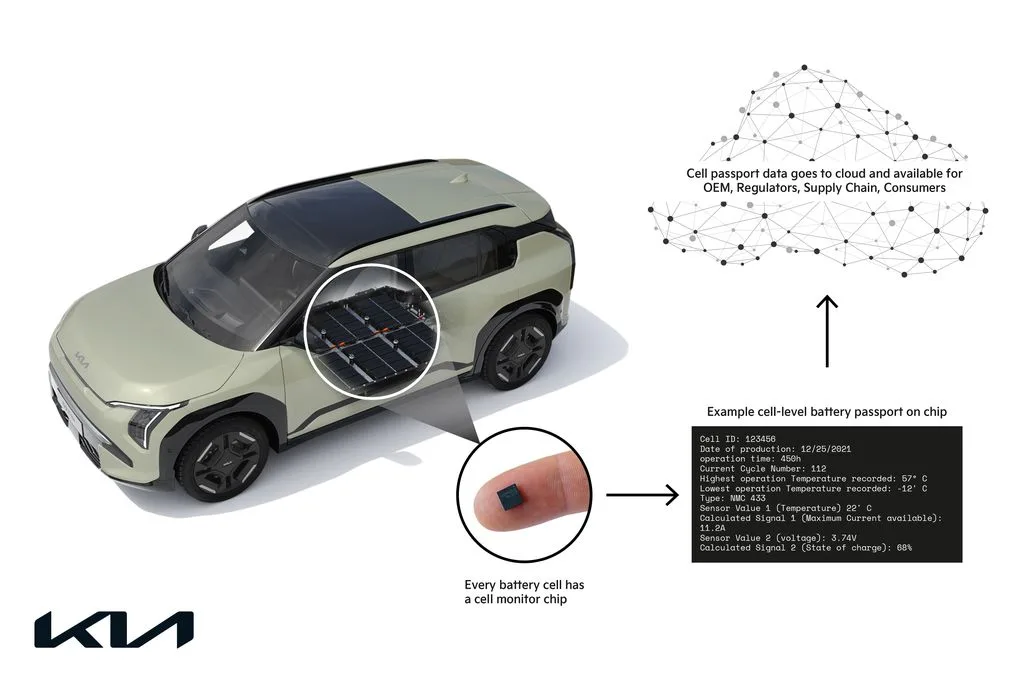
The pilot is positioned as preliminary research but goes beyond today’s common pack- or module-level monitoring by streaming State of Health (SoH) data for every cell in real time.
For the trial, a Kia EV3 fitted with a Dukosi cell-monitoring system was shipped from Korea and arrived in Germany in February.
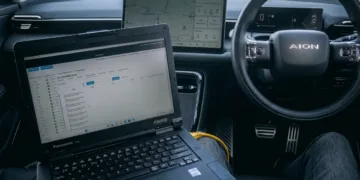
The car captured and uploaded live cell data to a digital passport. Users, workshops and regulators could view SoH via the infotainment screen, while the system auto-updated after repairs to maintain an auditable record.
Data from the trial is being shared through a pilot environment built by Dutch research organisation TNO.
Kia said cell-level visibility could cut ownership costs by enabling early fault detection and targeted fixes, such as replacing defective cells rather than whole modules.
The approach is intended to lengthen battery life, lower maintenance bills and build confidence in the used-EV market by providing credible, live health data. It should also help decisions on reuse and recycling, keeping batteries in circulation for longer and reducing waste.
The initiative sits alongside a wider Kia programme to develop an in-house battery passport service with partners across the supply chain.
The company plans to roll out passports for all EV and hybrid models sold in Europe by February 2027, in line with the EU battery regulation, and said its version would exceed the rules by adding extra safety-related fields. Current EU battery passport specifications run to more than 100 data attributes.
The multi-partner European trial is coordinated by Delft University of Technology with Hyundai Motor Group.
Hyundai Mobis and Hyundai Motor Group manage the technical and back-end integration to securely move data between vehicle systems and external stakeholders.
A related exercise with the EU-funded DATAPIPE project and ARN, the Dutch producer-responsibility body for end-of-life vehicles and batteries, explored how broader digital product passports could add value in future.
Kia Europe president and CEO Marc Hedrich said the aim is to set a new customer standard on battery transparency and performance, using cell-level passports to define tangible ownership benefits and strengthen trust.
If successful, the pilot could become a template for linking regulatory compliance with measurable gains in cost, safety and sustainability.