


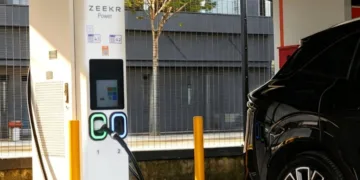
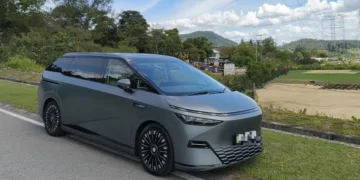




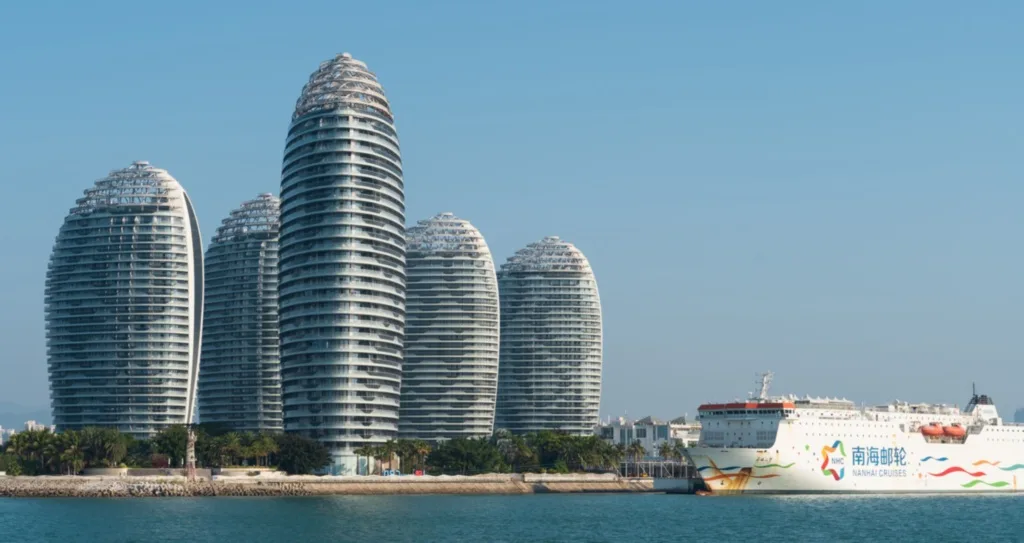
Hainan has reaffirmed its plan to end sales of new conventional fuel vehicles by 2030, putting the southern Chinese island province on course to become the first in China to carry out such a restriction.
The target appears in Hainan’s latest environmental plan and applies to new vehicle sales. Existing petrol and diesel vehicles will not have to be scrapped or removed from the road when the deadline arrives.
Hainan, which had 10.48 million permanent residents at the end of 2024, expects new-energy vehicles to account for 45% of its vehicle fleet by 2030, up from 23.75% in 2025. Its vehicle-to-charger ratio is targeted at below 2.5:1.
By 2030, clean-energy models are targeted to make up all new and replacement vehicles used for public services and commercial operations, apart from special-purpose vehicles. The same 100% target applies to new and replacement private vehicles.
China classifies battery-electric, plug-in hybrid and fuel-cell models as new-energy vehicles. The restriction therefore does not automatically exclude plug-in hybrids because they contain combustion engines.
The policy dates to 2019, when Hainan became the first Chinese province to set a timetable for ending conventional fuel-vehicle sales.
Comparable 2030 transition targets have been adopted in Singapore and the UK, although the policies differ in scope and the vehicle types they permit. The EU has set a 2035 target for effectively ending sales of new CO₂-emitting cars, though that policy is under review.