



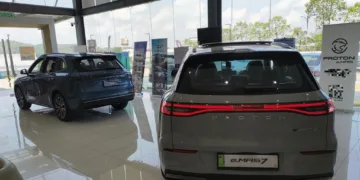



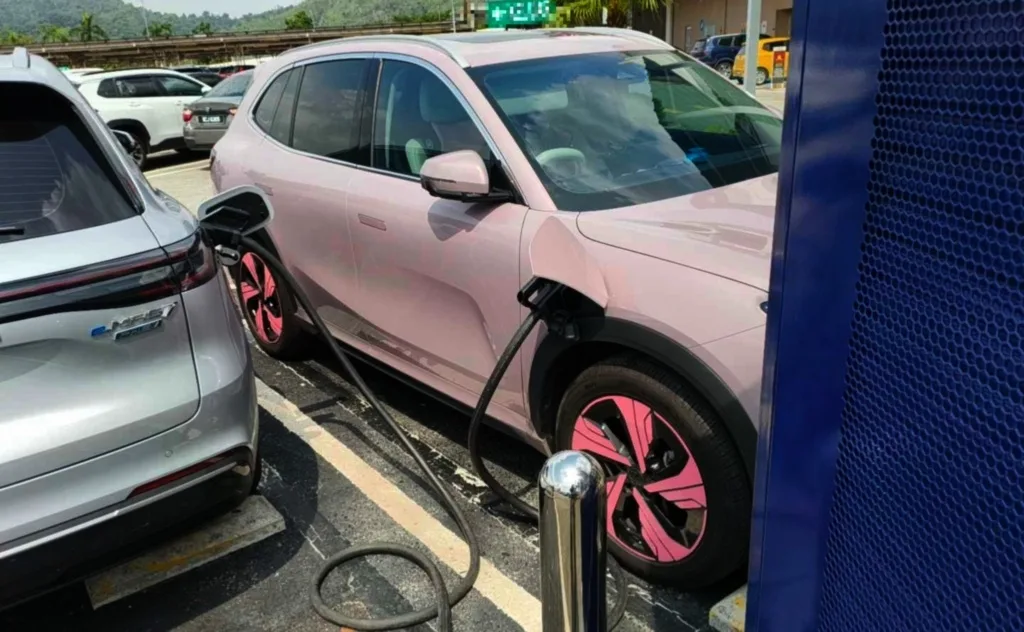
Hong Leong Investment Bank Research (HLIB) says Malaysia’s revised rules on fully imported electric vehicles should strengthen Proton and Perodua by making cheaper imported EVs harder to bring in.
The revised completely built-up (CBU) EV policy gives the national carmakers more breathing room in the lower-priced EV segment, where imported models now face a higher entry bar.
The policy took effect on July 1, 2026, and requires fully imported EVs to meet a minimum cost, insurance and freight value of RM200,000 and a minimum output of 180kW.
That makes it more difficult for brands to sell affordable EVs in CBU form, and may push them to consider completely knocked down (CKD) local assembly more seriously if they want to stay competitive in that price range.
HLIB said Proton already has an early lead, thanks to its e.MAS lineup. From January to May 2026, Proton sold 9,356 units of the e.MAS 5 and 2,286 units of the e.MAS 7.
Perodua has also made its EV offer more attractive, with the QV-E now priced at RM63,500 under a battery leasing scheme or RM87,500 for outright purchase.
The timing appears to favour both national brands.
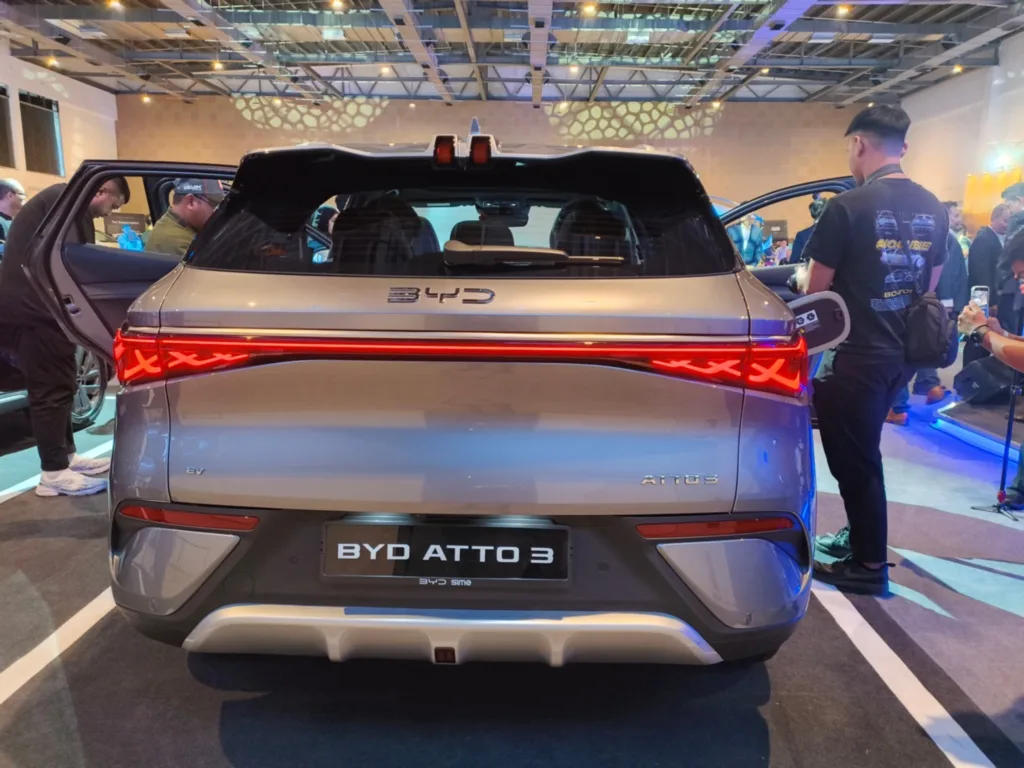
HLIB said EV sales in Malaysia reached 25,500 units in the first five months of 2026, lifting market penetration to 8.1%, compared with 3.8% in 2025. It also listed the BYD Atto 3 among the stronger performers, with 1,873 units sold.
The broader market has softened, but only moderately.
Total industry volume slipped 1.5% year on year to 315,600 units in the first five months, with HLIB attributing the decline to fewer working days, scheduled maintenance shutdowns at Perodua plants and softer demand for major Japanese brands.
Even so, the bank still expects Malaysia’s 2026 total industry volume to reach 780,000 units, which would be below last year’s level but still solid by historical standards.
Proton was among the stronger performers, with sales rising 39.6% year on year. HLIB attributed the growth to the new-generation Saga and e.MAS models, while Mazda also posted a 35.6% increase, helped by the more affordable Mazda3 1.5-litre variant.
National brands now command a record 67.6% of Malaysia’s passenger vehicle market. Chinese brands have risen to 7.8%, while Japanese brands have fallen to 21.1%, and European brands remain below 2%.
HLIB said Budget 2026 measures should provide additional support for Proton and Perodua.
These include a RM10 million matching grant to encourage owners of cars more than 20 years old to scrap them and switch to new national cars, with eligible buyers able to receive rebates of up to RM4,000.
Taxi and e-hailing drivers are also eligible for full excise duty and sales tax exemptions when they buy new Proton and Perodua models.
HLIB maintained its overweight recommendation on the automotive sector, naming MBM Resources and Sime Darby as top picks because of their exposure to Perodua.
Cheap CBU imports now have less room to compete, putting Proton, Perodua and locally assembled EVs in a stronger position as Malaysia’s electric car market enters its next phase.