



Bosch has announced plans to launch a new brake-by-wire system later this year that will replace the conventional mechanical connection between the brake pedal and the braking system with an electrical signal interface.
The system, scheduled for market introduction in the autumn of 2025, has already attracted orders from various vehicle manufacturers. Bosch expects that more than 5.5 million vehicles worldwide will be fitted with brake-by-wire technology by 2030.
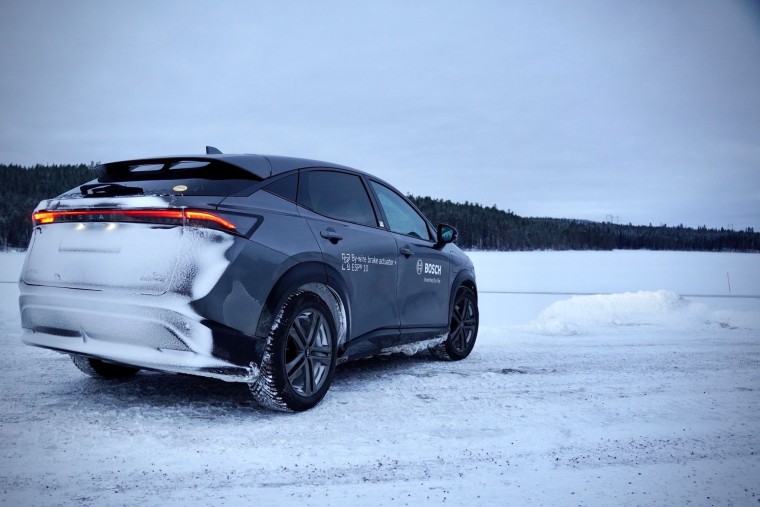
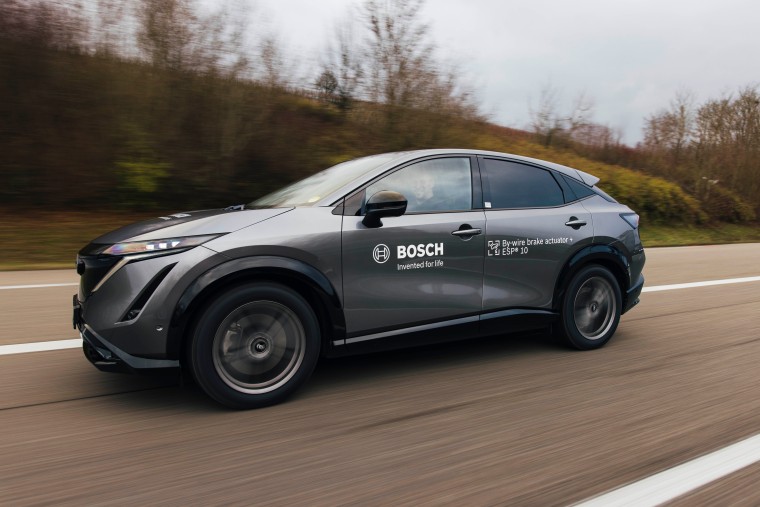
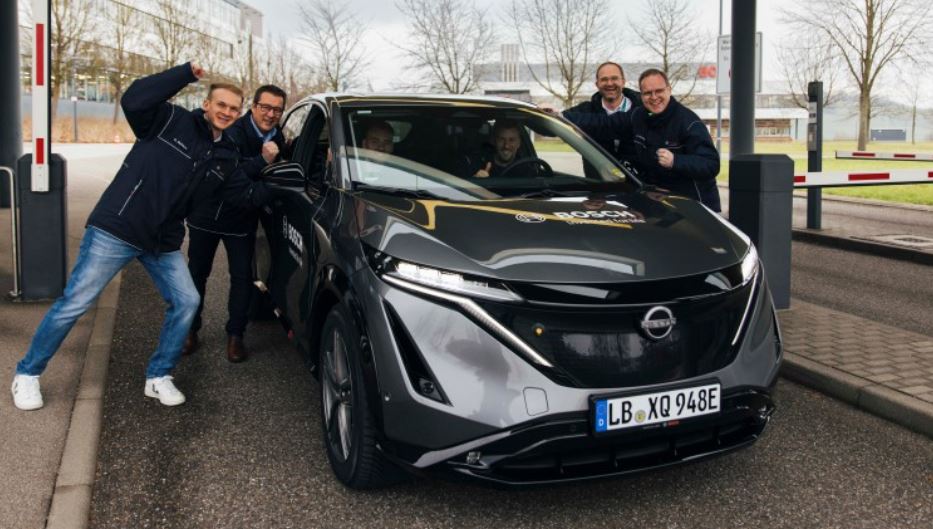
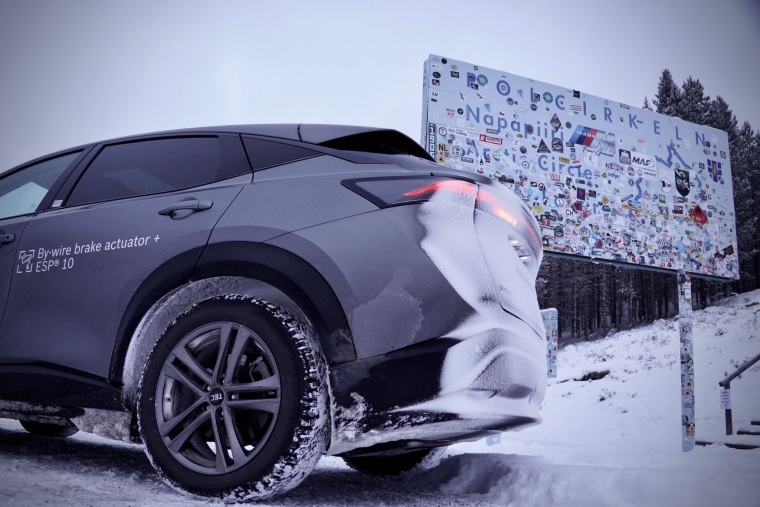
In a test drive using a Nissan LEAF covering 3,300km over six days and traversing several climate zones to the Arctic Circle, a Bosch development team successfully trialled the hydraulic version of the brake-by-wire system on public roads.
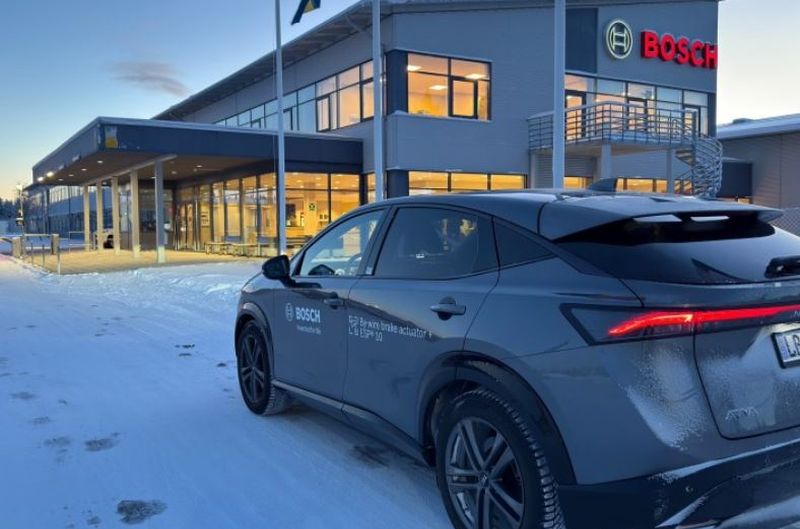
The test, which began near Stuttgart and concluded at the Bosch winter test centre in northern Sweden, was conducted with full regulatory approval in several countries. Thousands of braking operations were carried out during the journey, allowing engineers to gather essential data on the system’s performance under a range of real-world conditions.
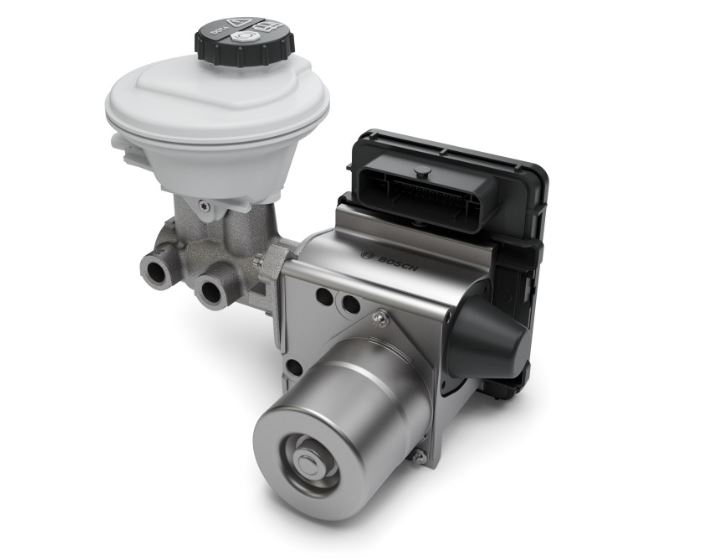
The new system differs from current designs by eliminating the physical connection between the brake pedal and the braking mechanism. Instead, the driver’s input is transmitted as an electrical signal via redundant lines, ensuring that any fault in one channel does not compromise braking capability.
The hydraulic system comprises two independent components – a by-wire brake actuator and an electronic stability programme (ESP) – each connected to separate channels.
This configuration enables either component to independently generate the necessary brake pressure at all four wheels should one channel fail, thereby enhancing reliability, particularly for highly automated vehicles.
Bosch is also developing a purely electromechanical variant of the system, which will further enhance design flexibility.
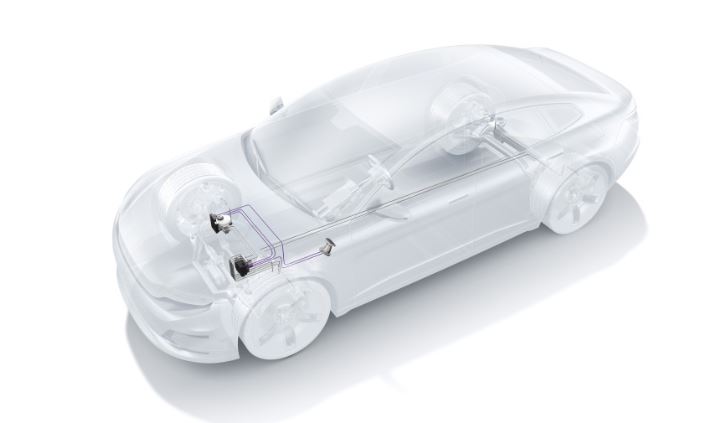
The absence of a mechanical link permits components to be installed in optimised positions rather than being fixed at the vehicle’s firewall. This arrangement offers advantages in crash safety, noise, vibration, harshness and manufacturing efficiency.
In addition, the new design eliminates the need for separate variants for right-hand and left-hand drive vehicles and allows for innovative pedal designs with reduced travel distance, creating more space for novel interior configurations.
The long-distance test has provided valuable insights that Bosch will use to further optimise the hydraulic brake-by-wire system.
The success of the trial under diverse conditions demonstrates the potential of the new technology to enhance vehicle safety and performance as the automotive industry moves towards increased automation.
This advancement is regarded as a significant step forward in automotive technology, promising improved vehicle performance and increased design flexibility for future car models.