







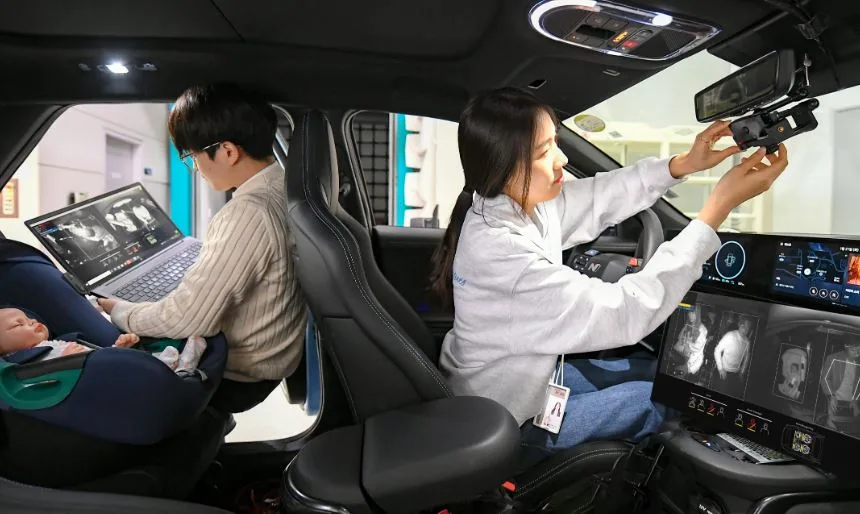
Hyundai Mobis has developed an In-Cabin Monitoring System (ICM) that detects passenger posture, actions and bio-signals to assess safety for both front and rear occupants.
The system, available for global clients from 2025, aims to reduce accidents by alerting drivers who exhibit risky behaviour — such as drowsy driving or mobile phone use — and ensuring that children in rear seats are properly secured.
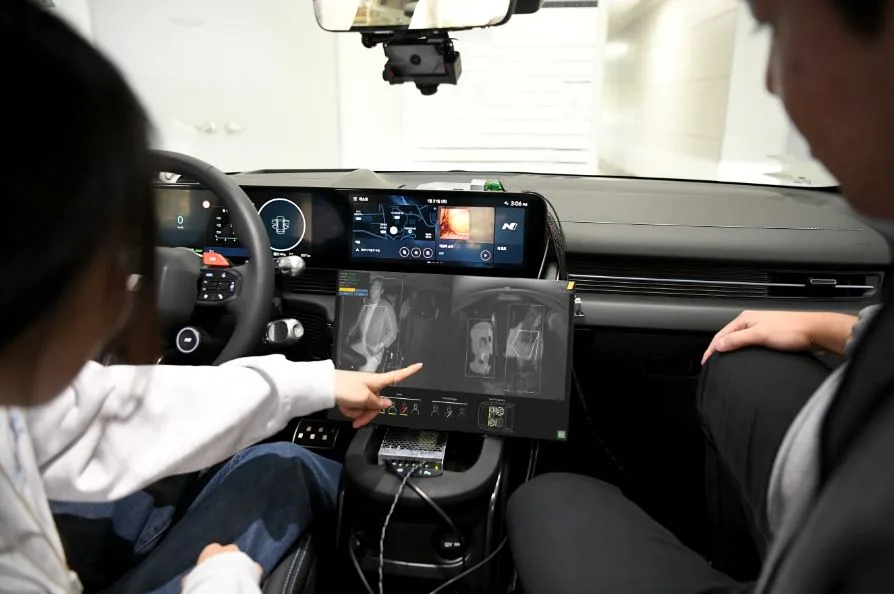
ICM comprises in-vehicle cameras and software logic. Cameras continuously monitor passengers, capturing real-time data on posture and bio-signals. The onboard software then analyses this information to identify potential hazards, triggering audio and visual warnings.
More than ten scenarios have been programmed, including detecting closed eyes, hands removed from the steering wheel, unfastened seatbelts, smoking and unattended children. If the driver shows signs of fatigue, the system issues an alert suggesting a break.
Hyundai Mobis has obtained ASPICE certification, meeting European automotive software standards, and reports that ICM performance exceeds New Car Assessment Program (NCAP) requirements.
The company is pursuing orders from European automakers, where driver monitoring systems (DMS) are set to become mandatory due to strict safety regulations. Industry research indicates camera-based DMS demand is growing at nearly 40 per cent annually.
At the 2025 Consumer Electronics Show, competitors displayed comparable technologies, but Hyundai Mobis claims to be first to complete development and prepare for mass production.
Emphasising software logic, the company plans to introduce enhanced healthcare features to monitor drivers’ vital signs and is already working on a 2.0 version of ICM for commercial fleet services later this year.
Shin Kyu-chul, Leader of the Electronic Control Development Group at Hyundai Mobis, said the rise of autonomous driving heightens demand for in-vehicle convenience and safety, and the company will focus on developing highly accurate software capable of analysing diverse passenger physiques.
Unlike conventional systems that treated driver and rear seats separately, ICM integrates multiple technologies into a unified system that safeguards all occupants.
Hyundai Mobis’s earlier achievements include a driver monitoring system tracking pupil movement in 2019, a radar-based rear-seat monitoring system in 2020 and a driver assistance system analysing posture and heart rate in 2022.