

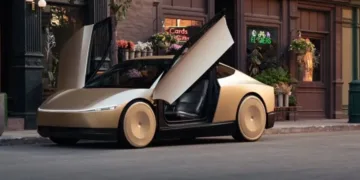



Tesla has adopted a modular battery design for its Cybercab robotaxi, allowing faulty battery modules to be replaced individually rather than requiring an entire pack replacement.
The change marks a departure from the heavily bonded structural battery pack used in the Model Y, with Tesla placing greater emphasis on repair costs and vehicle downtime.
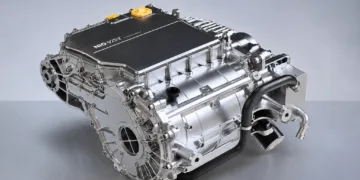
In an interview with Munro Live, Tesla engineers explained that the Cybercab’s battery pack uses four modules housed within a semi-structural enclosure.
The arrangement allows unaffected modules to be retained when one requires replacement, reducing the potential cost of repairs.
Tesla’s battery engineering team acknowledged that the structural pack approach used in earlier models had proved costly and difficult to manufacture and service.
The Cybercab design also makes battery-related electronics accessible from underneath the vehicle, simplifying maintenance without disturbing the battery modules.
Another consideration is the vehicle’s intended lifespan of at least 805,000 km. For a robotaxi operating extensively every day, battery replacement expenses and time spent off the road would directly affect operating costs.
Tesla has also reserved space inside the pack for lithium iron phosphate (LFP) cells, which have lower energy density than the battery chemistry currently used. This would allow the company to adopt LFP technology as production scales.
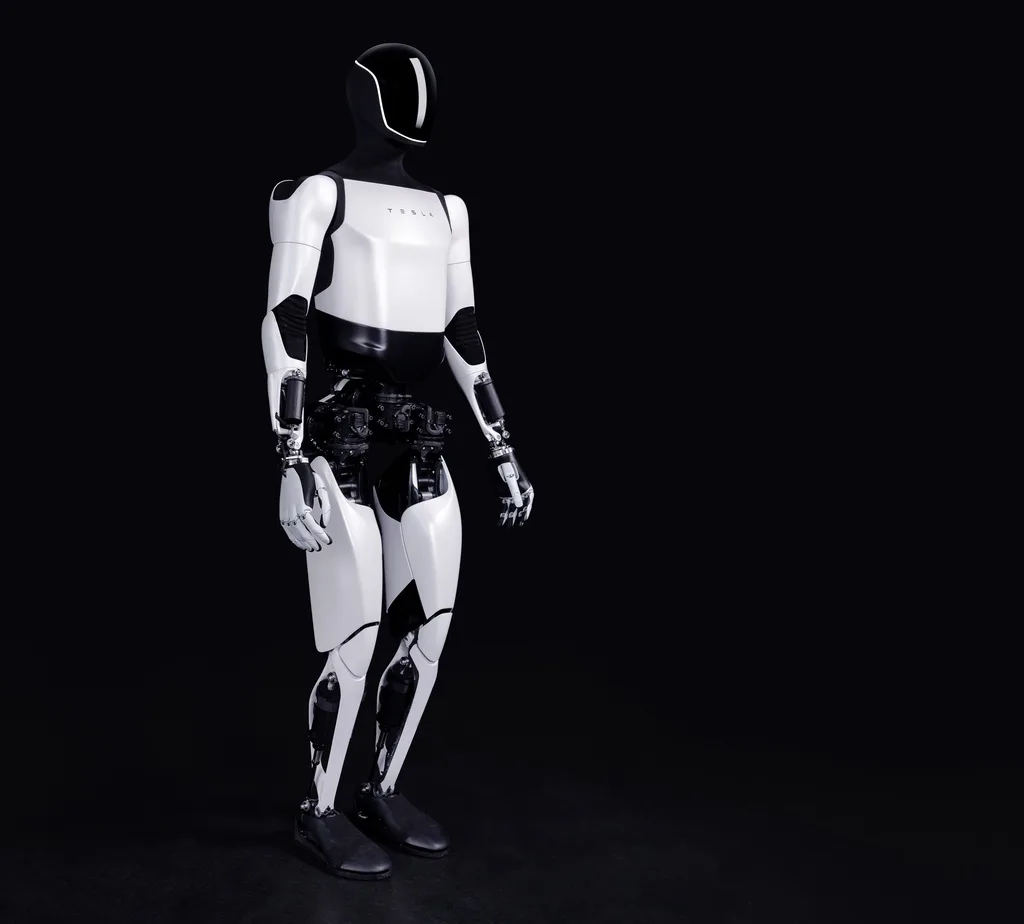
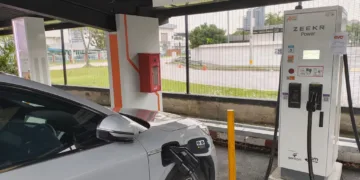
The discussion then turned to another challenge facing driverless taxis: who plugs them in when they need charging?
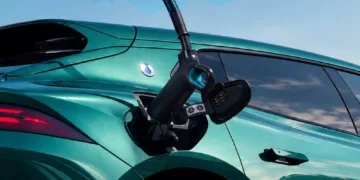
Tesla vice-president of vehicle engineering Lars Moravy said the Cybercab retains a conventional charging port to take advantage of the company’s existing charging infrastructure.
“Hopefully, Optimus will help us with that shortly,” he said, referring to Tesla’s humanoid robot.
The company is considering using Optimus to connect charging cables, potentially eliminating the need for staff to handle the task.
However, Tesla is also developing more automated charging solutions for future infrastructure, with the Cybercab already designed to accommodate them.
Such systems could eventually remove the need for either humans or humanoid robots to connect charging cables.