






Hyundai has confirmed a Santa Fe extended-range electric vehicle (EREV) for the first half of 2027, giving the SUV a new electrified powertrain with more than 965km of total range.
The Santa Fe EREV was one of the main product announcements at Hyundai Motor’s 2026 CEO Investor Day. It will be built at Hyundai Motor Manufacturing Alabama in the United States and is intended to provide an EV-like driving experience while reducing dependence on public charging during longer journeys.
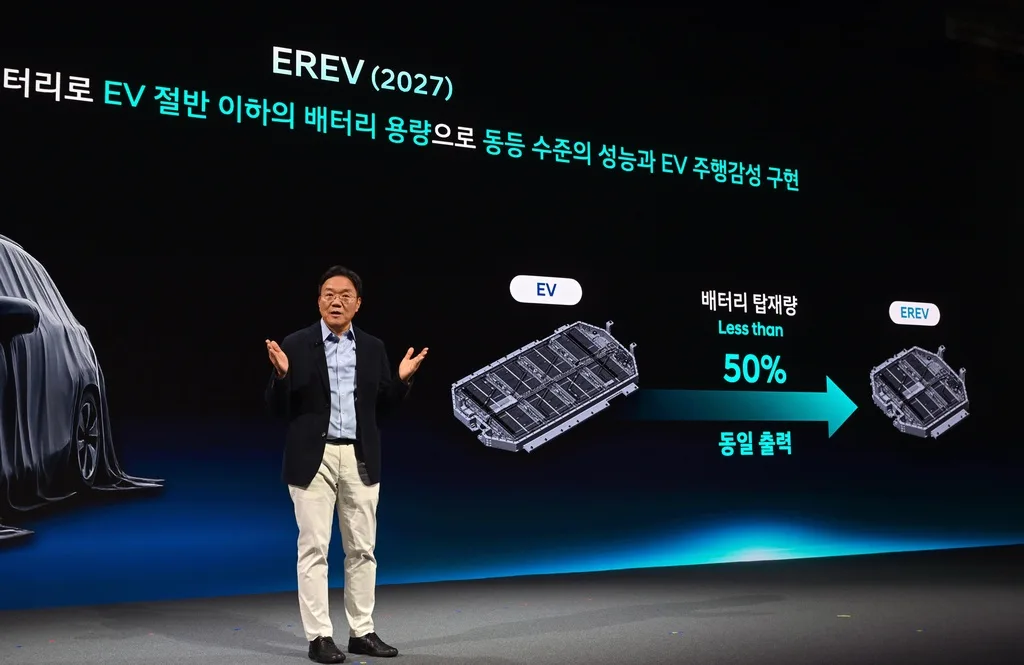
Hyundai said the EREV will use less than half the battery capacity of a comparable battery-electric vehicle. Its newly developed high-performance cells are claimed to deliver more than twice the output of the high-nickel cells previously used by the company while cutting charging time by 40%.
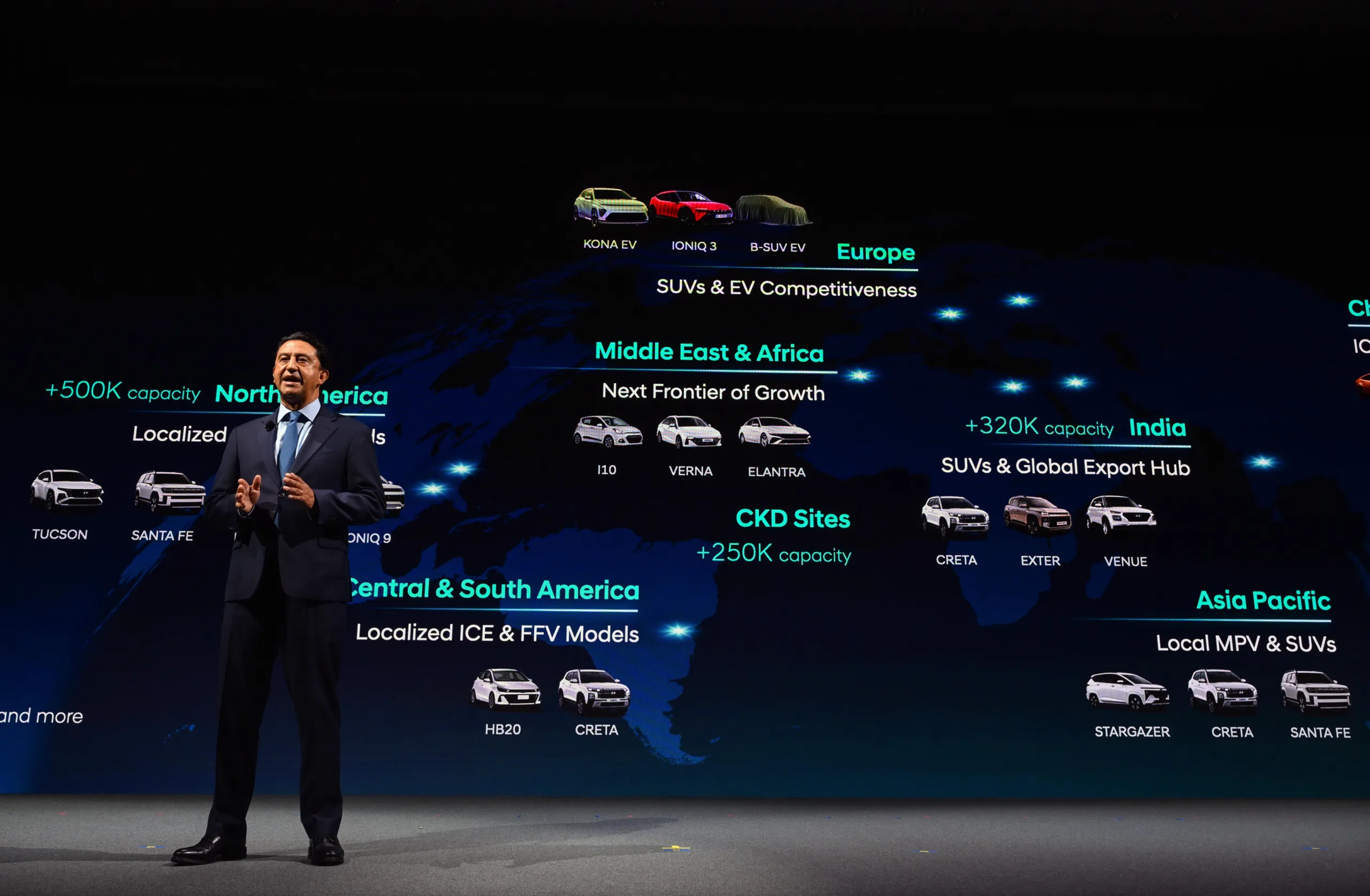
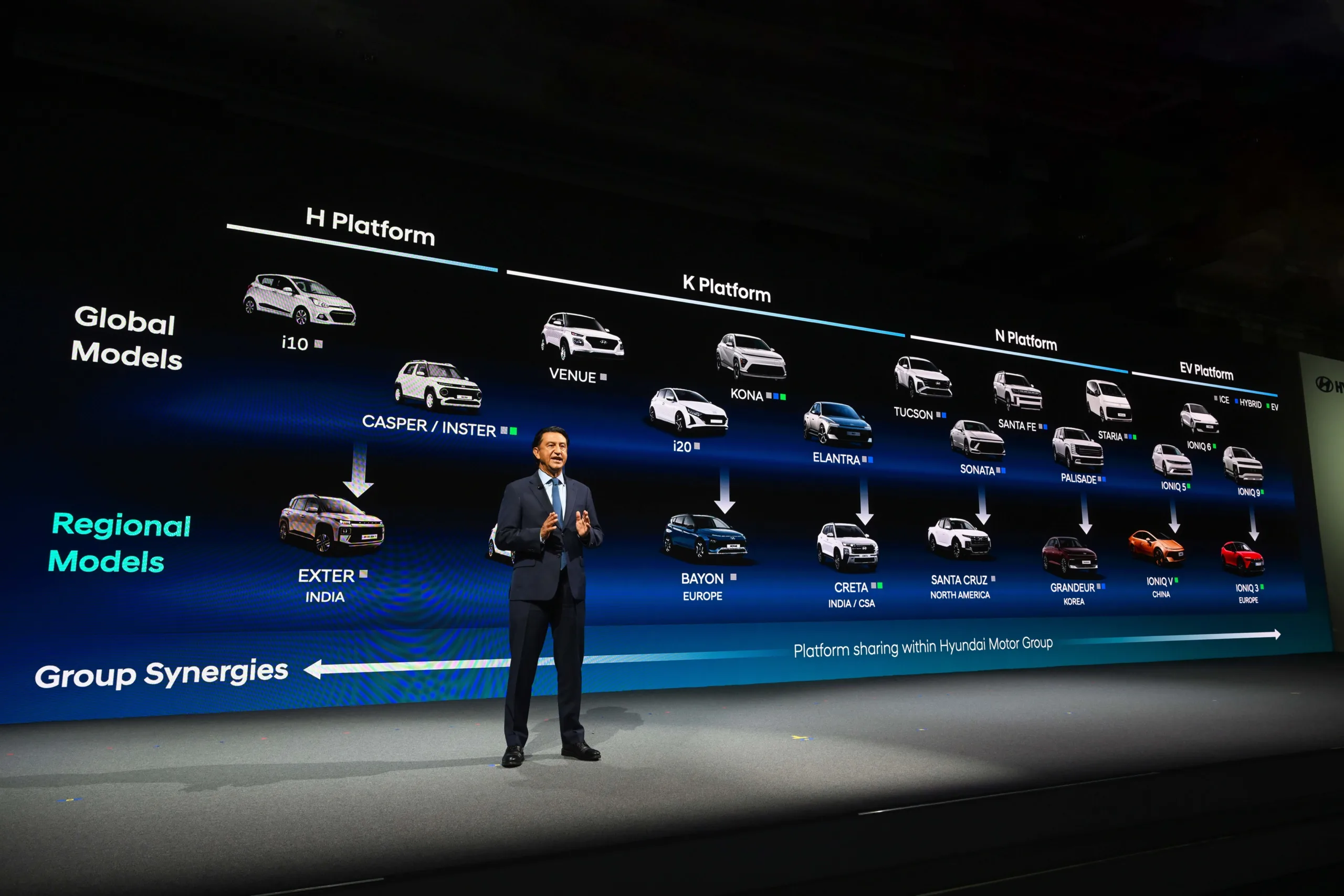
The model is part of a much wider product push. Hyundai plans to launch or refresh more than 100 vehicles globally by 2030, including 58 launches in North America, 49 in South Korea, 41 in Europe, 26 in India and 22 in China. Electrified vehicles are targeted to account for 60% of sales by then, up from 23% in 2025.
Some of those models are arriving soon.
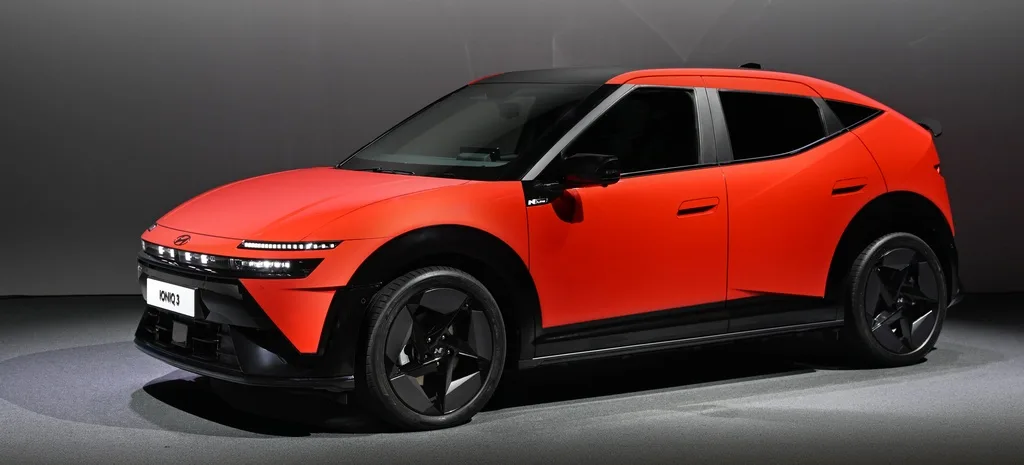
The new Ioniq 3 goes on sale in Europe this month with up to 497km of range and becomes Hyundai’s first European model with the Pleos Connect infotainment system. A new Tucson and Tucson Hybrid are due to enter initial markets in the fourth quarter.
Hyundai is also preparing a new A-segment electric SUV for India, another EV and an EREV for China in 2027, and additional SUV and light-commercial EVs for Europe. European EV sales are targeted to rise from 116,000 units in 2025 to more than 420,000 by 2030.
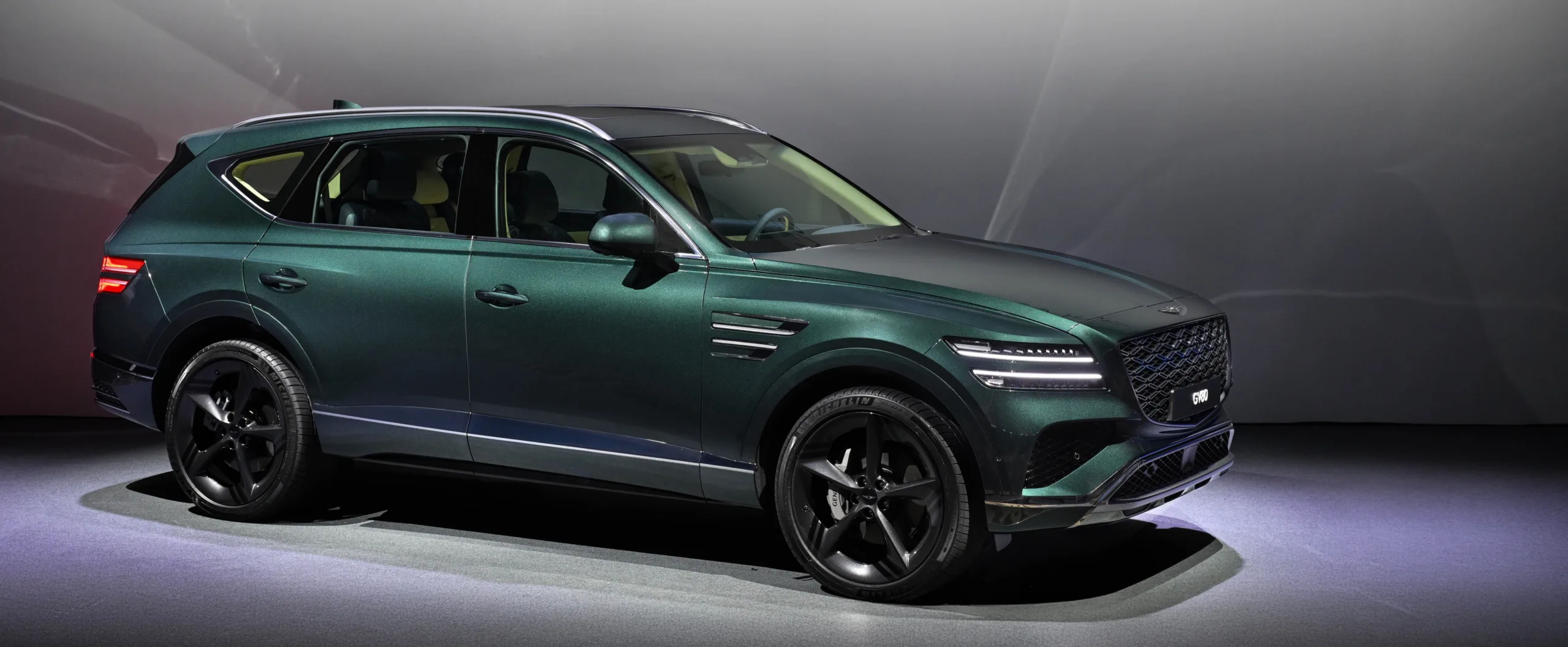
Genesis is broadening its electrified range as well. The GV80 Hybrid, its first hybrid, launches in the fourth quarter, while an EREV SUV targeting more than 1,030km of total range is due in early 2027. The GV90 electric flagship will be the first vehicle produced at Hyundai’s new EV facility in Ulsan.
Hyundai also wants to cut battery costs. EVs arriving next year are set to use mid-nickel nickel-cobalt-manganese cells, which Hyundai says can reduce battery cost by around 30%. A cloud-based battery-management system is also being developed to extend battery life by an average of 20% by 2028.
Hyundai is maintaining its target of 5.55 million global vehicle sales by 2030 while raising its consolidated operating-margin goal to above 9%.
In the first half of 2026, it wholesaled two million vehicles, generated 95.2 trillion won in revenue and posted a 5.6% operating margin. It also plans to add 1.27 million units of manufacturing capacity worldwide by the end of the decade.
Hyundai’s N performance range is also targeted to reach 100,000 annual sales by 2030. Beyond passenger cars, the first Ioniq 5 robotaxis for Waymo are due for delivery in the fourth quarter, with international robotaxi expansion possible from 2027.