



Range, charging speed and price dominate an EV purchase. Manufacturer survival deserves a place on the same checklist because support may be needed for five, eight or even 10 years.
Malaysia already has a live example. Neta vehicles remain on local roads while parent company Zhejiang Hozon New Energy Automobile works through a court-supervised reorganisation in China.
Elsewhere, Fisker, Canoo, Lordstown Motors, Nikola and Arrival have either been liquidated, sold off or redirected into businesses that no longer build vehicles.
These cases are not legally identical. A restructuring can preserve a company, while Chapter 7 in the United States normally means liquidation. What owners experience, however, is often similar: uncertainty over spare parts, warranty liability, diagnostic access, software servers and resale value.
Neta puts the risk on Malaysian roads
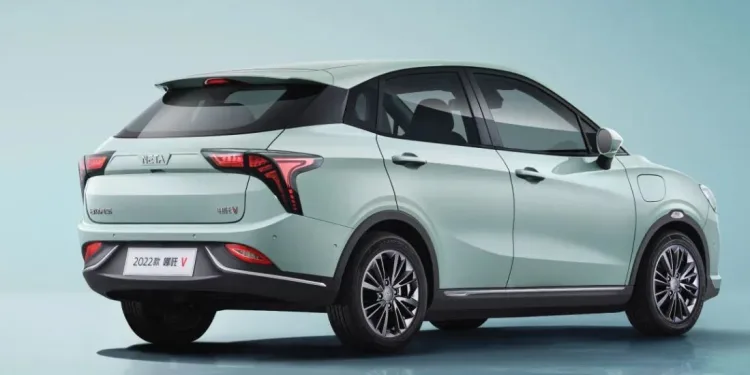
Intro Synergy launched the Neta V in Malaysia in October 2023 and added the Neta X nine months later. Less than a year later, Hozon entered reorganisation proceedings on June 12, 2025 under China’s Enterprise Bankruptcy Law. Reuters reported the development after it was disclosed by Chinese state broadcaster CCTV.
The court process followed a sharp sales contraction.
China Association of Automobile Manufacturers data showed Neta’s volume peaked at 152,000 vehicles in 2022, fell to 87,948 in 2024 and reached only 1,215 units in the first quarter of 2025.
A Reuters investigation found that Neta had activated compulsory insurance on at least 64,719 vehicles between January 2023 and March 2024 before those cars had reached retail buyers.
That allowed the vehicles to appear as completed sales under the registration-based system used in China. The report also said some customers were not told that their insurance cover had started earlier.
Malaysia’s distributor has continued to operate independently of the Chinese parent company’s court case. Intro Synergy said in June 2025 that it would replace its dealer-led structure with direct sales, while retaining service, warranty and parts support. When its original Glenmarie premises closed, the company said in August that the service operation had moved to Accentra Glenmarie nearby and that parts were being held in the Klang Valley and Seremban.
Neta Auto Malaysia added a separate layer of protection for Neta V owners in March 2026 through an optional EV warranty subscription offered in collaboration with Perak-based AZ Warranty.
The advertised three-year option is RM5,400, while five years costs RM8,640. Coverage is limited to specified components, including the traction battery, motor and infotainment hardware, and remains subject to the policy conditions.
For Neta V owners who subscribe, the optional plan provides another route for warranty claims while Hozon remains in court-supervised bankruptcy reorganisation in China.
Local support can still continue through the distributor or warranty provider despite the manufacturer’s financial and legal troubles. Its duration depends on the local company’s finances, parts inventory and access to factory technical information.
Hengchi barely moved beyond first deliveries
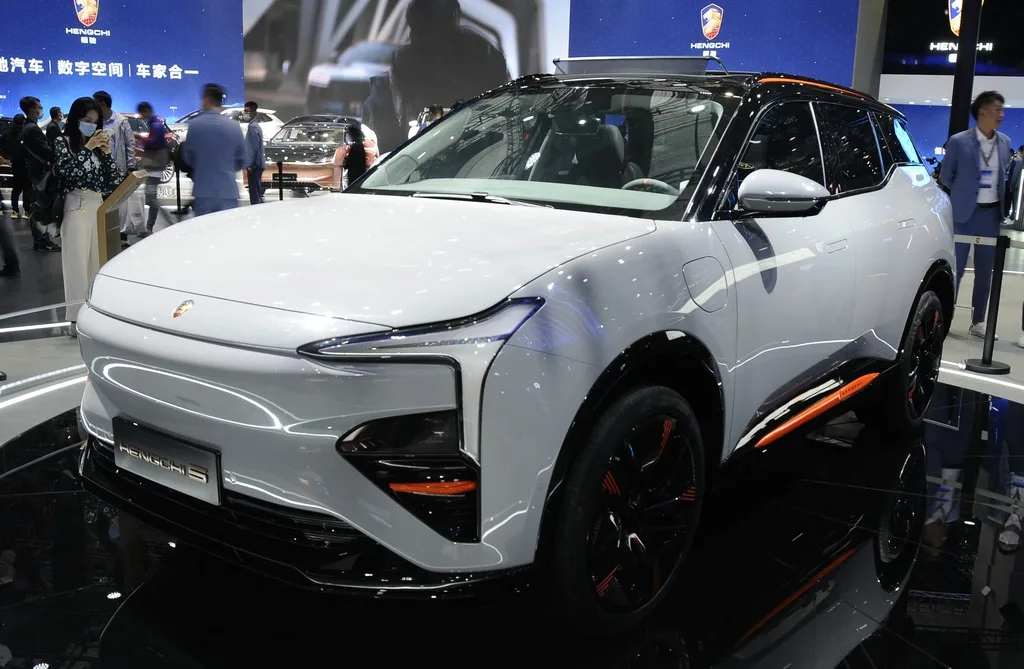
Evergrande’s automotive arm showed how quickly a large industrial plan can shrink. Its Hengchi 5 electric SUV entered customer service in October 2022, when the company said the first 100 vehicles had been handed over.
Mass production was suspended by December. Reuters cited people familiar with the matter who said the factory lacked enough new orders to continue at the planned rate.
The corporate position became more complicated in 2024. A court ordered two Evergrande New Energy Vehicle subsidiaries into bankruptcy reorganisation, while another creditor applied to liquidate the Shanghai-based Hengchi vehicle company.
Evergrande NEV later warned that severe cash constraints were obstructing operations and efforts to bring in an investor.
The listed parent has also remained outside normal market trading. A Hong Kong stock exchange announcement dated March 31, 2026 said its shares, suspended since April 1, 2025, would remain halted until further notice.
For owners, the corporate structure behind Hengchi was secondary to whether their cars could still be supported. The Hengchi 5 reached customers, but within weeks of launch, the companies responsible for parts, software updates and servicing were already under severe financial strain.
HiPhi restructuring approved, but comeback remains uncertain
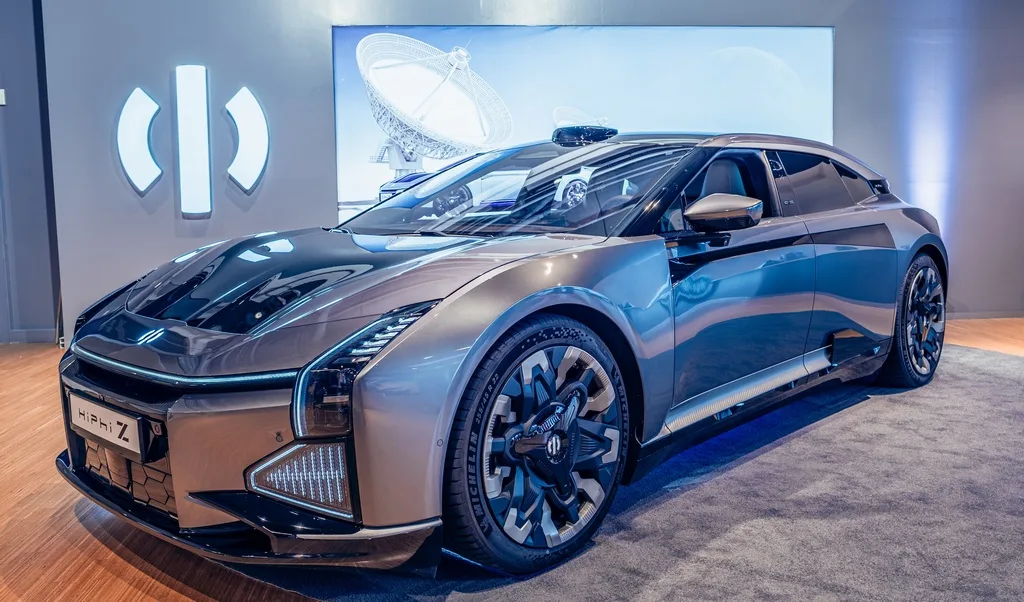
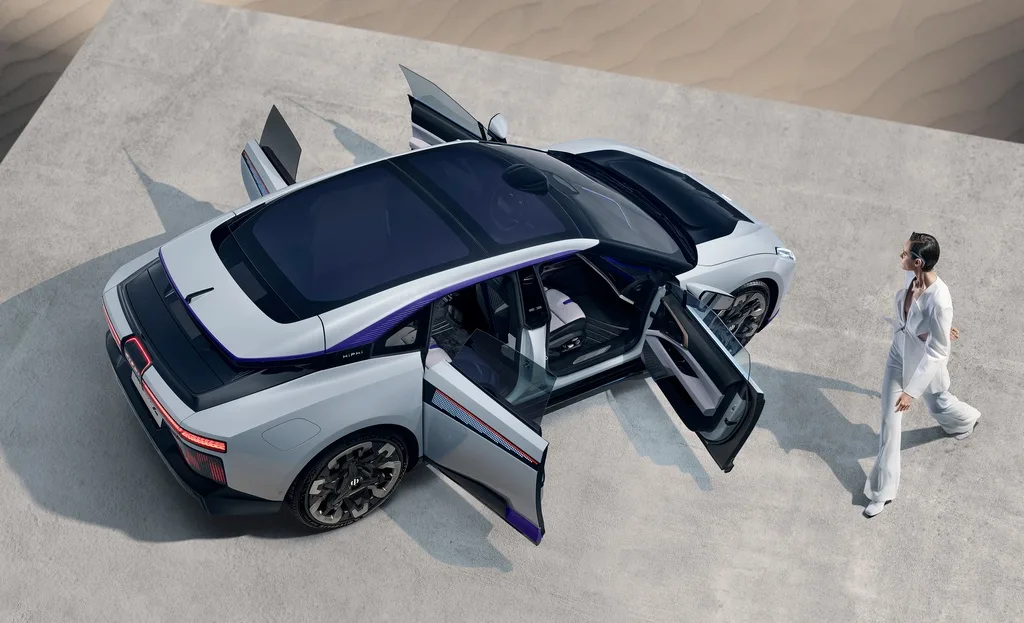
HiPhi sold high-priced electric cars with complex doors, elaborate cabins and styling intended to separate it from China’s mainstream EV field. The products attracted attention, but parent company Human Horizons could not establish enough volume to sustain the operation.
Human Horizons stopped work on Feb 18, 2024. Later that year, it sought up to 300 million yuan (RM181.1 million) in debt funding as part of an effort to resume production, according to Reuters. The company then moved from an initial rescue process into formal consolidated restructuring.
There has since been legal progress. Administrator JunHe said the Yancheng Economic and Technological Development Zone Court approved a plan on April 2, 2026 covering Human Horizons and 51 affiliated companies. JunHe said the case involved more than 16,000 vehicle owners and that funds were used during the proceedings to maintain basic after-sales support.
Court approval moves the restructuring forward, but HiPhi has yet to show that production or showroom operations have resumed. No new model has been given a firm production date either. For now, a return remains unproven.
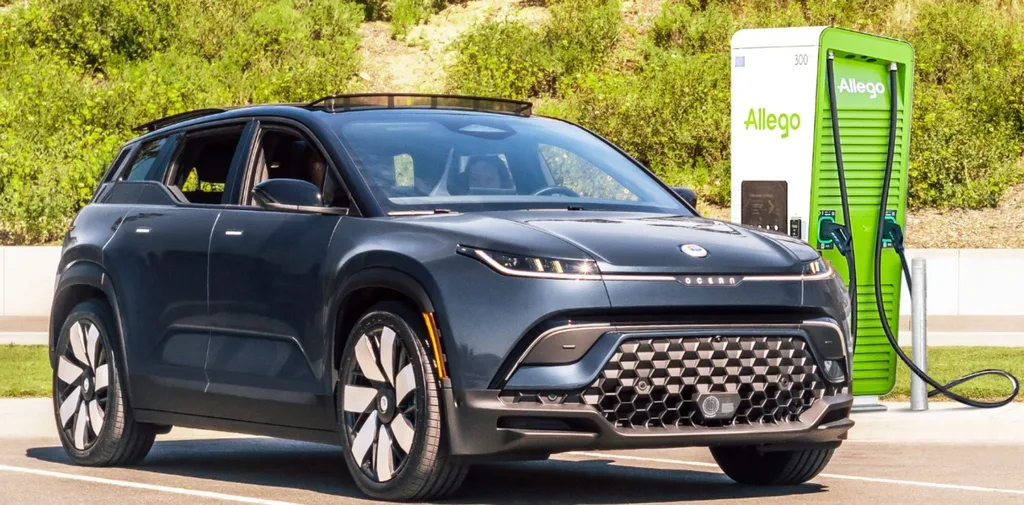
Fisker exposed risks of losing software support
Fisker Inc used Magna Steyr in Austria to manufacture the Ocean SUV, reducing the need to build its own assembly plant. Contract production did not solve its sales, cash and service problems.
Fisker Group began its US Chapter 11 case on June 17, 2024, with the other American entities following two days later. The Delaware bankruptcy court approved a liquidation plan in October, allowing the sale of roughly 3,000 remaining Ocean SUVs to American Lease to proceed.
The important part for owners was not the discounted vehicle inventory. It was the data infrastructure behind the cars. Court reporting by Reuters showed American Lease adding US$2.5 million (RM10.2 million) to fund five years of technical work, including data migration, software continuity and remote vehicle access. The settlement was also expected to provide some support to other Ocean owners.
The US Department of Justice separately told the court that owners could not lawfully be charged for safety-recall remedies that the manufacturer was required to provide without payment.
Fisker’s liquidation therefore exposed a risk that is easy to miss during a showroom test drive. A modern EV can remain physically roadworthy while losing app functions, remote commands, diagnostic links or over-the-air support because the company running the servers has disappeared.
Canoo and Arrival ended up in the same auction catalogue
Canoo’s compact electric vans gained attention through proposed work with Walmart, NASA and other fleet customers. It produced only limited numbers and repeatedly needed fresh capital.
On Jan 17, 2025, Canoo said it would file for Chapter 7 bankruptcy and stop operating immediately. Chapter 7 did not leave room for a conventional turnaround: the business moved towards selling assets for creditors.
By June 2026, equipment from Canoo’s Oklahoma City facility was being offered in an eight-day online auction. Auction organiser AssetBuilt listed robotic welding cells, conveyors, testing systems, vehicle-assembly equipment and a fully automated Manz battery cell-to-module line.
Some of the machinery had already travelled through another failed EV company. Arrival’s UK operations entered administration in February 2024 after EY was appointed to two British subsidiaries. Canoo later bought new or lightly used Arrival production equipment at a steep discount and shipped it to Oklahoma.
Less than a year after Canoo received the second batch, Canoo itself was in bankruptcy. The equipment was put back on the market in 2026. The sequence says more about the economics of the period than any launch presentation: valuable machinery could survive and find another buyer even when the vehicle programmes attached to it did not.
Lordstown survived as a company, but left trucks behind
Lordstown Motors planned to build the Endurance electric pick-up for commercial fleets from a former General Motors plant in Ohio. It filed for Chapter 11 protection in June 2023 and sued Foxconn, alleging that the Taiwanese group had failed to meet investment and commercial commitments.
Bankruptcy ended for the corporate entity on March 14, 2024, when it reappeared as Nu Ride Inc. Its remaining assets centred on cash, tax attributes and legal claims rather than vehicle production.
The change in direction became explicit in June 2026. Nu Ride agreed to acquire Affinity Advisory Network and AAN Wealth Advisors, with founder Robert Hall retaining a 15% interest.
The target businesses distribute insurance and provide investment-advisory services. The deal, expected to close in the third quarter of 2026 subject to conditions, has no connection with restarting Endurance production.
A company can therefore leave bankruptcy and continue trading even though the vehicle brand, manufacturing programme and service operation that made it recognisable are finished.
Nikola’s factories found a buyer, but its truck business did not
Nikola pursued battery-electric and hydrogen fuel-cell heavy trucks. It filed for Chapter 11 protection on Feb 19, 2025 and asked the court to approve a structured asset sale. Its Securities and Exchange Commission filing said only limited direct service and selected hydrogen-fuelling support would continue through the end of March 2025.
Lucid later agreed to buy Nikola’s former Coolidge factory and Phoenix development site, along with selected equipment. It also offered jobs to more than 300 former Nikola employees.
Lucid was explicit about what it was not buying: Nikola’s operating business, customer base and hydrogen fuel-cell truck technology were excluded. The transaction preserved buildings, tools and some employment, not the Nikola ownership proposition.
Founder Trevor Milton’s fraud case was separate from the bankruptcy. A court imposed a four-year prison term in December 2023; a presidential pardon followed in March 2025. Neither event restored the manufacturer’s commercial position.
What EV buyers should check
Weak sales, dwindling cash, poor execution and legal disputes pushed these companies towards different forms of collapse. Owners still needed warranties, parts, repairs and software support after the businesses behind their cars had begun to fail.
Buyers should first establish which company issued the written warranty and which local entity is expected to process claims. That may be the manufacturer, importer, distributor, dealer or an insurance-backed warranty provider.
The written terms are important, but they are not the whole legal position.
Malaysia’s Consumer Protection Act also provides statutory rights against suppliers and manufacturers. In some cases, a local importer or distributor may be treated as a manufacturer where the overseas producer has no ordinary place of business in Malaysia.
Parts availability is only one test. Buyers should ask whether the local operator has trained technicians, suitable diagnostic equipment and continuing authorised access to factory technical bulletins, repair procedures and software systems.
It is not enough for a workshop merely to remain open. Some firmware updates, security fixes and connected functions may depend on manufacturer-controlled servers, software authentication or engineering support.
Buyers should also establish what happens to the mobile app, digital keys, navigation services and remote vehicle functions if the overseas company stops maintaining them.
Resale values may weaken before bankruptcy or restructuring is completed.
Research on financially stressed automakers suggests that uncertainty over warranties, parts supply and servicing can depress the resale value of vehicles already on the road.
A capable local distributor can reduce the damage by holding parts, retaining technicians and arranging independent warranty protection. It may not, however, be able to replace every service previously performed by the manufacturer.
The safer EV is not always the one with the longest range or lowest price. Buyers should also consider whether the distributor has enough money, parts, technical access and legal authority to support the car if the manufacturer runs into trouble.