








Last updated: 25/6/26
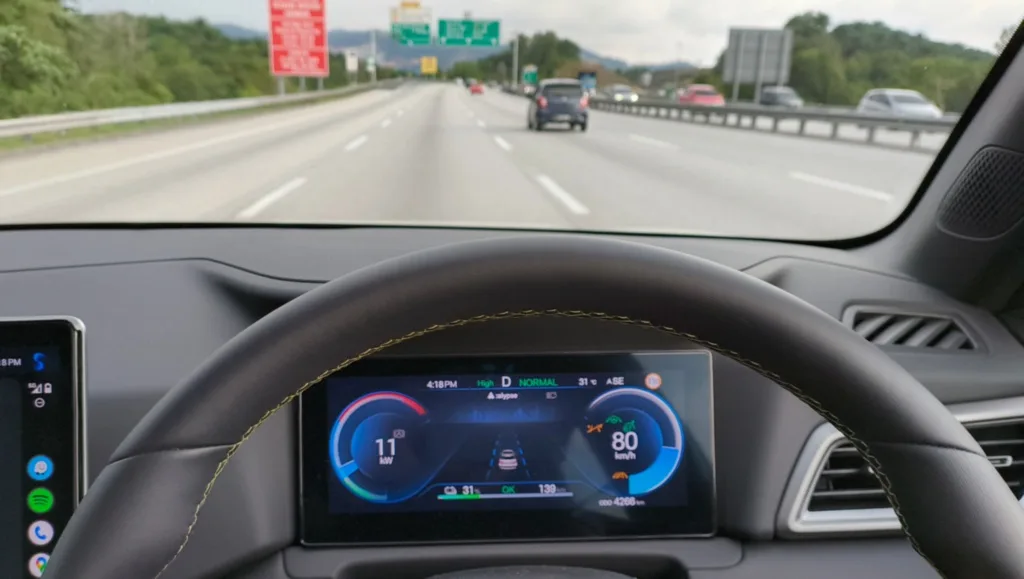
EV charging is not difficult. The catch is that too many buyers only learn the basics after taking delivery, then discover that charging speed, home wiring, public apps and charger etiquette are not as simple as “plug in and wait”.
For drivers in Malaysia, charging knowledge is part of the buying decision. A cheap EV with poor home-charging access may be less convenient than a pricier one that fits your daily routine. A fast DC charger is useful on a highway run, but pointless if the car cannot accept that speed.
AC versus DC charging
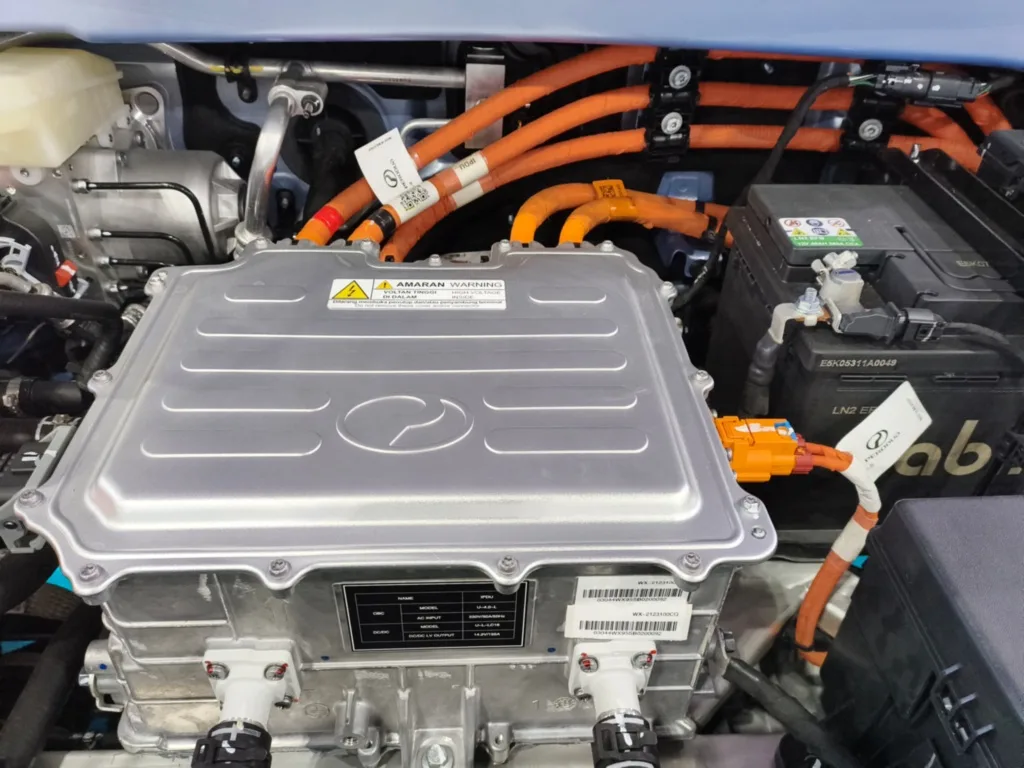
The electricity grid supplies alternating current, or AC. An EV battery stores direct current, or DC. With AC charging, the car’s onboard charger converts AC to DC. With DC fast charging, the charger does the conversion outside the car and sends DC straight to the battery.
That is why home charging normally uses AC. A wallbox rated at 7kW, 11kW or 22kW is enough for overnight charging, and it suits routine use. DC charging is for faster top-ups at public sites, highway stops, malls and charging hubs.
The car is the limiting factor. If the wallbox is 22kW but the car’s onboard AC charger accepts only 7kW or 11kW, that is all you get. The same logic applies to DC charging. A 350kW charger will not make a 100kW-capable car charge at 350kW.
Home charging: wallbox, three-pin plug and granny charger
A home wallbox is a fixed charging unit, usually wired to a dedicated circuit from the home distribution board.
Tenaga Nasional Bhd (TNB) advises owners to appoint a licensed wireman or electrical contractor registered with the Energy Commission to assess total home load before installing an EV charger.
TNB also states that single-phase supply is suitable for homes with total usage up to 10kW, while homes above 10kW and up to 37kW need three-phase supply.
TNB approval is not needed just to install a home charger. But if the house needs a single-phase to three-phase upgrade, that application goes through TNB. Do not let a contractor simply “upgrade the fuse”. TNB says changes to its meter or fuse are not allowed and can create fire risk.
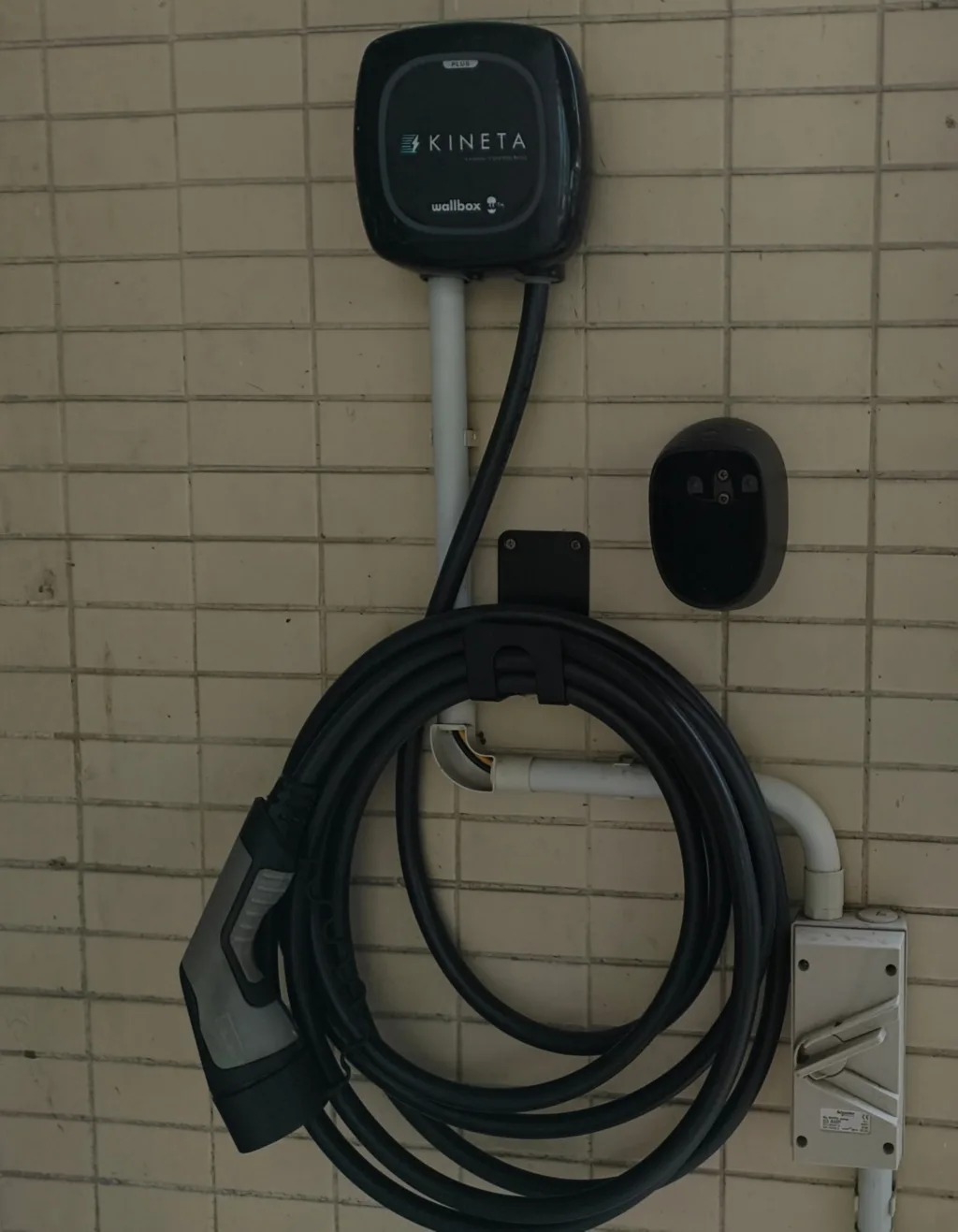
For condos, the headache is rarely the charger alone. It is parking-bay ownership, management approval, metering, cable routing, load capacity and who pays for what.
Some buildings will need shared chargers with load management rather than individual chargers at every bay.
A granny charger is the portable charger that usually plugs into a domestic socket. It is useful for emergency or occasional top-ups. It is slow, and it should not be treated as a permanent daily charging solution unless the socket, circuit and usage pattern are suitable.
Avoid extension cords and multi-plug adapters. Inspect the cable, plug and socket, and follow the car maker’s charging instructions.
Public charging
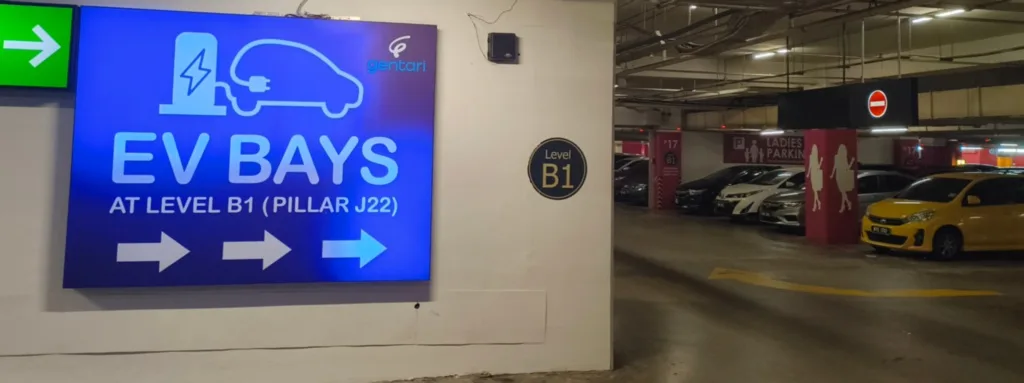
Public charging still means apps, accounts and planning. Gentari Go, chargEV, JomCharge, TNB Electron and DC Handal are among the names EV owners will come across.
Some apps show charger status, session progress, pricing and payment.
Idle fees are being used by several charge point operators to stop cars hogging charging bays after charging has ended. The details vary by network: some charge after a grace period, some apply the fee only when a site is busy, and some distinguish between idle fees and overstay fees.
Gentari’s current idle-fee structure began from March 30, 2026, replacing its earlier overstay-fee system.
The main connectors to know are Type 2 for AC and CCS2, or Combo CCS, for DC.
The Energy Commission’s EVCS guide lists Type 2 for AC, and Combo CCS Type 2 and CHAdeMO for DC. For most current Malaysia-market EV buyers, CCS2 is the connector to focus on.
CHAdeMO is relevant mainly for some older or imported EVs. GB/T is mostly a grey-import China-market issue, not the mainstream public-charging standard in Malaysia.
For balik kampung trips, plan your charging stops before you leave, not when the battery is already low. Check where the chargers are along your route, whether they use the right connector, how much power they offer, which app or payment method is needed, and whether parking or operating-hour limits apply.
Where the app allows it, also check live status and recent user feedback so you are not gambling on a charger that may be offline, blocked or painfully slow.
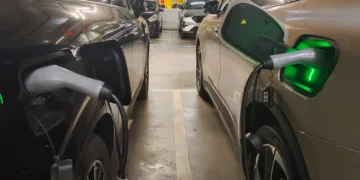
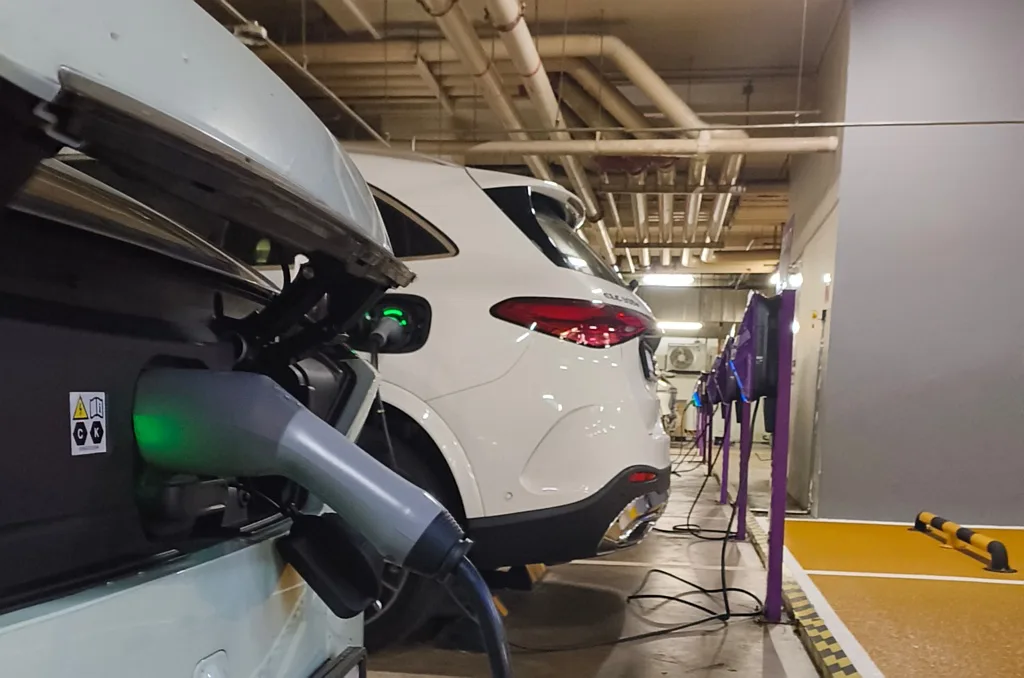
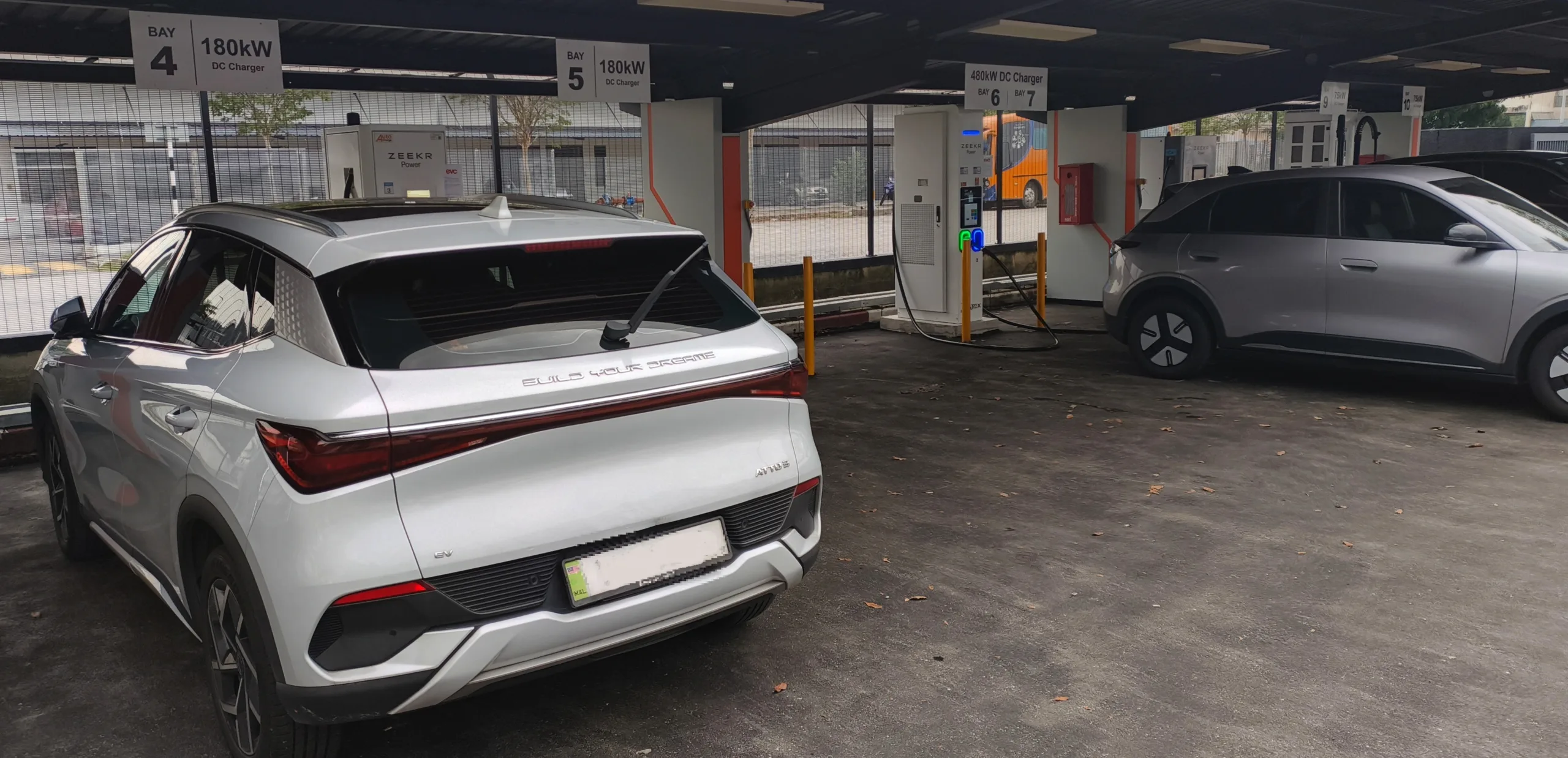
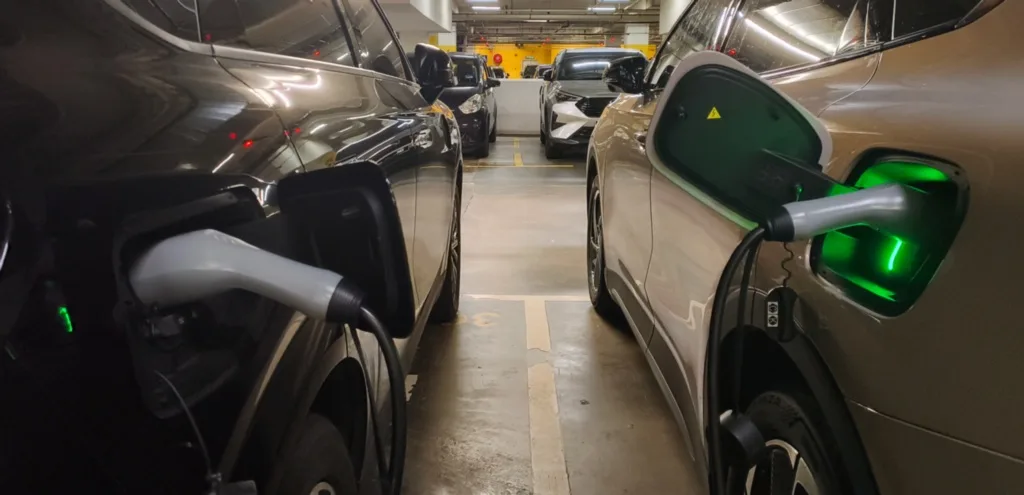
Also look at how the charger is laid out. At some multi-bay charging sites, plugging into a point already serving another car can split the available power. If there are empty alternatives, pick the unused unit rather than parking beside another EV to avoid sharing power.
A 180kW charger at the wrong location is less useful than a reliable 50kW charger where you were planning to stop anyway.
Why charging speed varies
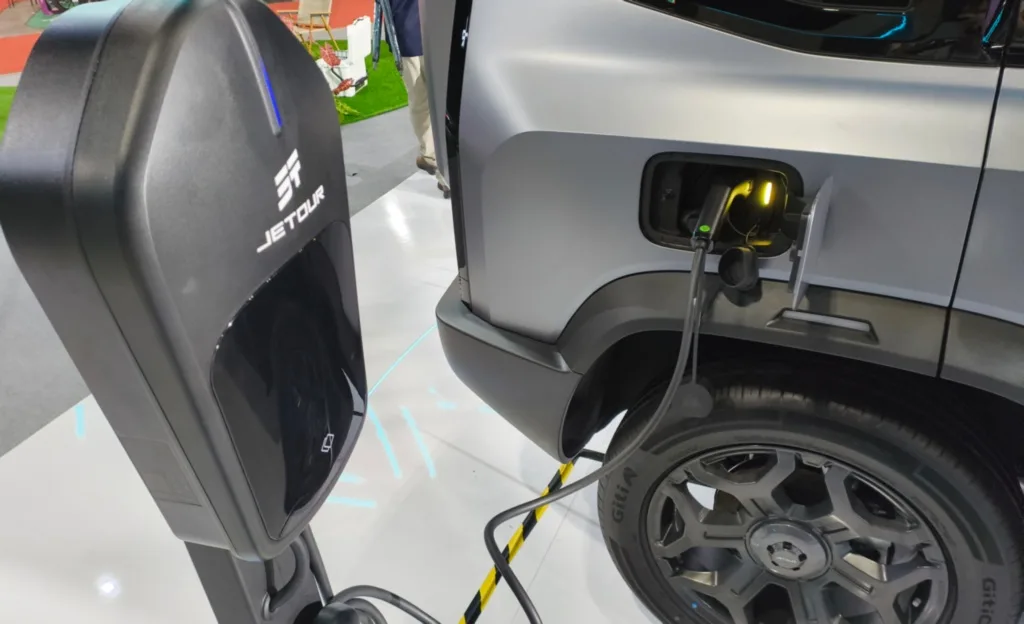
Charging is about kilowatts and kilowatt-hours. The battery size is measured in kWh. Charger output is measured in kW.
A 60kWh battery charging at a steady 7kW would take around nine hours from empty in simple maths, before losses and the car’s own charging behaviour are counted.
DC charging is not a flat line. The car may charge quickly when the battery is low, then reduce power as the state of charge rises.
Porsche’s own fast-charge figures assume an initial state of charge of about 9–10% under optimal conditions. The broader lesson applies to many EVs: DC charging is usually quickest when the battery is low to mid-level, then slows as it fills.
That does not mean owners should run the battery low every day. It means DC fast charging is often best used as a short, purposeful stop rather than a long wait to fill the battery.
Many EVs are quickest to charge roughly between 10% or 20% and 80%. After that, charging slows to protect the battery and manage heat.
Temperature also plays a part. A hot battery, cold battery, full battery, shared charger, low site power or software limit can all reduce speed. So when a brochure says “10-80% in 18 minutes”, read the conditions.
Dynamic charging hubs and BESS
Dynamic power sharing is a smarter way to run a charging hub. Instead of giving every charging bay a fixed power level, the system shifts power to the cars that can use it.
Kempower, for example, says its satellite charging system can dynamically distribute power between multiple charging points in 25kW steps.
That is important because two cars rarely need peak power at the same time. One may be tapering down at 75%, while another has just arrived at 20%. The system can move available power where it is useful.
A battery energy storage system, or BESS, does a different job. It stores energy on site and releases it when chargers need a short burst of high power.
That can reduce sudden grid demand and make fast charging possible at sites where the grid connection is limited. There are already local BESS-linked charging examples, including solar and BESS public chargers announced by Gentari and EV Connection, and BESS-enhanced chargEV chargers.
New charging ideas to watch
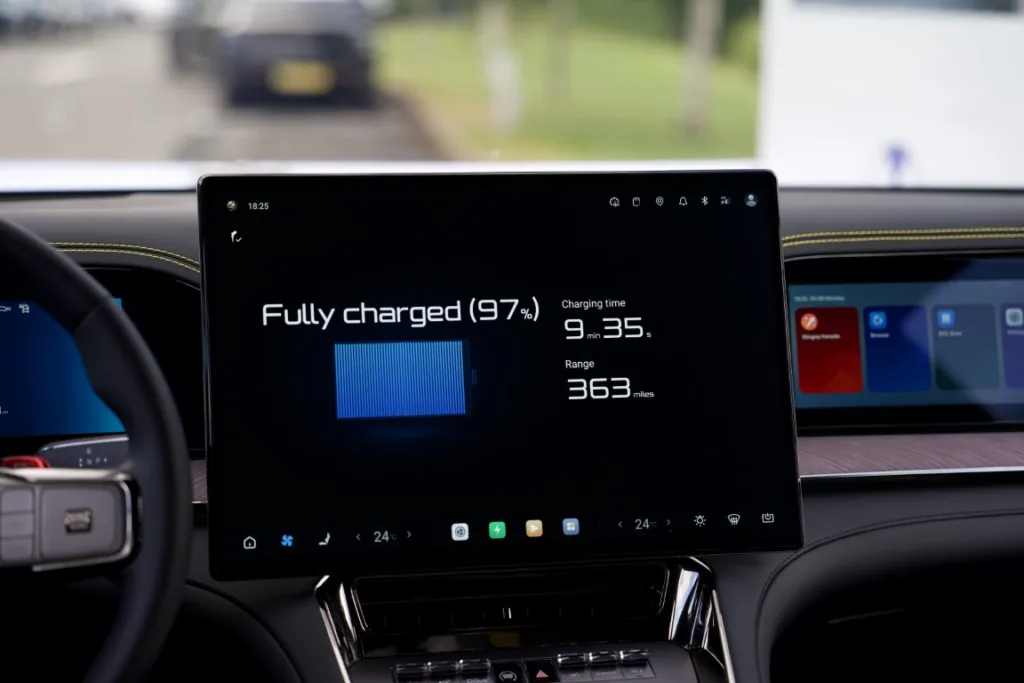
Plug-and-charge is meant to remove app fiddling: plug in, the charger identifies the car, and billing happens automatically. It depends on compatible cars, chargers, back-end systems and standards such as ISO 15118.
Bidirectional charging is another big idea, but it needs the right hardware. A large battery alone does not mean an EV can run a house. The car must support bidirectional power, the charger or inverter must support it, the home wiring must be set up correctly, and the utility rules must allow it.
Vehicle-to-load is simpler and already familiar on some EVs; it can power small appliances or tools. Vehicle-to-home and vehicle-to-grid are more complex.
Megawatt-class charging needs elaboration. The formal Megawatt Charging System, or MCS, is being developed mainly for commercial vehicles such as electric trucks and buses, and for other large-battery uses.
But megawatt-class charging itself is no longer only a heavy-vehicle topic. BYD is already pushing 1,000kW and 1,500kW flash-charging technology for passenger EVs, including the Han L and Tang L in China and the Denza Z9GT in Europe. (Note: BYD has announced flash charging is coming to Malaysia)
The charger may be rated at 1MW, but the car has the final say. Most EVs today cannot take that much power, so they will charge at their own limit.
Wireless EV charging has been standardised under SAE J2954, but it is still not a mainstream buying factor for passenger EVs.
Practical charging habits
Use home AC charging for normal daily use if you can. Keep the battery within the range recommended by the owner’s manual.
Many cars do not need 100% every day, though some lithium iron phosphate battery models may recommend periodic full charging for calibration. Read the manual, not random social-media advice.
On DC chargers, stop at around 80% unless you need the extra range. The last 20% can take a long time.
For some trips, two short DC stops may be faster than one long session, especially if the car has already passed its fastest part of the charging curve.
A route planner can help because it may know when to stop, how much to charge and whether the car should precondition the battery before arrival. That is better than simply chasing the highest kW number on the map.
Move the car once charging is done, especially at busy sites. Charging in rain is generally safe if the charger and cable are proper, undamaged and not sitting in standing water.
Do not use a damaged charger. Do not run a granny charger through an extension cord in the wet. Common sense still applies.
Short buyer checklist
1. Check whether you can charge at home before choosing the EV.
2. Confirm the car’s AC limit: 7kW, 11kW or 22kW.
3. Confirm its real DC charging capability, not just the charger maximum.
4. Use a licensed wireman or Energy Commission-registered contractor for home assessment.
5. For condos, get management approval and clarify metering.
6. Know your connector: Type 2 for AC, CCS2 for most DC use.
7. Install the main charging apps before a long trip.
8. Treat 80% as the practical DC charging stop for most journeys.
9. On long trips, arriving at a DC charger with a lower battery can save time.
10. Avoid pairing beside another charging car if empty standalone points are available.
FAQs
1. Can I charge an EV from a normal socket?
Yes, with the correct portable charger, but it is slow and should be used carefully. It is better for occasional top-ups than daily heavy charging.
2. Is a 22kW wallbox always better than 7kW?
No. If the car’s onboard AC charger accepts only 7kW or 11kW, a 22kW wallbox will not overcome that limit.
3. Why did my car charge slowly on a fast charger?
The battery may have been too full, too hot, too cold, or the charger may have been sharing power. The car also controls how much power it accepts.
4. Should I charge to 100% before every trip?
Only when you need the range. For daily use, follow the car maker’s recommended charge limit.
5. Is DC fast charging bad for the battery?
Not by itself. Occasional DC fast charging is normal, but using high-power DC for most charging sessions can add more heat and stress over time compared with regular AC charging.
Use DC fast charging for trips and convenience. Use AC charging for routine charging where possible.
Closing advice
The best EV charging setup is not always the fastest one. It is the one that fits your parking, wiring, daily mileage, budget and travel pattern.
Home AC charging keeps ownership easy. Public DC charging keeps long trips possible. The trick is knowing when to use each one, and not believing every big kW number on the charger.