


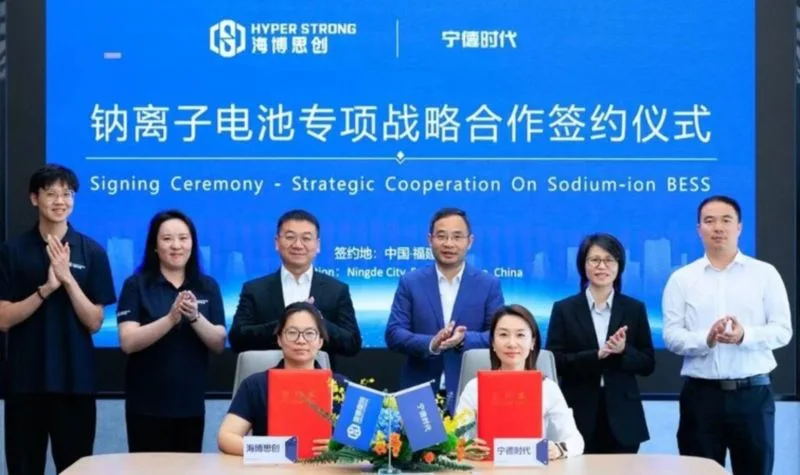
CATL has signed a three-year sodium-ion battery supply deal with HyperStrong, an energy storage agreement that sits outside electric cars for now but could still affect the wider EV ecosystem.
Signed in Ningde, Fujian, on April 27, the agreement covers 60GWh of sodium-ion batteries. CATL and HyperStrong describe it as the world’s largest sodium-ion order so far.
HyperStrong is CATL’s first strategic partner for this chemistry in energy storage. The Beijing-based company integrates and operates large battery projects for utilities, renewable energy developers and commercial users.
This is not an EV battery supply contract. The batteries are meant for stationary use, including grid projects, renewable energy sites and large power stations.
Even so, the deal has an EV angle because cheaper, more durable storage could support charging networks. In general, large battery systems can buffer fast-charger demand, store renewable energy and help reduce grid strain during peak hours.
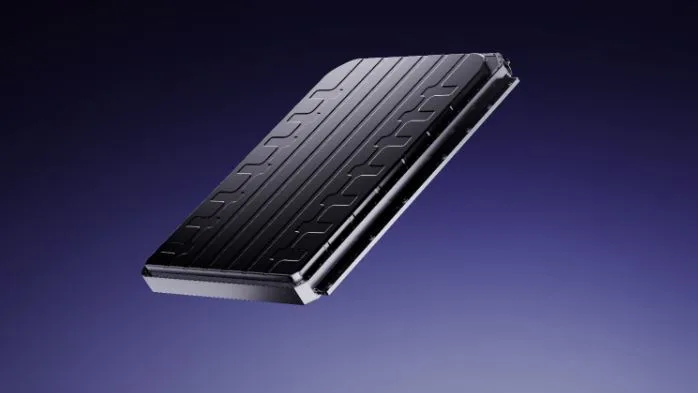
Sodium-ion batteries usually have lower energy density than lithium-ion batteries, limiting their appeal for many passenger EVs. For stationary storage, however, size and weight are less critical. Cost, safety, temperature tolerance and long service life carry more weight.
CATL said it has improved sodium-ion energy density through material and surface changes, while also tackling production issues such as foaming in hard-carbon lines and moisture control.
The company also said its sodium-ion storage batteries use the same size platform as lithium-ion batteries. That should make them easier to fit into existing supply chains and shorten the move from product readiness to energy storage station deployment.
For EV users, the near-term effect will not be inside the car. It may be at the charging sites behind it.