








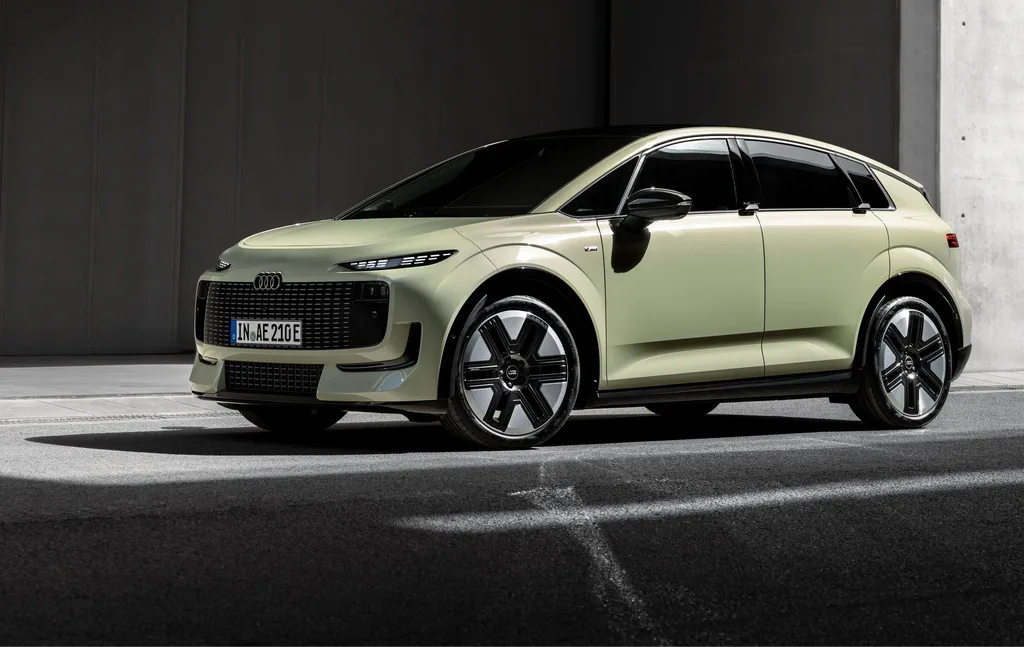
Audi has detailed the engineering changes behind the A2 e-tron’s low energy consumption, including a more efficient inverter, revised electric motor and transmission improvements.
The compact electric car achieves a preliminary WLTP consumption figure of 12.8 kWh/100 km in its 140 kW (190 PS) version with the optional efficiency package, making it Audi’s most efficient model yet.
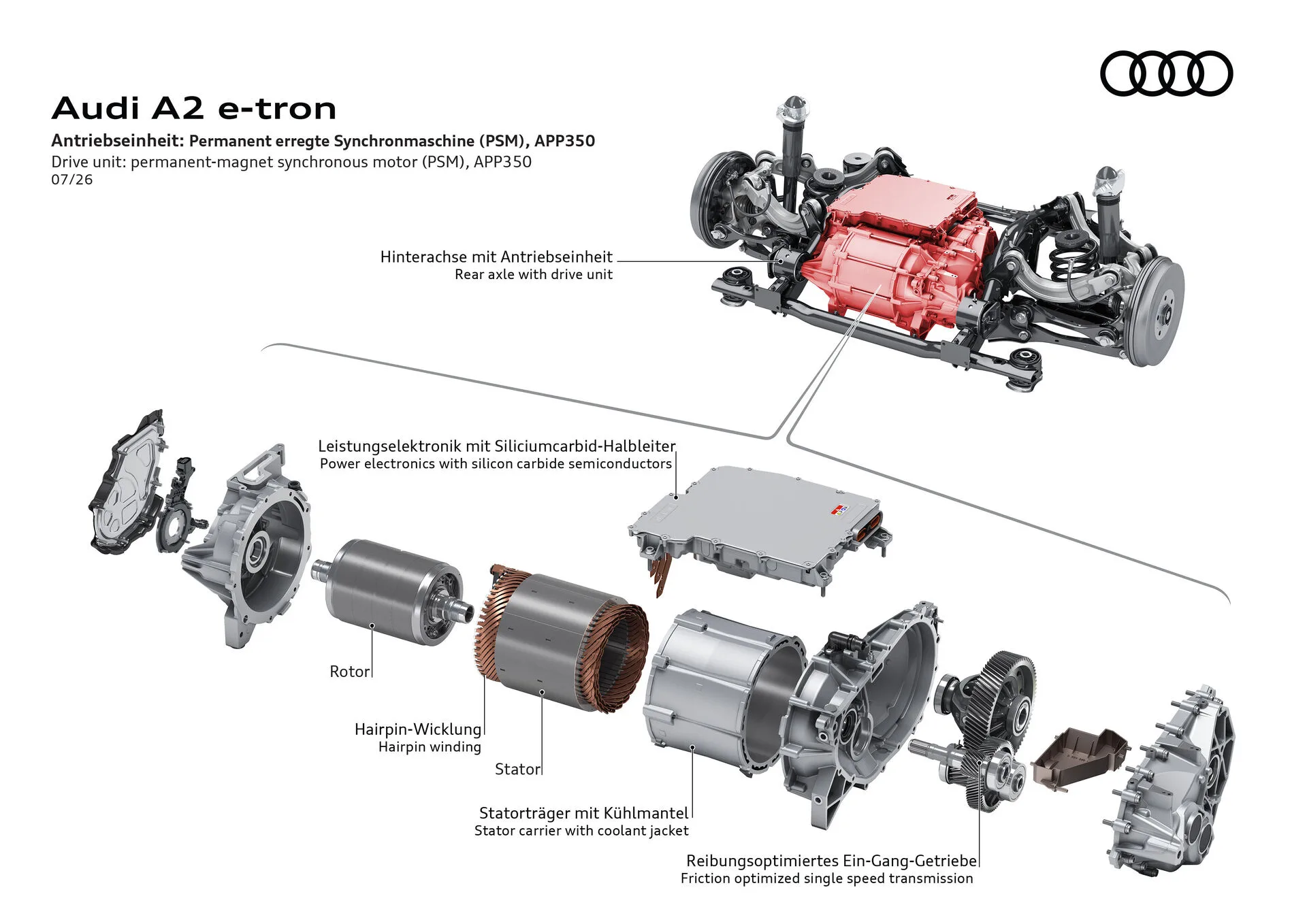
Much of the improvement comes from the upgraded APP350 electric drive, which uses a rear-mounted permanent-magnet synchronous motor operating on a 400-volt electrical architecture.
Its new inverter replaces conventional silicon-based transistors with silicon carbide semiconductors, reducing electrical switching losses and achieving efficiency exceeding 97%.
Software further reduces energy consumption by adjusting the inverter’s switching frequency according to driving conditions. Audi said the benefits are particularly noticeable during typical urban and rural driving at moderate speeds.
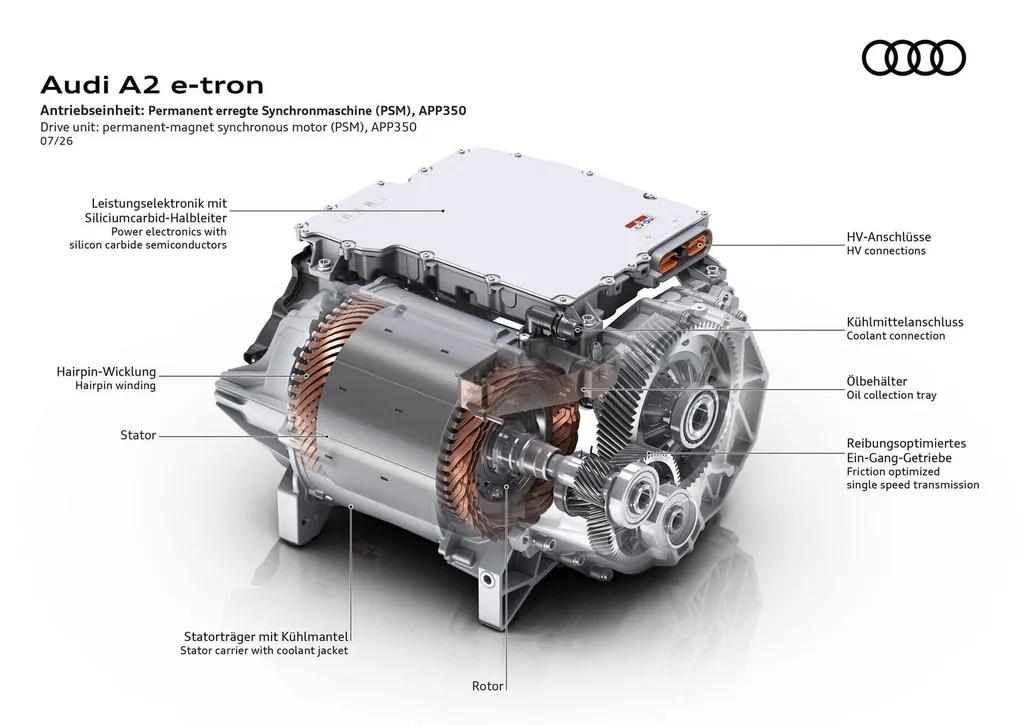
The motor itself has also undergone changes. Its rotor laminations are more than 30% thinner than those of the previous APP310 unit, reducing magnetic losses.
Audi has rearranged the rotor segments to suppress vibration and the characteristic whining noise of electric motors, particularly when pulling away from a standstill.
Revised stator windings also improve efficiency during partial-load operation, when drivers are not demanding maximum power.
The transmission receives equally detailed attention. The 125 kW (170 PS) and 140 kW versions use a 10.21:1 gear ratio, while the 170 kW (231 PS) variant uses 11.53:1.
Finely machined gears reduce friction, while specially developed low-viscosity oil and improved lubrication passages minimise energy losses from oil churning.
Audi said these changes work alongside the A2 e-tron’s aerodynamic design and battery technology to reduce consumption without sacrificing performance or cabin comfort.