






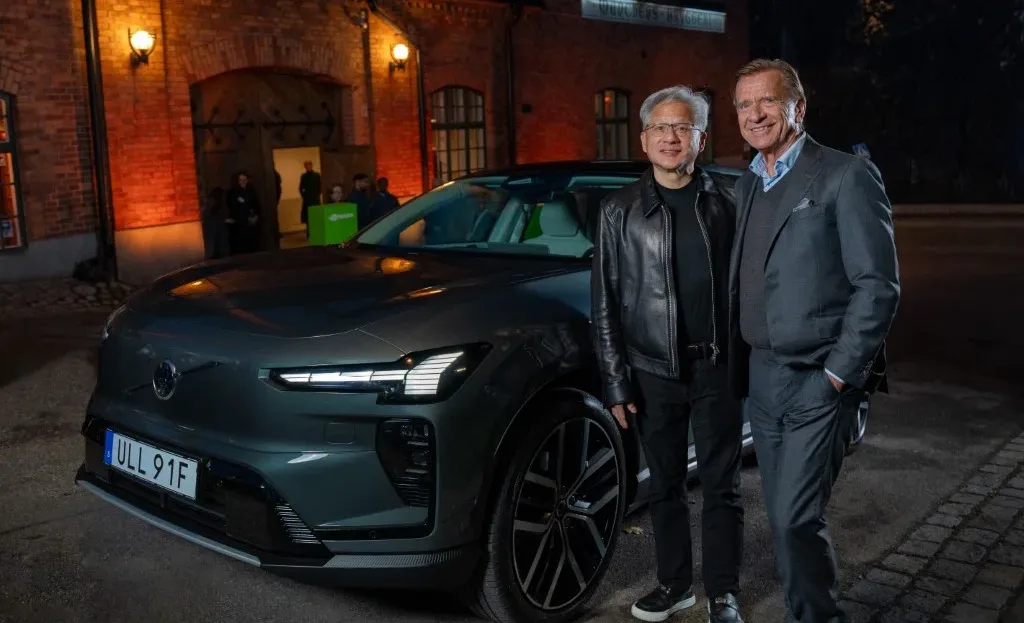
Volvo Cars is expanding its partnership with Nvidia to develop advanced automated driving systems for its next generation of electric vehicles, with plans to eventually introduce eyes-off and mind-off driving capabilities.
The collaboration combines Volvo’s vehicle safety engineering with Nvidia’s artificial intelligence, computing hardware and driving software to help future models navigate highways, congested city streets and car parks.
The technology will debut in an upcoming Volvo model as part of the Swedish manufacturer’s biggest product expansion programme to date. However, Volvo has not identified the vehicle or announced a launch date.
Central to the development is Nvidia Hyperion, an integrated architecture combining sensors and high-performance computing hardware to process information about the vehicle’s surroundings.
It will work alongside Nvidia Halos OS, which provides a safety architecture for automated driving, and Alpamayo Stack, AI software designed to help vehicles interpret complex road situations and make driving decisions.
The aim is to allow future Volvo vehicles to handle journeys from departure to destination with progressively less driver intervention.
Volvo plans to introduce eyes-off driving, which allows motorists to divert their attention from the road under specified conditions, followed eventually by mind-off operation, where occupants would no longer be responsible for monitoring the driving task.
However, the manufacturer has not specified the SAE automation levels targeted, operating restrictions or regulatory approvals required for either capability.
The announcement therefore represents a development programme rather than confirmation of an imminent fully autonomous production vehicle.
Volvo Cars president and chief executive Håkan Samuelsson said the partnership would combine the company’s long experience in vehicle safety with Nvidia’s AI expertise to develop safer and more appealing cars.
The two companies began working together in 2017, initially concentrating on computing technology for advanced driver assistance and automated driving.
Their expanded collaboration comes as Volvo increasingly relies on software and centralised computing systems to manage vehicle functions, safety features and future upgrades.