








Hyundai Motor Group has reaffirmed its commitment to developing multiple electrified powertrains, including battery-electric vehicles, hybrids, range-extender EVs and hydrogen fuel-cell vehicles.
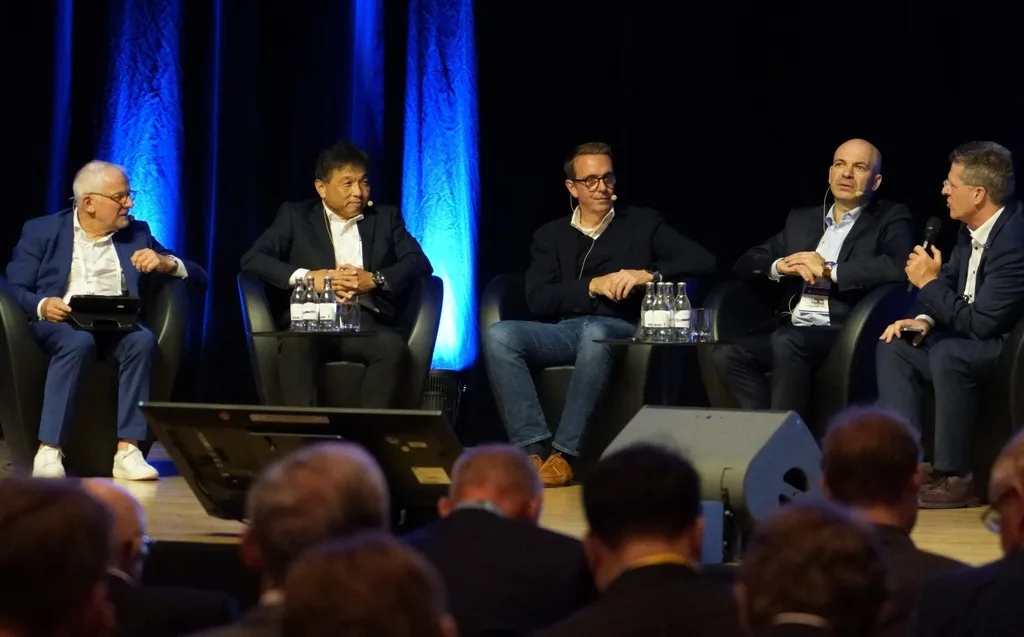
The South Korean automotive group outlined its strategy at the Aachen Automotive Colloquium 2026 in Germany, held from Oct 5 to 7.
Hyundai Motor Group president and head of R&D Manfred Harrer said the future of mobility would depend on combining different technologies to meet varying customer requirements, rather than relying on a single propulsion system.
The approach covers conventional hybrids (HEVs), extended-range electric vehicles (EREVs), battery-electric vehicles (BEVs) and fuel-cell electric vehicles (FCEVs).
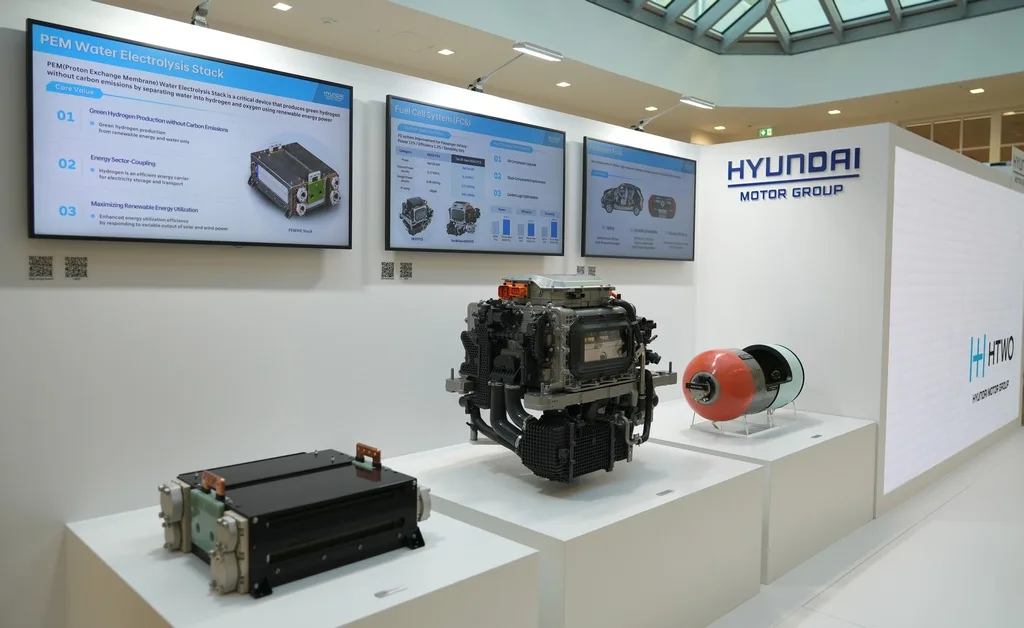
Hyundai also displayed hardware supporting these technologies, including battery cells and packs, a two-stage electric motor system, power modules and its TMED-II hybrid transmission.
Hydrogen exhibits included a polymer electrolyte membrane water electrolysis stack, storage tank and the latest NEXO fuel-cell system.
Visitors could experience the NEXO and Genesis GV60 Magma on an 11–12km test-drive route near the conference venue.
Beyond powertrains, Hyundai highlighted its use of artificial intelligence, digital twins and virtual vehicle testing to improve development efficiency.
Its Data Flywheel system uses vehicle operating data and customer feedback to support continuous improvements in engineering and software.
Joining the bandwagon
Hyundai is far from alone in pursuing multiple propulsion technologies simultaneously.
Toyota has long advocated a multi-pathway strategy, developing conventional hybrids, plug-in hybrids, BEVs and hydrogen fuel-cell vehicles to suit different markets and infrastructure conditions.
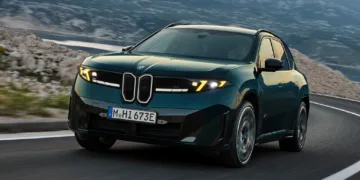
BMW follows a similar technology-open approach. Its latest X5 programme encompasses petrol, diesel, plug-in hybrid and battery-electric versions, with hydrogen fuel-cell propulsion scheduled to join the range in 2028.
Porsche is also retaining combustion engines and plug-in hybrids alongside its expanding electric line-up, having adjusted its electrification plans in response to slower-than-expected EV adoption.
Bentley has similarly extended the availability of combustion-engined and plug-in hybrid models while introducing its first production EV. Its revised Beyond100+ strategy allows hybrid models to remain available until at least 2035.
The common factor is uncertainty over how quickly consumers and different markets will move towards fully electric vehicles.
Battery costs, charging infrastructure, regulation and customer preferences vary considerably between regions.
Developing several powertrain types in parallel gives manufacturers greater flexibility to respond to those differences, although it also increases engineering costs and complexity.
Hyundai’s Aachen presentation reinforced that broader industry trend, with battery-electric propulsion remaining central to its plans but no longer treated as the only route towards lower-emission mobility.