









Toyota Gazoo Racing will enter a hydrogen fuel-cell Hilux prototype in the 2027 Dakar Rally, using the desert event to test the technology in high temperatures, over rough terrain and through long stages.
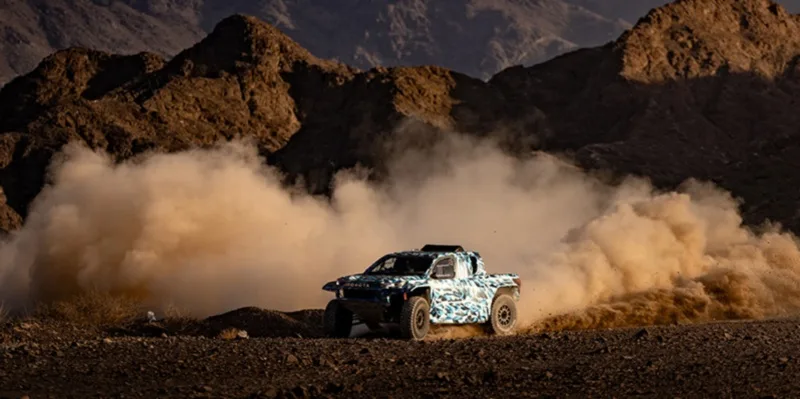
Called the DKR GR FC Hilux, the experimental vehicle is based on the DKR GR Hilux that competes in Dakar’s top category. Its petrol engine will be replaced by a Toyota fuel-cell system.
The system uses hydrogen to generate electricity for the vehicle’s electric drivetrain. Toyota said the prototype will produce no carbon dioxide while driving, with water as its only tailpipe emission.
The vehicle will compete in the Dakar Future Mission 1000 category rather than the rally’s main car class.
Mission 1000 is reserved for experimental vehicles demonstrating new technologies.
Entrants will cover a total of about 1,000km of competitive running, considerably less than the 5,320km of special stages planned for Dakar’s main categories.
Toyota will focus on reducing the size of the fuel-cell system, improving cooling, increasing durability and refining energy management.
It has not disclosed the drivetrain output, hydrogen storage capacity, range or refuelling time.
Vehicle assembly, powertrain development and software tuning have started in Belgium, with further testing planned before the rally.
The 2027 Dakar Rally will run from Jan 1 to 15 in Saudi Arabia, starting and finishing at King Abdullah Economic City.
Unlike Toyota’s earlier ORC ROOKIE Corolla H2 Concept and GR Yaris H2 projects, which burned hydrogen in combustion engines, the DKR GR FC Hilux will use a fuel cell to produce electricity.
Toyota is also a member of the HySE research association, which entered hydrogen-engine buggies in Dakar’s experimental category. The HySE-X1 completed Mission 1000 in 2024, followed by the upgraded HySE-X2 in 2025.
Toyota said information gathered from the Hilux could support fuel-cell development for passenger and commercial vehicles. It did not say whether the project would lead to a production fuel-cell Hilux.
The planned 1,000km programme will test the drivetrain’s cooling, durability and energy management in desert conditions.