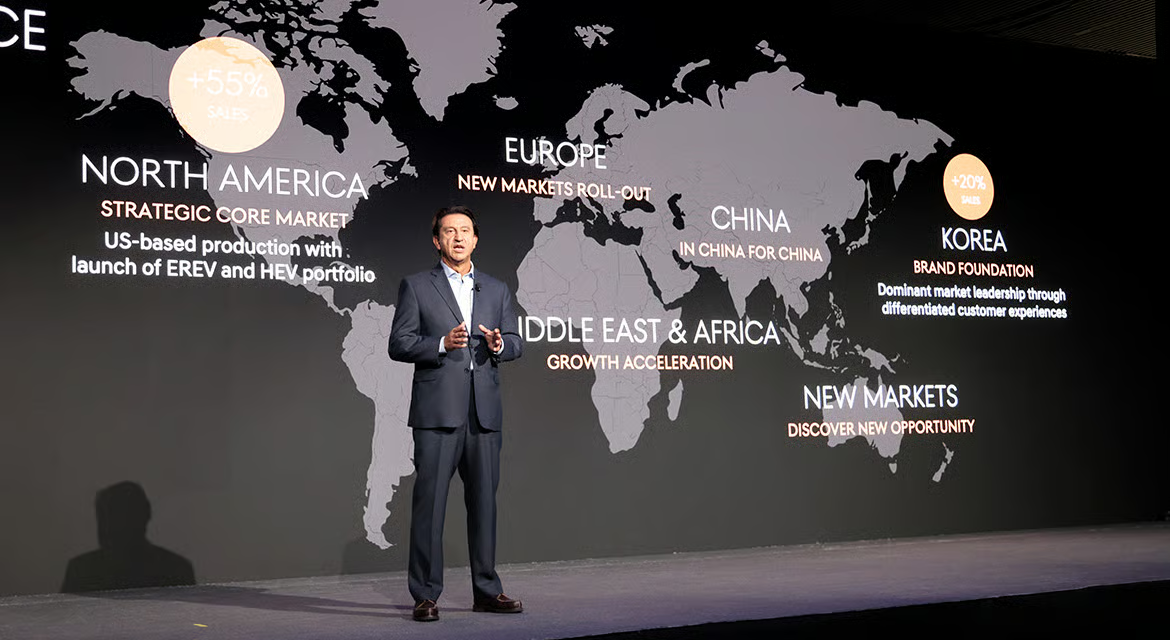





Hyundai Motor set out an aggressive electric-vehicle roadmap at its CEO Investor Day in New York on Sept 18, prioritising region-specific EVs, extended-range technology and a software-defined future.
The carmaker targets 5.55 million unit global sales by 2030, with electrified models accounting for 60% (3.3 million).
New EVs include the Europe-focused Ioniq 3 with next-gen infotainment, India’s first Hyundai EV engineered for local drivers and supply chains, and China-built Elexio models (an SUV and C-segment sedan).
A 2027 Extended Range EV (EREV) programme promises EV-like performance and over 960km range via high-performance batteries and motors integrated with a compact engine, delivering long range with less than half the usual battery capacity.
The performance arm is expected to grow to more than seven N-branded models by 2030, led by the Ioniq 6 N.
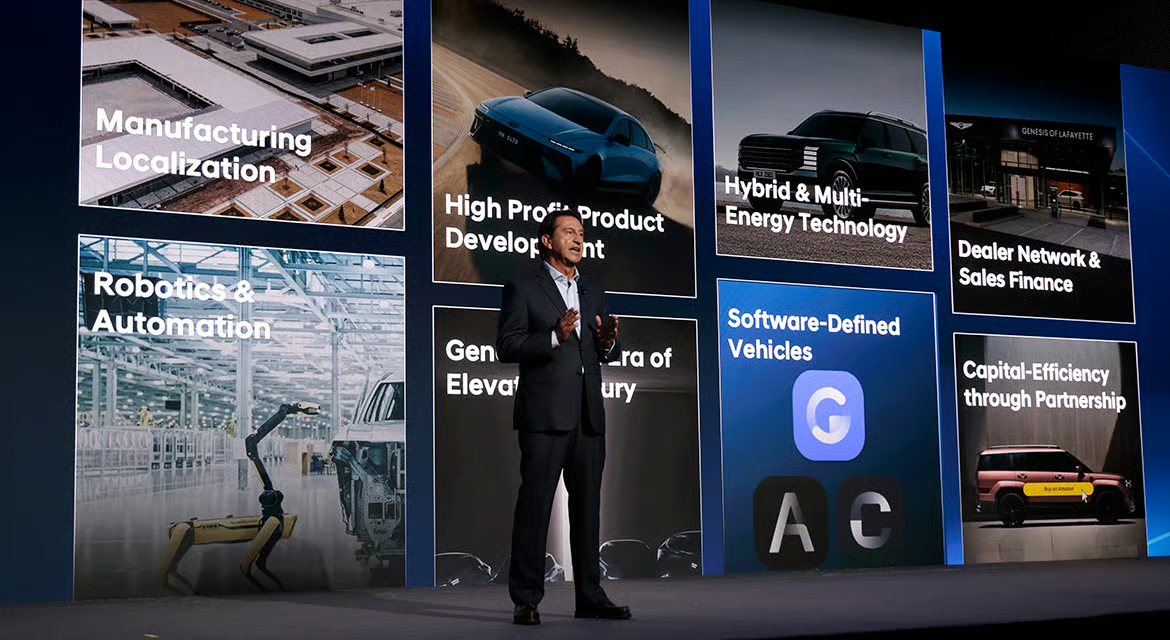
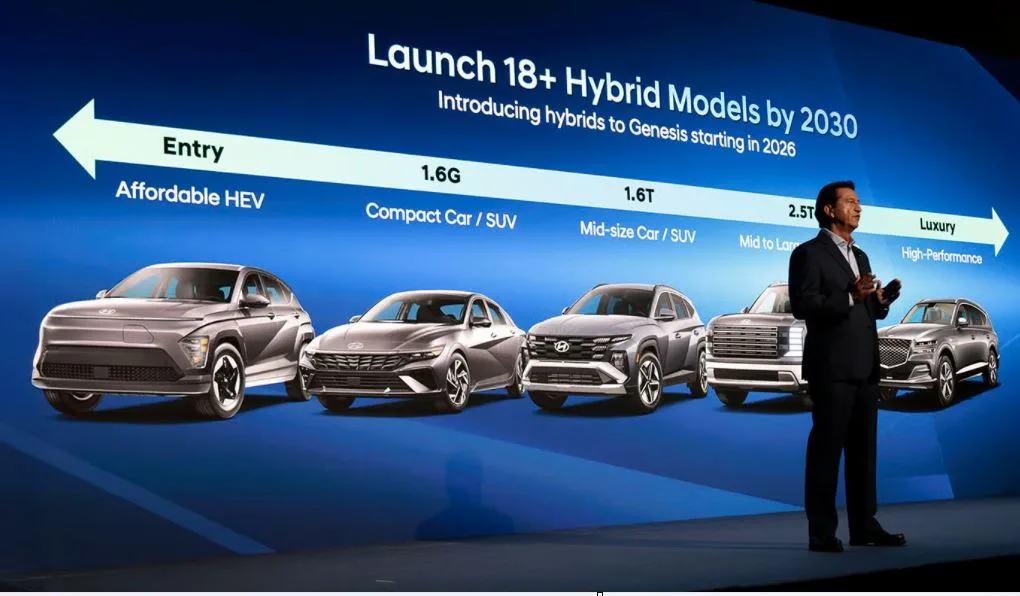
Hybrid plans follow closely behind the EV push. Hyundai will field more than 18 hybrid models by 2030, with Genesis introducing hybrids from 2026.
The next Palisade Hybrid will debut TMED-II hardware for higher performance and efficiency. Hyundai also plans its first mid-size pickup for North America before 2030, building on Santa Cruz learnings, and will grow its commercial portfolio with fuel-cell trucks, trailers and a large electrified van.
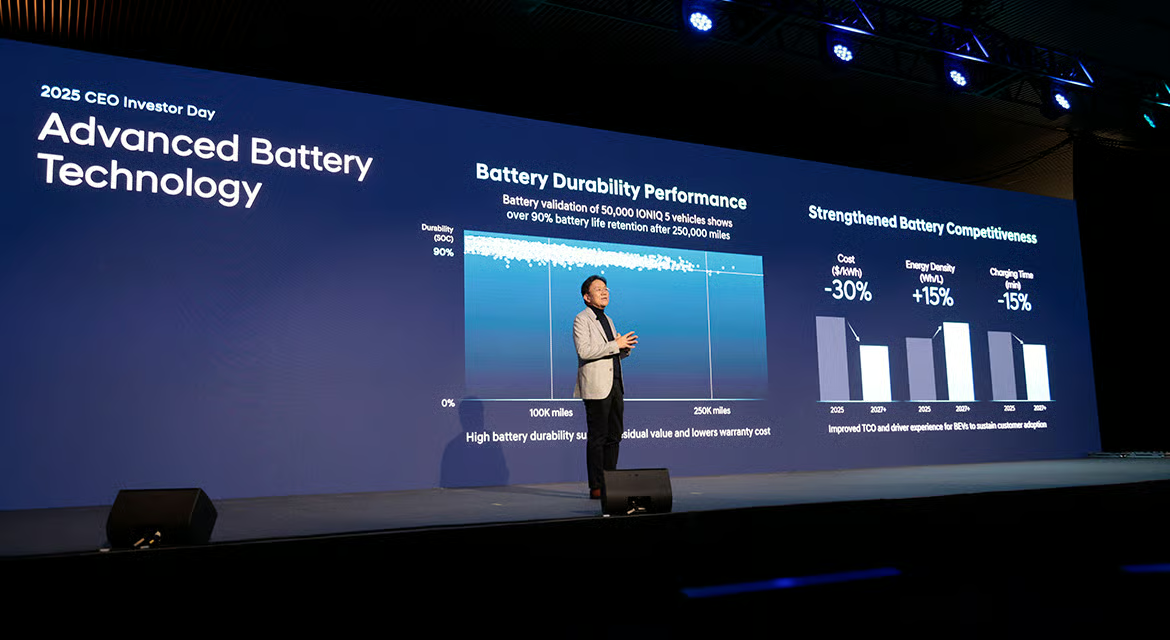
Battery technology remains central: by 2027 Hyundai targets 30% lower cell costs, 15% higher energy density and 15% faster charging.
Field data from over 50,000 Ioniq 5s, including units past 400,000km, show most packs retain above 90% performance.
Safety upgrades include predictive diagnostics via an advanced Battery Management System, moving to cloud-based analytics from 2026 with multiple protective layers to mitigate thermal incidents.
The company is also advancing fuel-cell development for commercial vehicles.
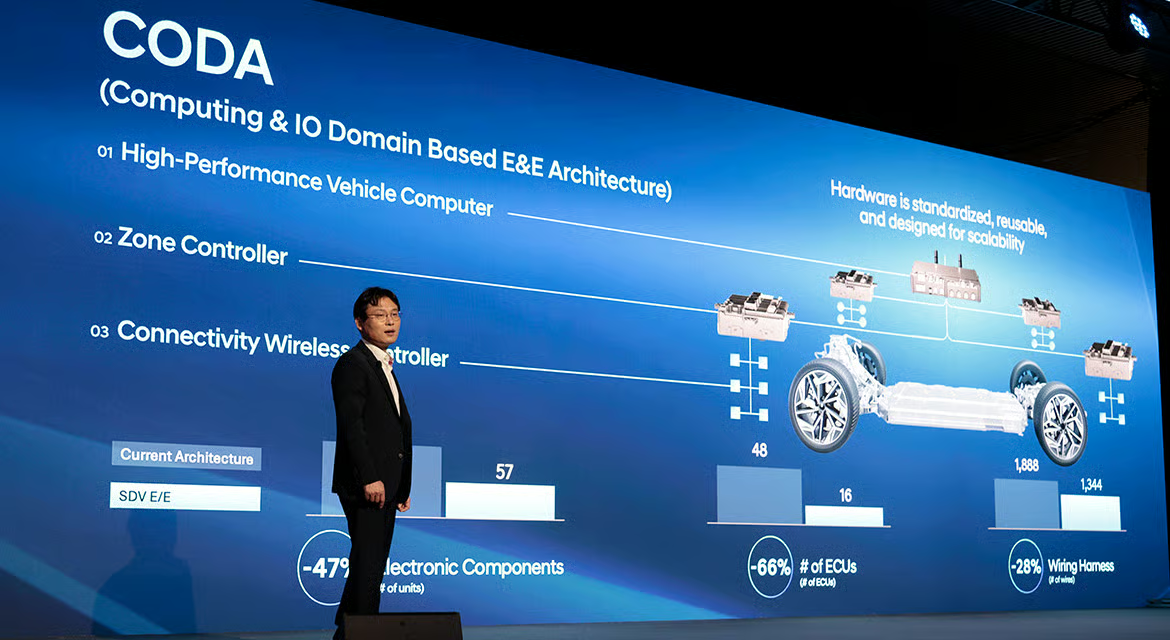
Hyundai’s software-defined strategy is anchored by a Computing & I/O domain architecture (CODA), a High-Performance Vehicle Computer and zone controllers to decouple hardware from software.
Its in-vehicle operating system, Pleos, enables rapid updates and feature upgrades; the Pleos Connect infotainment suite would roll out from Q2 next year with multi-window UX, profile personalisation and an in-car app marketplace.
AI tools span map-free autonomous capability, natural-language voice control and fleet optimisation.
Manufacturing will scale through Software-Defined Factory concepts seeded from the Singapore innovation hub.
In the US, Hyundai Motor Group Metaplant America aims for 500,000-unit capacity by 2028 across hybrids and EVs, part of a broader plan to add 1.2 million units globally by 2030, including expansions in India and at the new Ulsan EV plant.
Localisation in the US is set to exceed 80% of sales by 2030, backed by a 15.3 trillion won investment in capacity and robotics within a wider 77.3 trillion won group plan (2026–2030).
Alliances are designed to compress timelines: Waymo-equipped Ioniq 5 prototypes are on US roads, while a GM tie-up targets five co-developed vehicles from as early as 2028, including vans, compact cars and trucks for the Americas.
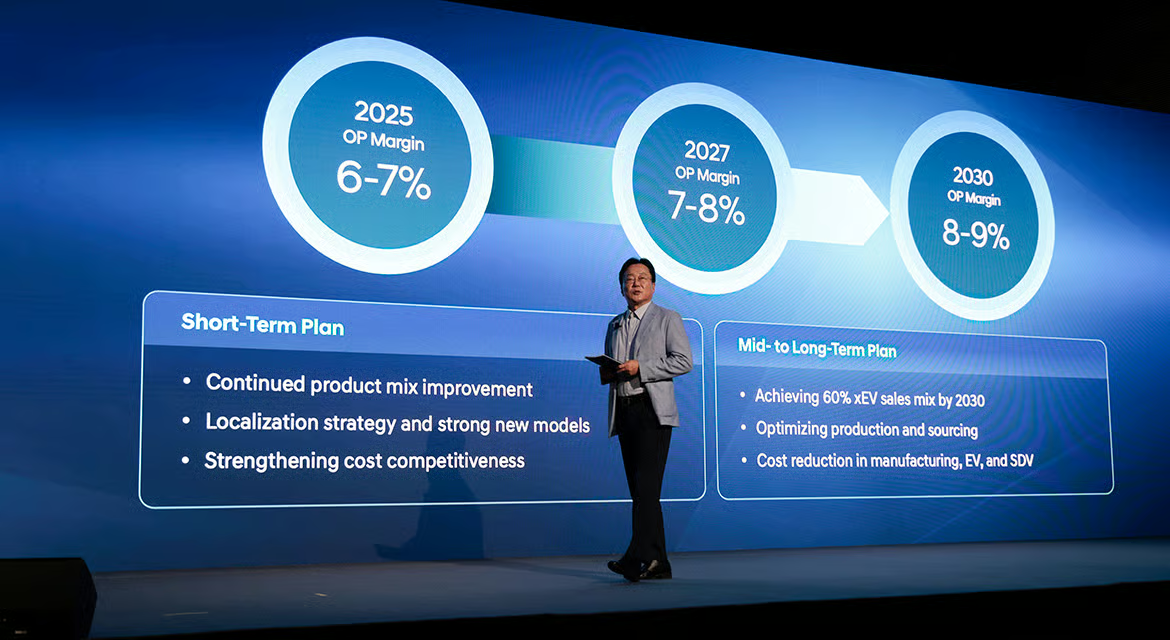
Financially, Hyundai raised 2025 revenue guidance by 5–6%, set a 6–7% operating margin for the year, and reiterated a shareholder-return policy above 35% TSR for 2025–2027, with ambitions to reach an 8–9% margin by 2030 through a richer mix, localisation and cost discipline.