








Malaysia’s vehicle registration dashboard shows a solid base of electrified cars on the road, but the monthly momentum is now tilting towards battery-electric.
Based on Road Transport Department (JPJ) figures as at Aug 31, Malaysia’s registration data points to a market in transition rather than a tipping point.
According to JPJ, the country has recorded 224,462 electrified cars since 2000, split at around 72% hybrids (162,268) and 28% EVs (62,194).
That pool is still small against the 15.07 million cars registered across all fuels since 2000, meaning electrified models account for only 1.49% of cumulative registered cars. In other words, hybrids built the base, but they have yet to reshape the local auto scene.
August’s flow tells a different story.
Out of 78,978 cars registered in the month, EVs were 3,461 (4.38%) and hybrids 2,902 (3.68%), giving electrified cars a combined 8.06% share.
Within that electrified slice, EVs led at 54% versus 46% for hybrids, a reversal of the long-term mix.
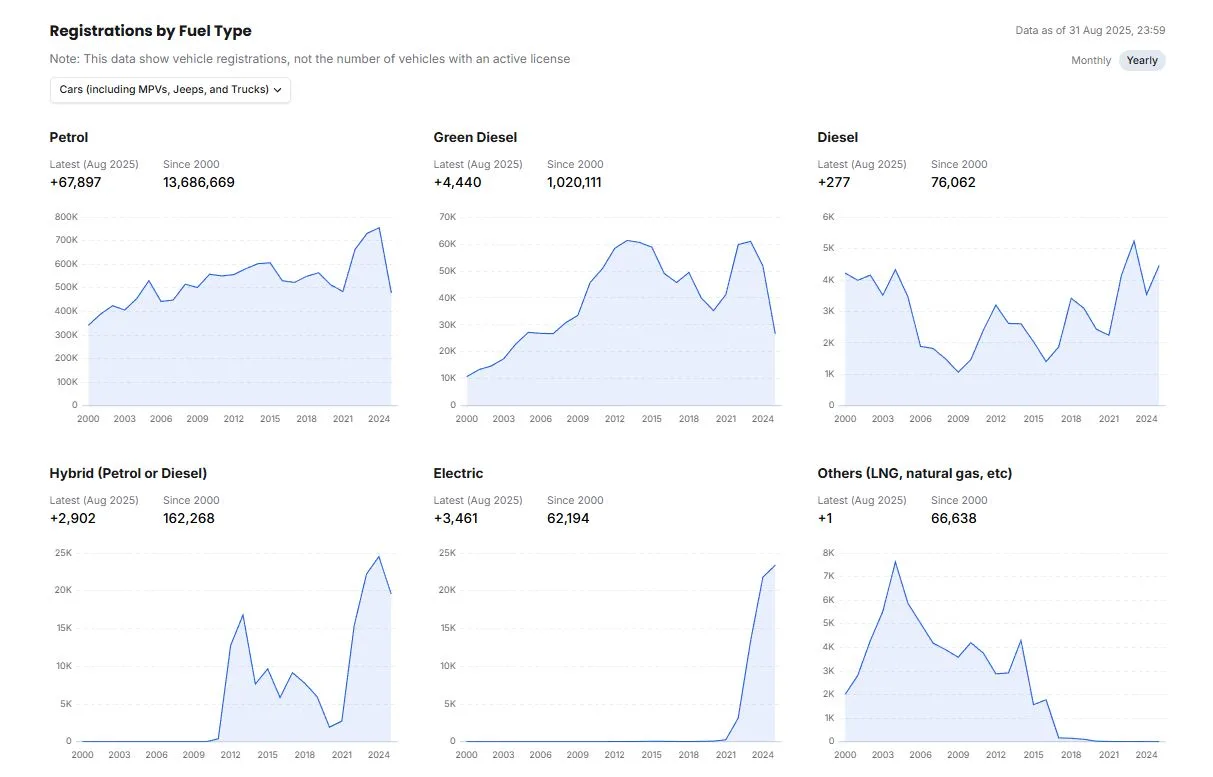
The structural picture, however, remains anchored by petrol at 67,897 (86%), with green diesel and diesel making up most of the balance.
The signal is clear: monthly demand is moving EV-first, but the installed base still reflects a decade of hybrid-heavy adoption.
Two interpretations follow.
First, hybrids have done their job as the on-ramp.
They normalised electric drive in daily use, helped reduce anxiety about smoothness and stop-start traffic, and broadened the appeal of electrification beyond early adopters.
Second, EV momentum is now visible in the flow data. Sustained months where EVs outnumber hybrids within the electrified set indicate improving product breadth, sharper value equations, and a charging network that, while not complete, is no longer a universal deal-breaker.
Scale is the brake.

With petrol still at roughly 86% of monthly car registrations and the cumulative register dominated by internal combustion, the needle will move slowly unless the electrified share rises well into the teens and stays there.
Even at eight percent combined, annual additions will take time to dent a multi-million fleet.
The pace at which EVs become common will depend on three levers: locally assembled options at accessible price points, total cost of ownership advantages that survive real-world electricity tariffs and insurance premiums, and dependable charging where Malaysians actually live and work.
One housekeeping note for readers: these numbers refer to cars only (the JPJ “Cars” filter that includes MPVs, “jeeps” and trucks) and represent cumulative registered cars since 2000, not a verified count of active, road-going vehicles
Netting it out, Malaysia’s cumulative register remains hybrid-led, but the monthly flow is now EV-tilted.
Hybrids proved Malaysians will buy electrified cars. EVs are now picking up the baton.
The direction of travel is set; achieving scale is the next hurdle.