


Ferrari said it consulted medical experts and NASA while developing its first EV, as it tried to understand how much acceleration people can comfortably tolerate.
In an interview with Autocar India, Ferrari CEO Benedetto Vigna said the company wanted to understand what level of acceleration starts to unsettle people, arguing that outright thrust alone does not guarantee a rewarding electric performance car.
Vigna said many EVs can deliver huge straight-line acceleration, but argued that too much of it, especially in a very linear form, can become disturbing rather than enjoyable.
He said Ferrari studied that issue with outside medical centres and NASA as part of a broader effort to define what makes an electric performance car feel right from behind the wheel.
That, he suggested, is one reason Ferrari believes it can take a different route from rivals whose high-end EV efforts have struggled to gain traction.
Vigna said Ferrari’s first EV Luce was not being developed as a simple engine-out, motor-in exercise, but as a broader clean-sheet rethink spanning the cabin, exterior, technology and design language.
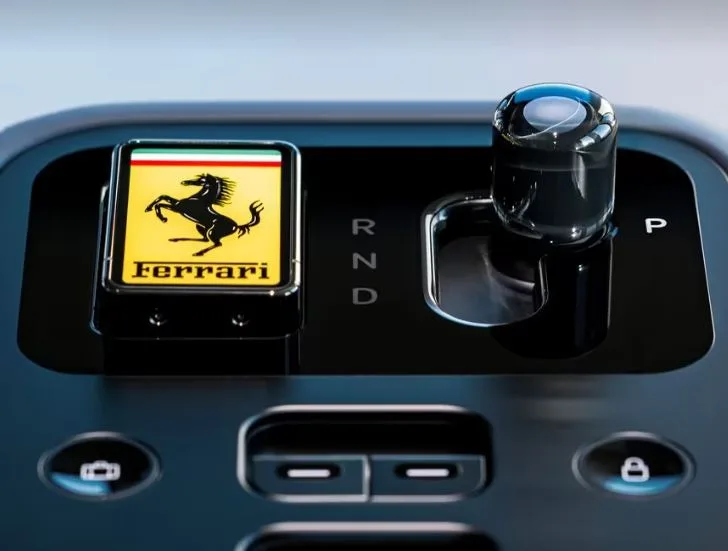
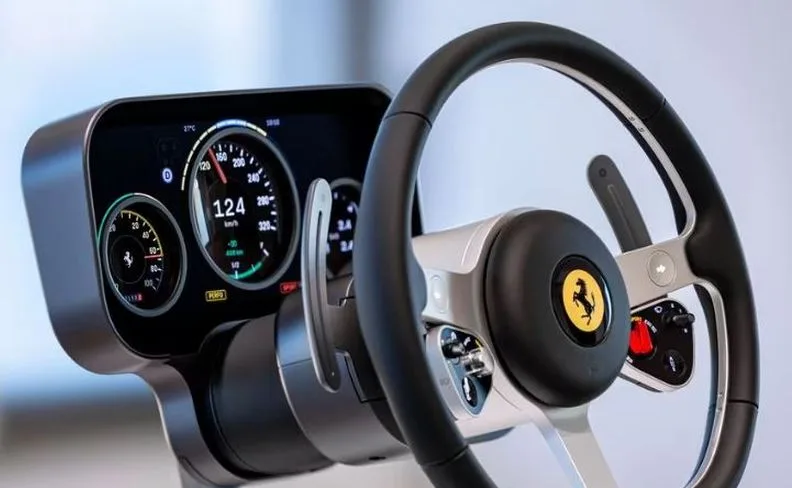
He added that Ferrari had filed more than 100 patents linked to the project, covering areas including materials, vehicle dynamics and the way the driver interacts with the dashboard.
Vigna said Ferrari had identified five main generators of driving pleasure for its EV programme.
The first was longitudinal acceleration, though he stressed that raw thrust alone was not enough. The second was transversal acceleration, where vehicle weight becomes critical in corners.
The third was braking feel, an area where poorly judged regenerative braking can make the driver feel less in control. The fourth was gearing. Vigna said Ferrari’s EV would feature paddle shifters, not to adjust regen levels but to modulate torque delivery in a more engaging way.
The fifth was sound, though he said Ferrari wanted to draw on authentic electric-motor characteristics rather than create something artificial.
On range, Vigna said the car would offer more than 500km, while acknowledging that harder driving would cut that figure.
He also made clear the model was not intended as a track car, saying current battery technology still posed limits for sustained high-performance circuit use.
He added that the car would use an 800-volt architecture and support fast charging.