
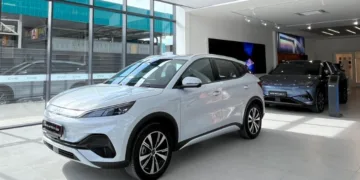




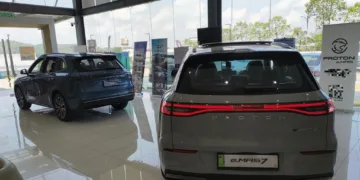




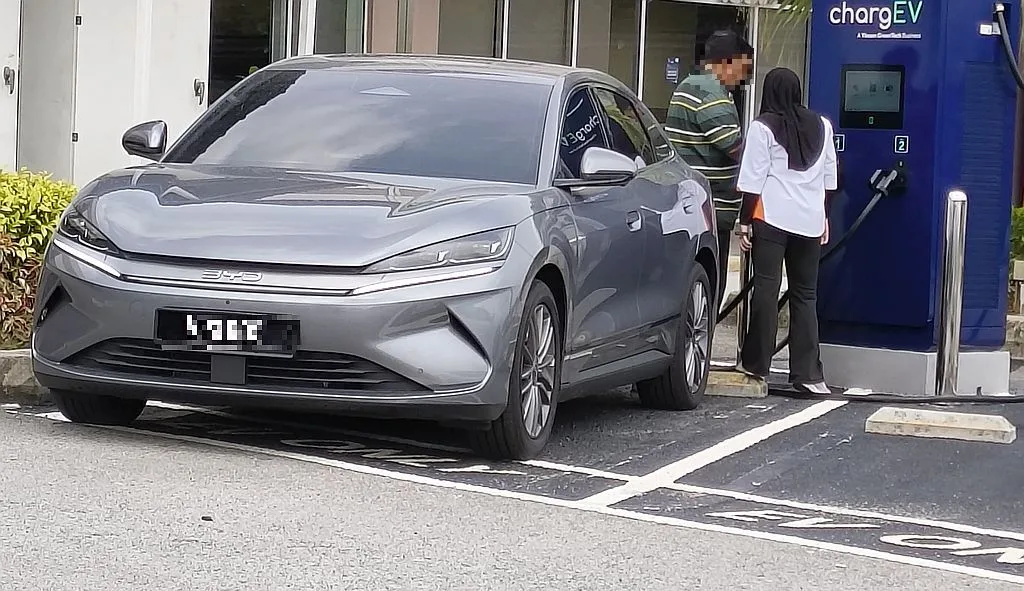
The Ministry of Investment, Trade and Industry (Miti) today denied it was singling out BYD, insisting the conditions tied to the Chinese carmaker’s Tanjung Malim assembly project are the same it applies to any large-scale auto investment — regardless of brand or nationality.
Miti’s response came a day after The Edge Malaysia reported that BYD was weighing whether to pull back from local assembly after failing to reach agreement on a number of conditions.
The reported friction centred on a hefty export quota and a minimum price for cars sold locally. Miti didn’t deny the export-led framing but said some of what had been spreading online simply wasn’t accurate.
The dispute hinges on BYD’s interim manufacturing licence, which Miti said it approved on Sept 29, 2025, covering passenger EVs and plug-in hybrids to be assembled in Tanjung Malim, Perak.
Miti said it signed off on the licence with the understanding that the plant would be predominantly export-facing, in line with the National Automotive Policy and the New Industrial Master Plan 2030.
The pricing correction
On pricing — where Miti was most pointed in its corrections — the figure doing the rounds online was RM200,000, alleged to be the minimum price for any BYD unit sold locally. Miti said that number is wrong. The actual floor, it clarified, is RM100,000 on-the-road for CKD vehicles.
The 20% figure isn’t entirely wrong — but the context matters. Miti said the cap is 10,000 units a year for domestic sales, which works out to roughly a fifth of BYD’s expected output from the plant.
Basically, Miti wants the plant to be a real export hub, not a back-door route to flooding the Malaysian market.
The ministry said the structure is designed to pull manufacturers into regional supply chains and push them toward genuine industrial investment, rather than screwdriver assembly that exists mainly to dodge import duties.
What counts as local
Localisation requirements add another layer. Miti said genuine high-value assembly means body shop, paint and trim work must happen inside Malaysia — importing fully painted shells and counting that as local content won’t fly. BYD can still buy other parts from wherever it likes.
The intent is straightforward: Miti wants manufacturing that actually employs Malaysians and develops local suppliers, not a nameplate operation.
Protecting what’s already there
Miti was open about the protectionist rationale underpinning the rules.
The statement pointed out that Proton-Geely and Perodua-Daihatsu together hold over 63% of the local market. Behind those brands sits an ecosystem of more than 700,000 jobs and a contribution of around 4% to annual GDP.
Perodua’s mainstream models run above 75% local content; Proton-Geely hit 76% in 2025. Those numbers explain why Putrajaya is wary of letting in high-volume players who may spend years sourcing parts from abroad.
Not anti-China, Miti insists
Miti is conscious of how this looks internationally. Fourteen of the 34 foreign car brands in Malaysia are Chinese, the ministry noted, and it held up Chery’s manufacturing approval as evidence that the door isn’t closed — as long as projects come with genuine export ambitions, local content and technology transfer.
On pick-up trucks and EV pricing
Miti used the statement to address two other claims that had been circulating alongside the BYD story.
On pick-up trucks: the BYD Shark and GWM Cannon are not banned — commercial vehicle imports remain possible under existing “Market Research Pre-Assembly” approved permit quotas.
On EV pricing: the temporary relaxation of the CBU floor price from RM250,000 down to RM100,000, which was introduced in 2022 to seed the EV market, expired on Dec 31, 2025.
Miti said the policy is under review, and that the long-term answer is local manufacturing, not permanent import concessions.
Where this leaves BYD
For BYD, the path forward is narrow but not closed. Malaysia is open — just not on easy terms.
The government wants a plant that exports, employs and transfers technology, not one that exists to slip cars into the local market at scale.
Whether BYD decides that trade-off is worth it is the question Miti is now waiting for an answer to.