

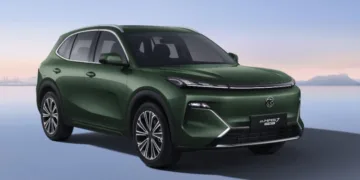



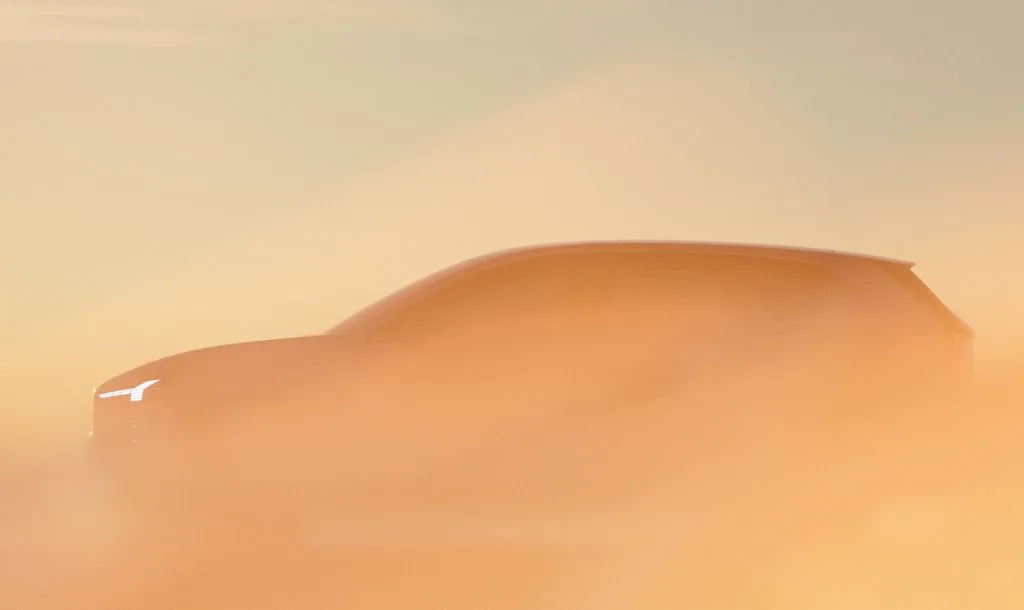
Volvo will unveil the EX60 on Jan 21, 2026 in Stockholm, its first model on a new “latest technology base” and billed to deliver the longest electric range of any Volvo to date.
Series production is slated for the first half of 2026 at the Torslanda plant in Gothenburg.
Industry reports say the EX60 debuts Volvo’s SPA3 architecture, a fully electric, software-defined platform that supports over-the-air updates and cost-saving manufacturing such as megacasting and a structural battery pack.
Volvo executives describe SPA3 as “100% Volvo Cars”, positioned as a successor to the tech underpinning the EX90 and ES90.
Range is the headline figure. Volvo indicates the EX60 will exceed the ES90’s quoted 700km WLTP, with media speculations suggesting a battery of around 106kWh and single- and dual-motor variants.
On paper that would outdistance the Tesla Model Y Long Range, rated at 586km WLTP. Final specifications remain under wraps.
Design teasers show familiar cues: “Thor’s Hammer” headlamps with pixel LEDs and tall, pillar-tracing rear lamps.
The silhouette broadly mirrors today’s XC60, reinforcing its role as Volvo’s electric entrant in the premium mid-size SUV class, positioned between the EX30 and EX90. Volvo is promising a “groundbreaking user experience”, reflecting the software-first direction of SPA3.
Safety tech will advance as well. The EX60 is set to be the first Volvo to adopt a new multi-adaptive safety belt that adjusts restraint force based on a passenger’s size and shape, extending the brand’s long-standing focus on occupant protection.
Taken together, the launch timing, platform shift and projected range frame the EX60 as a cornerstone model for Volvo’s next phase of electrification.
It replaces combustion-era constraints with a clean-sheet EV architecture, targets class-leading efficiency, and readies a global production plan from Sweden for deliveries beginning later in 2026.
On a related note, Volvo has started European production of the ES90.
The ES90 is Volvo’s first model with an 800-volt electrical system, promising longer range and quicker charging than previous Volvos. It runs on next-gen core computing with the in-house Superset stack for continual over-the-air upgrades.
Orders are open in several European markets, with first deliveries due later this year; availability in key Asia-Pacific markets will follow. Built in Chengdu using climate-neutral energy, Volvo says the ES90 has one of its lowest lifecycle carbon footprints to date.