











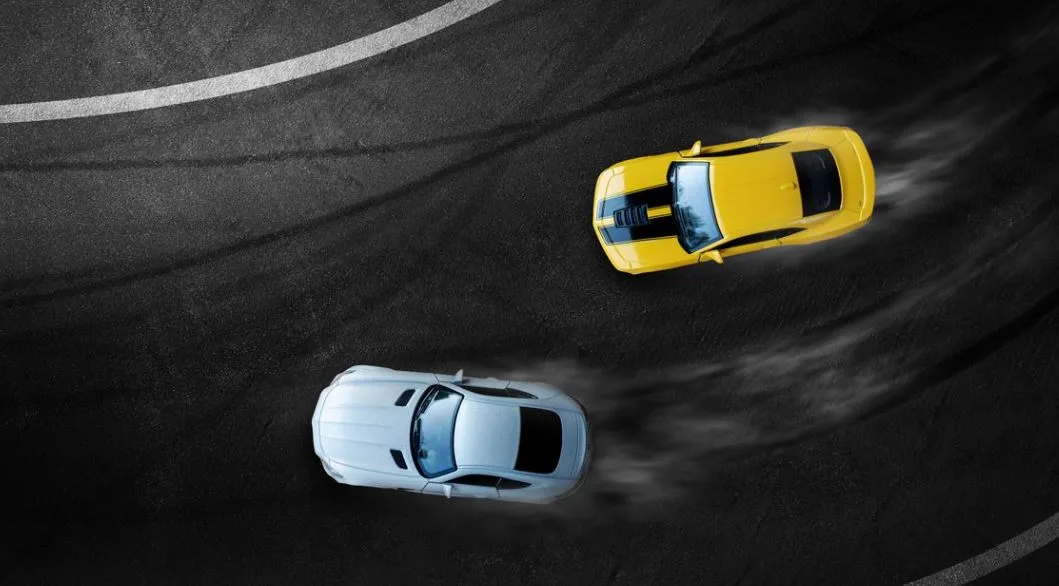
Malaysia’s latest Road Transport Act changes move enforcement closer to everyday motorists, with tougher action planned against illegal racing, repeat offenders, camera-detected offences, vehicle fraud, unpaid summonses at the border and cleaner registration rules for electric vehicles that do not have conventional engine numbers.
The Road Transport (Amendment) Bill 2026, listed by Parliament as D.R.7/2026, was tabled for first reading on June 22 and passed its second and third readings on June 24. It amends the Road Transport Act 1987 and gives the police and Road Transport Department wider powers to act before dangerous behaviour turns into a crash.
Illegal racing
The most direct change is a new Section 42A covering illegal racing and speed-testing on public roads. Bernama reported Transport Minister Anthony Loke as saying the provision allows action to be taken earlier, without waiting for an accident, injury or death.
Racing involving two or more motor vehicles, including cars, will become a specific offence. So will speed-testing on public roads. For a first conviction, offenders face a fine of RM2,000 to RM10,000, jail of up to two years, or both. For a second conviction, the fine rises to RM5,000 to RM20,000, with jail of not less than five years, or both.

Higher fines
For ordinary motorists, several offences will carry a higher minimum fine of RM500 instead of RM300. The listed offences include failing to display a registration number, not possessing a licence, driving without a valid driving licence, speeding, breaching vehicle construction, equipment and use requirements, ignoring traffic directions or signals, and illegal racing.
Drivers who continue driving while suspended or disqualified face tougher punishment too. The penalty rises to jail of up to three years or a fine of RM3,000 to RM10,000, compared with the previous maximum of one year’s jail or a fine of up to RM5,000.
The maximum compound for compoundable offences will also rise from RM300 to RM500 from Jan 1, 2029. Loke said the higher ceiling is not meant to raise government revenue and does not mean every offence will automatically attract a RM500 compound.
Owner liability
Vehicle owners will also have less room to dodge camera-detected offences. If someone else was driving, the owner must make reasonable efforts to identify that person.
Unpaid summonses may also affect cross-border movement. Malaysian and foreign-registered vehicles may be stopped from entering or leaving the country if offences remain unresolved.
EV registration
The Bill also updates the law for electric vehicles (EVs). Unlike petrol or diesel cars, EVs do not have conventional engine numbers, so the amendments clarify how they are identified for registration.
Under the updated Section 10 framework, an EV must have a clear electric-motor serial number and chassis number. Those identifiers must not be altered, tampered with or damaged. For owners, this is mainly an administrative change, but it matters for registration, enforcement, used-EV checks and vehicle identity fraud.
Vehicle fraud
The Bill also targets false statements, forged documents and vehicle identity manipulation, with penalties of up to RM200,000 or 10 years’ jail. A new Section 110B goes after “tonto” activity, including trailing enforcement teams or leaking operation details.
Other changes cover electronic notices, digital documents, online reporting for minor crashes, micromobility vehicles, modified vehicles, special-purpose vehicles and foreign vehicle entry permits.