



Mercedes-Benz is developing a programmable power converter that could change how electric vehicle batteries deliver high-voltage power, potentially improving efficiency while reducing the size and complexity of electrical components.
The technology is one of three research projects recently detailed by the German carmaker, alongside LED displays embedded in vehicle windows and a holographic windscreen.
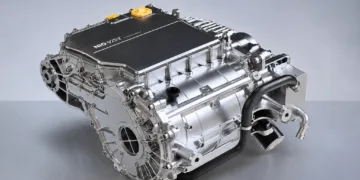
Unlike conventional battery architectures, where output voltage depends heavily on the number of cells connected in series, the new converter uses software-controlled micro-converters to regulate energy from individual battery cells or groups of cells.
Multiple converters operating in parallel can maintain a stable DC output of up to 800 volts, independently of variations in cell charge levels or ageing.
This would give engineers greater flexibility in designing battery packs without having to rely on a fixed arrangement of cells to achieve the required operating voltage.
Mercedes-Benz said the technology could eventually combine functions currently handled by separate electrical components, including AC/DC conversion and bidirectional charging.
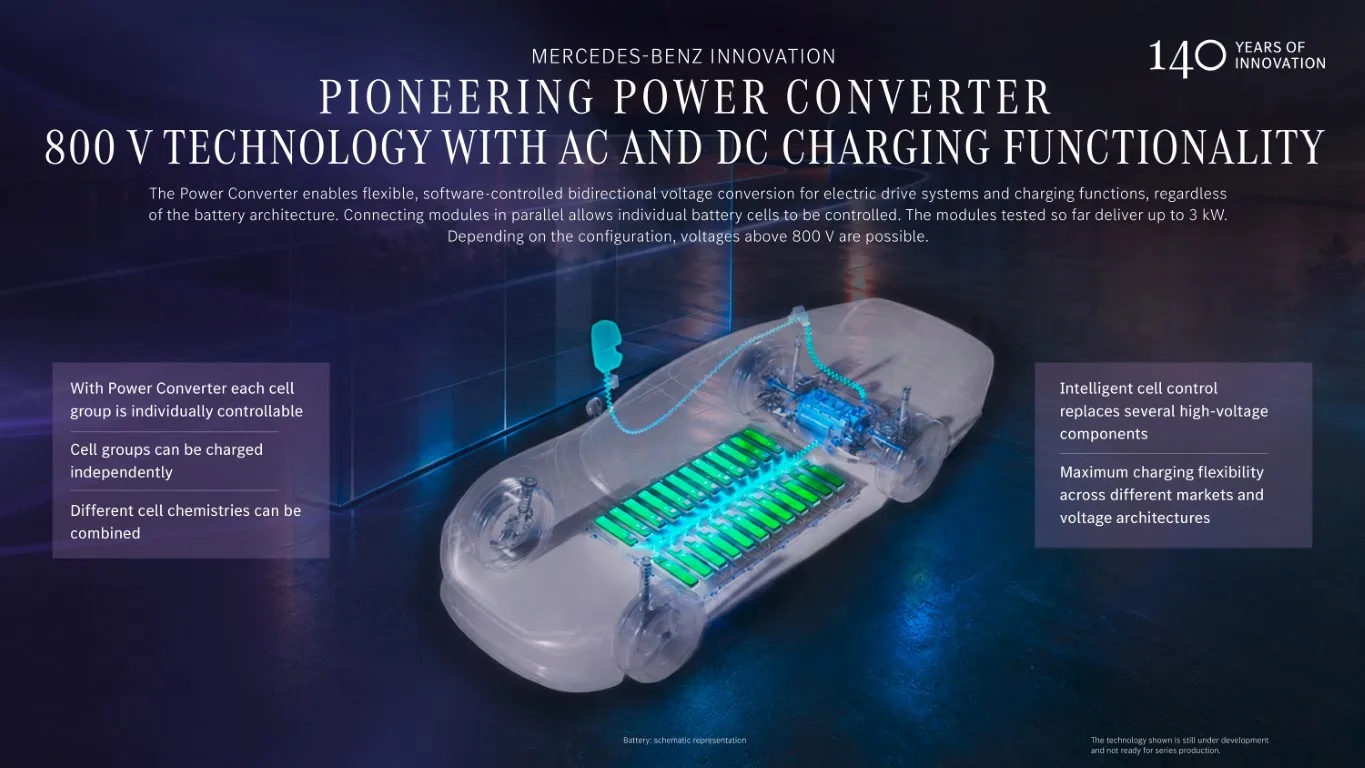
Potential applications include vehicle-to-home (V2H) and vehicle-to-grid (V2G) energy transfer, along with more compact powertrain designs for electric vehicles and plug-in hybrids.
The current converter generation delivers up to 3 kW, demonstrating the technology’s capabilities for 800V applications rather than the output required for a complete production EV powertrain.
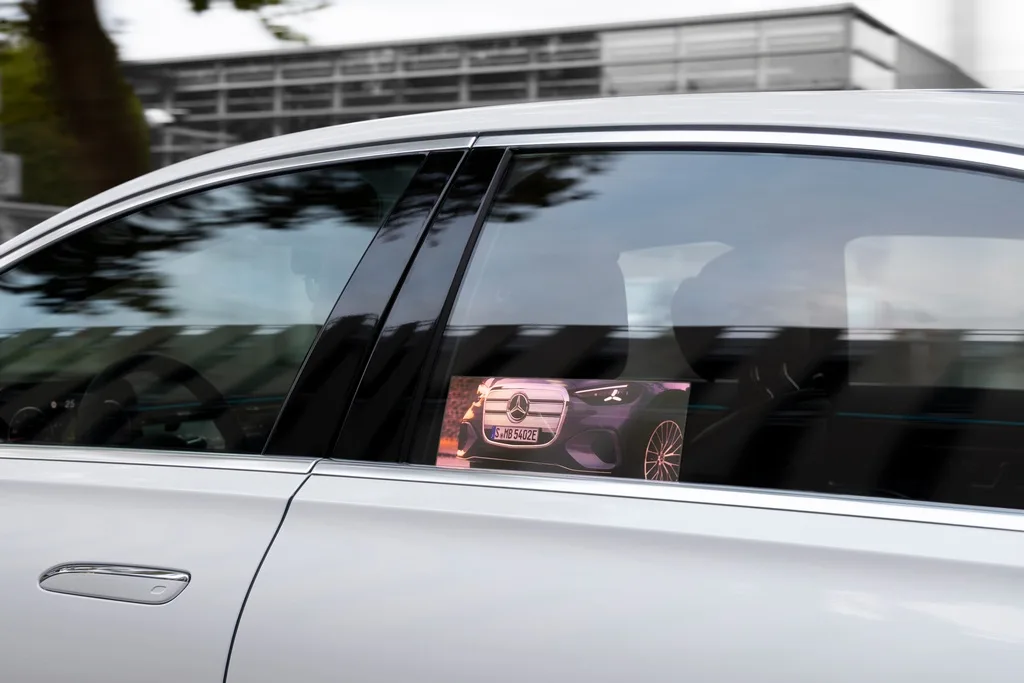
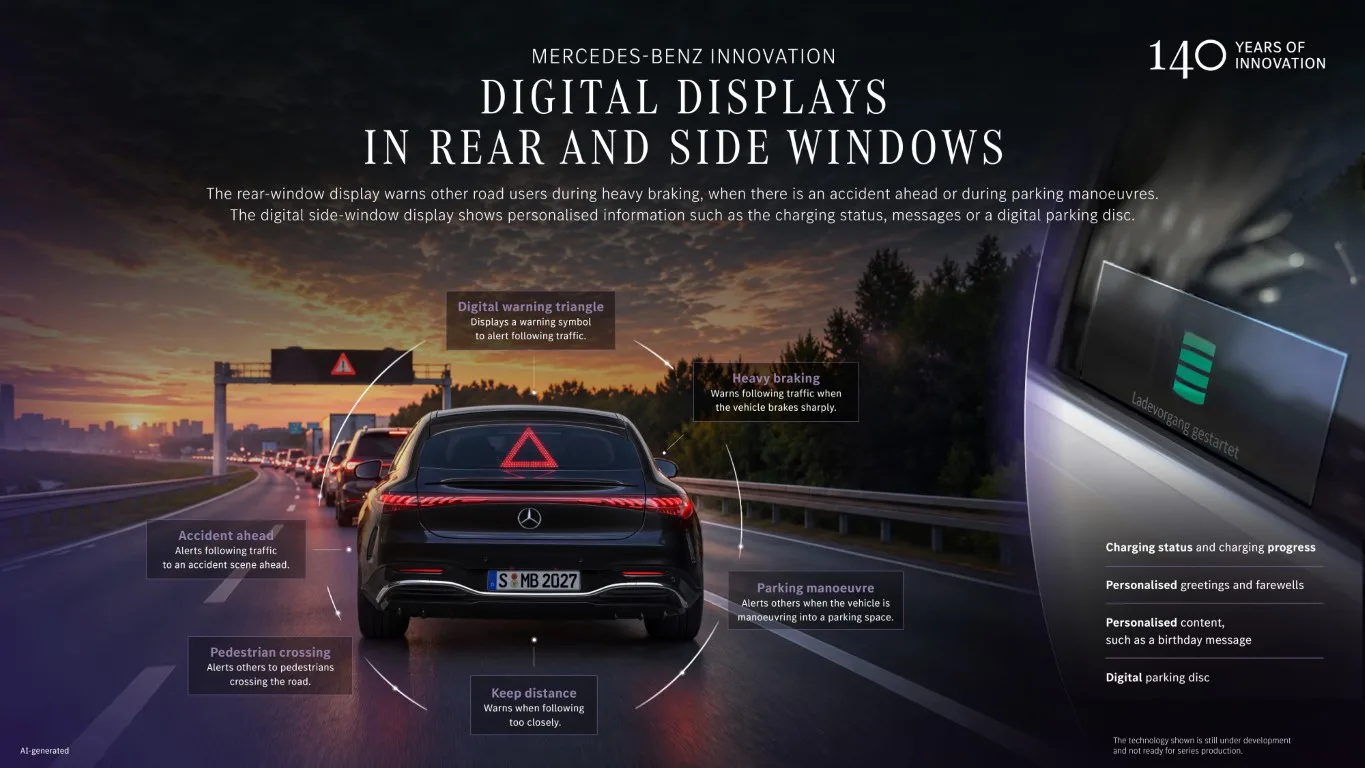
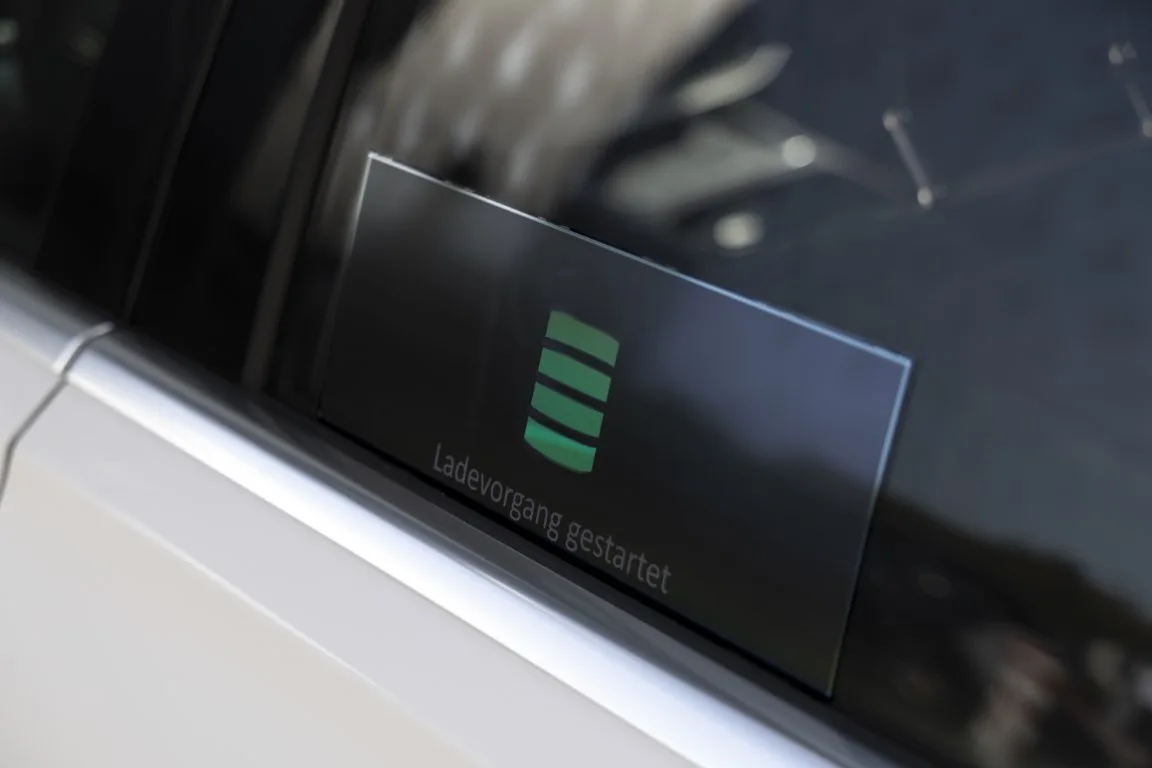
Separately, Mercedes-Benz is exploring ways for vehicles to communicate with surrounding traffic through LED elements laminated into their windows.
Mini-LED technology could display braking signals, warning symbols or traffic information across the rear window, while higher-resolution micro-LEDs would support more detailed graphics in smaller areas.
The elements would remain almost invisible when inactive.
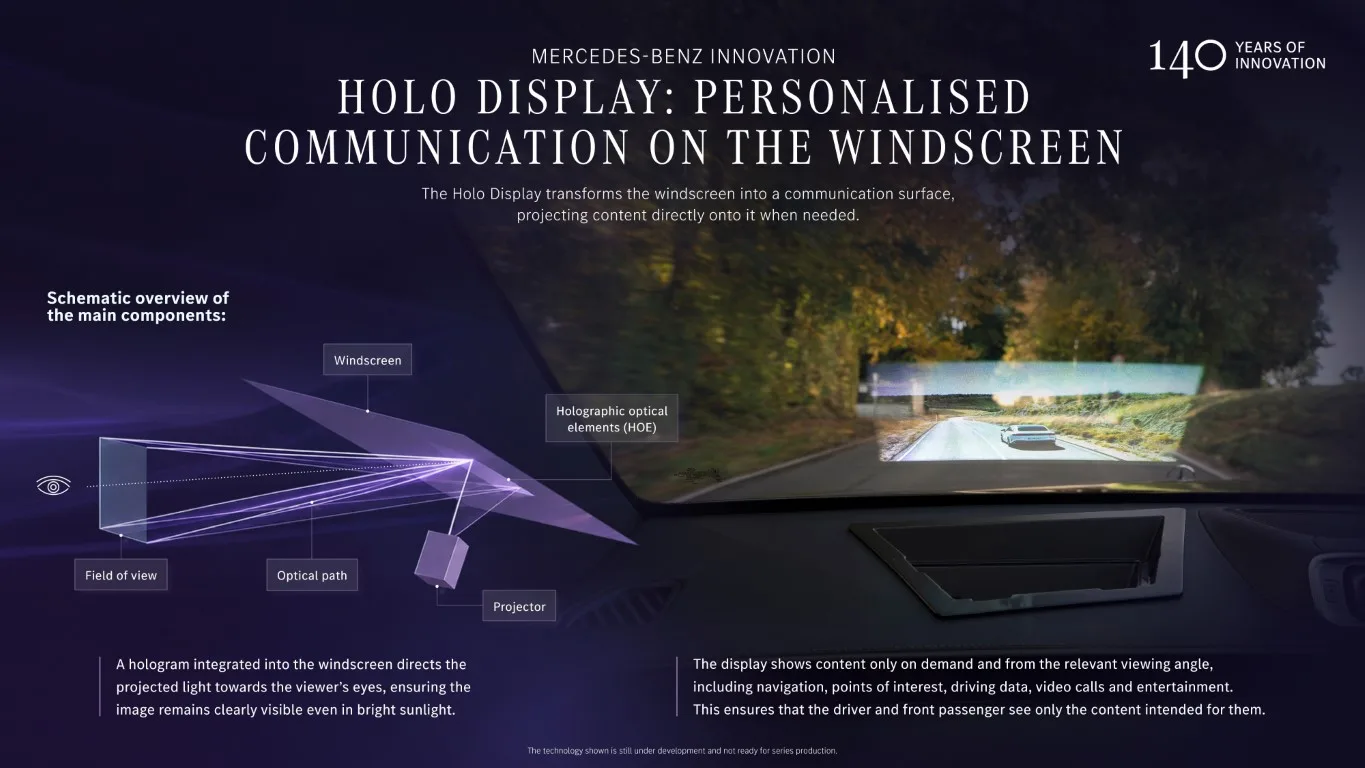
 Another project uses holographic optical elements embedded in a transparent windscreen film to reflect images from a dashboard-mounted projector.
Unlike conventional displays, the system can direct different images towards the driver and front passenger, preventing either occupant from seeing the other’s content.
Mercedes-Benz said the images would remain visible in sunlight, enabling applications ranging from navigation instructions and driving information to passenger entertainment and video calls.
All three technologies remain research and development projects, with their potential applications extending beyond current production vehicle systems.
Video: Mercedes-Benz