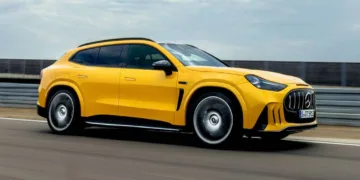





Mercedes-Benz and Nvidia have expanded their strategic partnership to develop next-generation automated driving systems, including technology for future Level 4 autonomous vehicles and robotaxis.
Announced on Oct 16, the collaboration combines Mercedes-Benz’s MB.OS operating system and vehicle safety expertise with Nvidia’s artificial intelligence, computing hardware and automated driving software.
Central to the partnership is Nvidia Hyperion, an architecture integrating sensors and high-performance computing hardware to process information about a vehicle’s surroundings.
It will work with Nvidia’s Alpamayo Stack, which uses AI reasoning to interpret complex traffic situations and support urban point-to-point driving, active safety functions and automated parking.
Nvidia Halos adds a separate safety system designed to provide redundancy and safeguards during automated driving.
Together, the technologies will support increasingly sophisticated driver assistance systems and future SAE Level 4 applications, where vehicles can operate without driver intervention under defined conditions. Potential applications include autonomous limousine services.
Mercedes-Benz chief technology officer Jörg Burzer said Nvidia was the company’s most important strategic partner in automated driving, citing their earlier work on urban driving assistance.
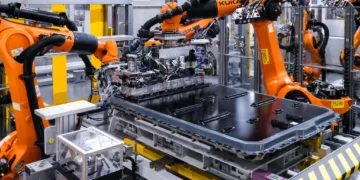
Beyond vehicle automation, Mercedes-Benz uses Nvidia technology for engineering simulations and its MO360 digital manufacturing network, including virtual factory planning and AI applications.
The announcement follows Volvo Cars’ separate expansion of its Nvidia partnership on Oct 15. Volvo is developing automated driving technology for future electric models using Hyperion, Halos and Alpamayo, targeting progressively less driver involvement, including eventual eyes-off and mind-off operation.
Mercedes-Benz has not disclosed which production models will receive the new systems or when Level 4 capabilities could become commercially available.