





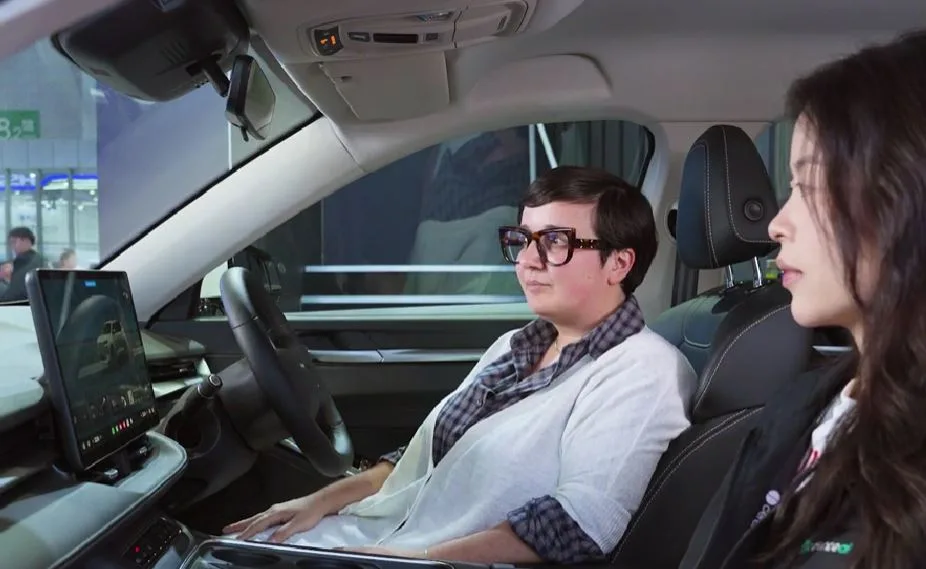
AI-powered in-car assistants are evolving beyond simple voice commands into more sophisticated systems capable of anticipating driver needs and managing multiple vehicle functions, according to a new Frost & Sullivan study.
The research firm said advances in generative artificial intelligence (AI) are allowing automakers to offer more natural conversations, personalised recommendations and greater integration with connected services.
Instead of merely responding to instructions, these systems are being developed to understand context and help drivers manage navigation, entertainment, climate controls and other vehicle functions.
Frost & Sullivan estimates that global connected vehicle sales will rise from 68.3 million in 2026 to 84.6 million by 2032, expanding the potential market for advanced AI assistants.
Its “Frost Radar: AI-Powered In-Car Assistants, 2026” study evaluates nine technology providers: Cerence AI, Google, Amazon, Apple, SoundHound AI, Microsoft, OpenAI, Perplexity and iNAGO.
The companies range from automotive technology specialists to established consumer technology groups and general-purpose AI developers.
According to the study, competition is increasingly centred on generative and agentic AI, which can interpret requests and coordinate actions across different systems.
Hybrid edge-cloud processing is another emerging priority, combining computing capabilities within the vehicle with cloud-based services to improve responsiveness and functionality.
Potential applications include arranging EV charging, paying for parking and accessing subscription-based vehicle services.
Cerence AI said it received the highest growth and innovation scores among the nine providers assessed, citing its conversational AI platform and ability to coordinate specialised digital assistants.
Frost & Sullivan growth expert Gautham Prakash Hegde said the ability to integrate AI with vehicle systems while protecting driver data would become increasingly important.
The study also identified opportunities for automakers to generate revenue through premium digital features and connected services, although wider adoption will depend on reliable performance, security and integration across vehicle platforms.