








China’s car export boom has created a less visible bottleneck: ships.
Dedicated roll-on/roll-off carriers remain the preferred way to move finished vehicles. Cars are driven on, secured, shipped and driven off again at the destination port. The process is simple enough. The shortage is in vehicle deck space.
With Chinese brands expanding into Europe, Southeast Asia, South America, the Middle East and other markets at the same time, shipping capacity has become part of the export problem.
That pressure has pushed operators to use ships that were never designed as car carriers.
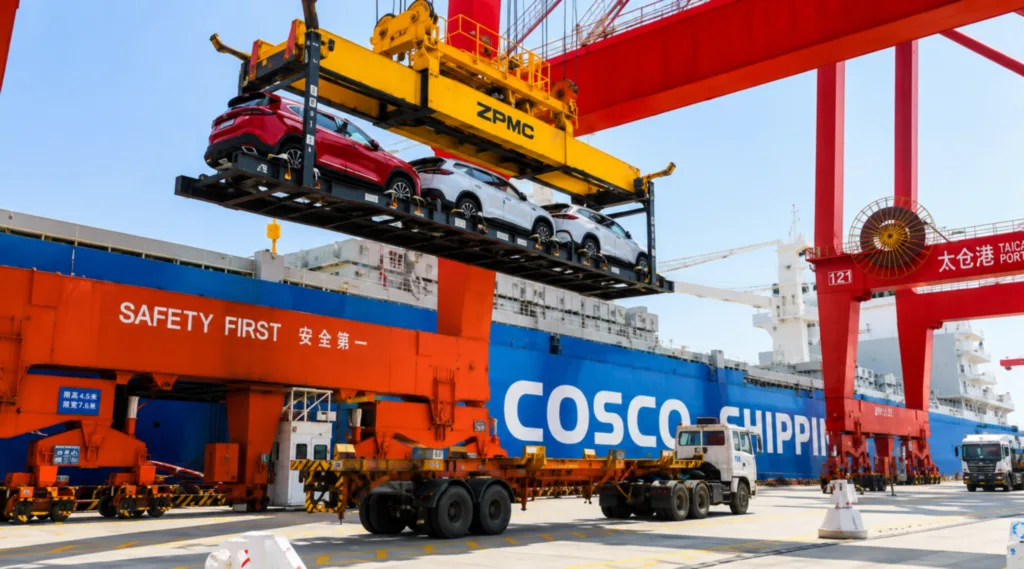
COSCO Shipping Specialized Carriers has been among those turning multipurpose vessels into temporary vehicle carriers. Instead of waiting for more pure car and truck carriers to enter service, it has been fitting cargo ships with removable frame systems that allow cars to be secured inside the hold.
A conventional open-hatch multipurpose vessel can carry pulp, steel, heavy equipment or project cargo. With vehicle frames installed, the same ship can also carry cars. Once the job is done, the frames can be removed or folded away, allowing the vessel to return to other cargo work.
The advantage is that the ship is not locked into one business. A dedicated car carrier works best when vehicle volumes are high and routes are regular. A multipurpose vessel can move between cargo types, ports and industries.
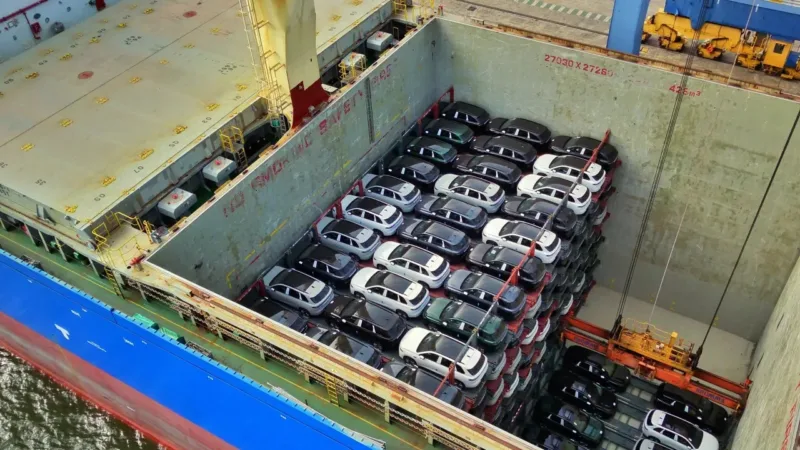
For exporters, that provides another option when Ro-Ro capacity is tight or when the destination does not justify a full car-carrier service.
Containers can help in smaller niches, but they are not ideal for mass passenger-car exports. They can work for small batches, higher-value cars, test fleets, remote markets or routes where normal car-carrier coverage is thin.
For big-volume exports, Ro-Ro shipping still makes more sense. For awkward vehicles, buses, construction machinery or other large units, breakbulk and multipurpose shipping can be the better fit.
The shipping workaround also points to a larger export challenge. Getting cars out of China at scale does not end at the factory gate. Manufacturers also need inland transport, port handling, shipping slots, customs coordination, destination logistics and aftersales distribution to line up. When one part of that chain is short of capacity, the whole export plan can slow down.
More purpose-built car carriers are on the way, including vessels ordered or operated by Chinese groups. BYD, for example, has already moved to control part of its own shipping chain with dedicated car carriers. But new ships take time to build, and China’s export push has not paused while the fleet catches up.
So the improvised methods are unlikely to disappear soon. They will not replace Ro-Ro carriers, but they give carmakers another way to keep exports moving when specialist capacity is tight.
China’s vehicle export boom has spilled beyond the car industry into shipping, ports and inland logistics. When there are not enough specialist ships, ordinary cargo vessels are being adapted to carry some of the load.