






Mercedes-Benz has published the 360° Environmental Check for the new electric GLC, laying out how much cleaner the SUV is claimed to be over its full life.
According to the independently verified lifecycle assessment, the electric GLC cuts carbon emissions by about two-thirds versus the current combustion-engined GLC.
Mercedes-Benz said that comes from working the problem at several points, not just at the tailpipe, including lower-carbon aluminium, cleaner battery-cell production and wider use of recycled materials.
For production alone, Mercedes-Benz said supplier-side measures cut emissions for the GLC 400 4Matic with EQ Technology by 23%.
The biggest pressure points are familiar ones: battery cells, aluminium, steel and thermoplastics.
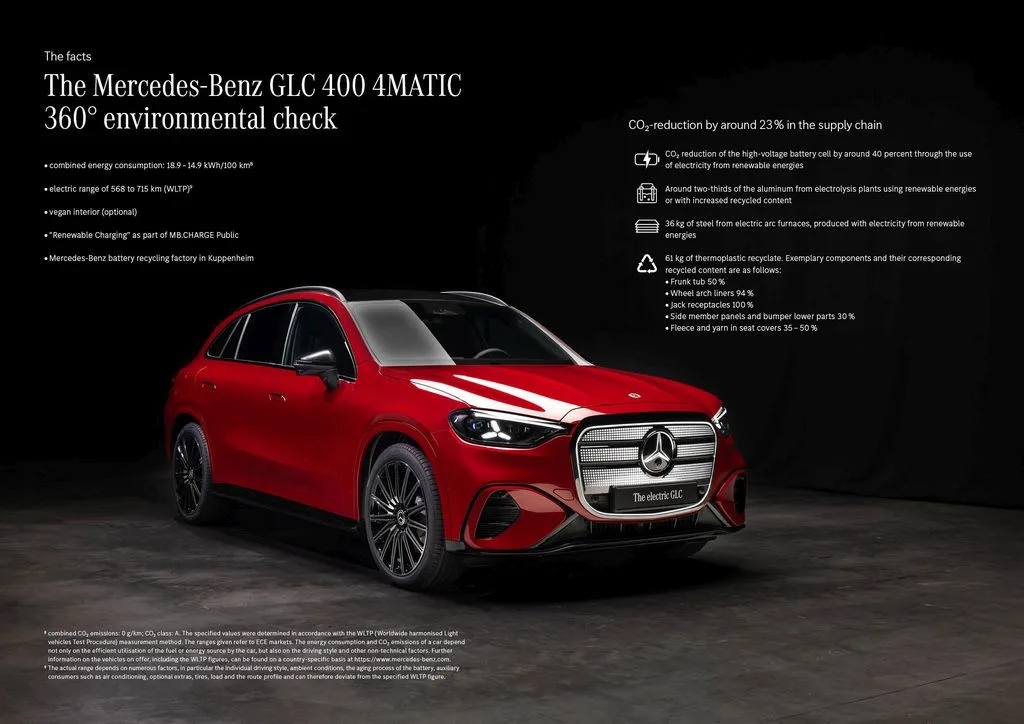
Mercedes-Benz claims the battery cells carry roughly a 40% smaller carbon footprint per cell than conventional production, helped by renewable energy use and lower-carbon cathode, anode and housing materials. The company said that saves about 3.4 tonnes of CO2 per battery.
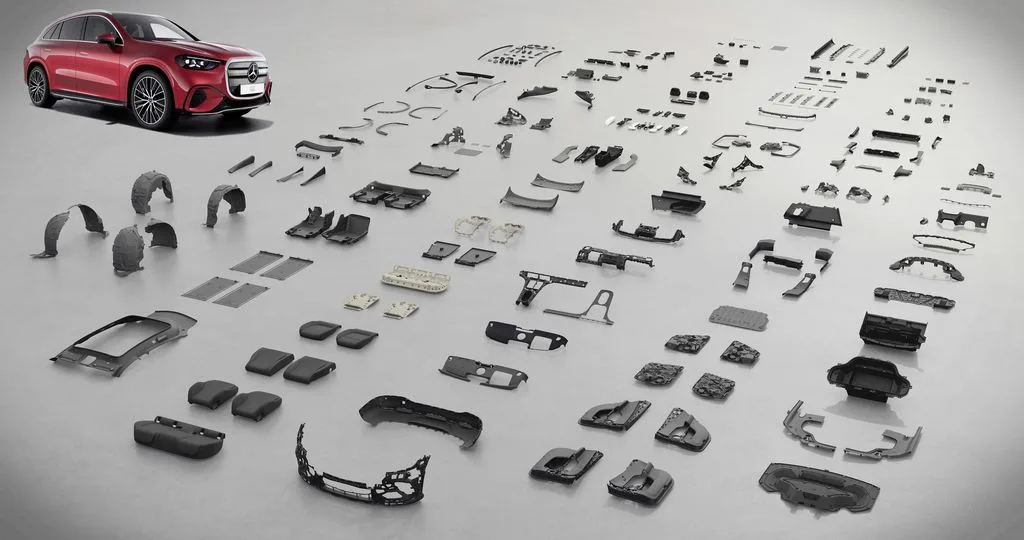
There is also more recycled content in the car itself. Mercedes-Benz said the electric GLC uses about 61kg of secondary-material thermoplastics, with around 35% coming from post-consumer sources.
Even the jack mounting points are made entirely from recycled bumper material taken from scrap vehicles. On top of that, about two-thirds of the aluminium is said to come from renewable-energy electrolysis or recycled content, saving roughly 1.2 tonnes of CO2.
Inside, buyers can also specify what Mercedes-Benz describes as the world’s first vehicle interior certified by The Vegan Society, covering about 100 soft-touch material components.