






Nissan’s electrification strategy just got a lot more Chinese.
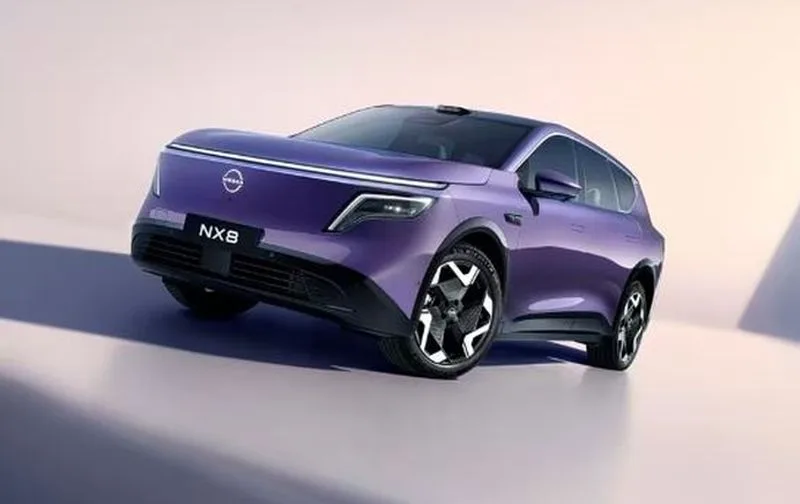
The Japanese automaker has pulled the wraps off the NX8, a family-sized SUV that won’t be designed in Yokohama or built in Tennessee.
Instead, it’s coming straight from Dongfeng Nissan’s operations in China, targeted at the world’s most competitive EV market when it launches by mid-2026.
This isn’t a side project. The NX8 marks the third vehicle in Dongfeng Nissan’s N-series lineup, following two sedans that have already hit Chinese roads.
For a legacy brand scrambling to catch up in electrification, relying this heavily on a regional partner tells you everything about where the action is.
The NX8 measures nearly 4.9 metres bumper to bumper — roughly Pathfinder territory — but ditches the third row for a more spacious five-seat cabin.
Two powertrains will be offered: a pure battery-electric variant with either 215kW or 250kW from a single motor, and a range-extender setup pairing a 1.5-litre turbo engine with a 195kW electric motor.

The battery tech is where things get interesting. Nissan is deploying an 800-volt electrical system fed by CATL’s lithium iron phosphate cells, promising 5C ultra-fast charging speeds.
The company is branding this as its next-generation Yundun battery pack — a clear attempt to compete with BYD’s Blade and CATL’s Qilin technologies that dominate Chinese showrooms.
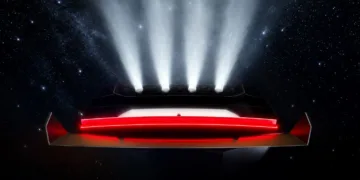
On the outside, the NX8 looks ready for a sci-fi film set. A 2.4-metre light strip stretches across the nose.

The rear features an OLED panel packing over 2,000 individual lighting elements that can display programmable patterns. There’s a LiDAR sensor perched on the roof, feeding Nissan’s highway and city autonomous navigation systems.
Nissan executives have been talking up “China speed”— the breakneck pace of development possible when working with local partners who understand the market.
Industry observers reckoned the NX8 could eventually be exported if Nissan decides its Chinese-developed models are ready for global audiences.
That would represent a significant shift. Instead of Japan designing cars for the world, China might soon be designing Nissans for everyone else.