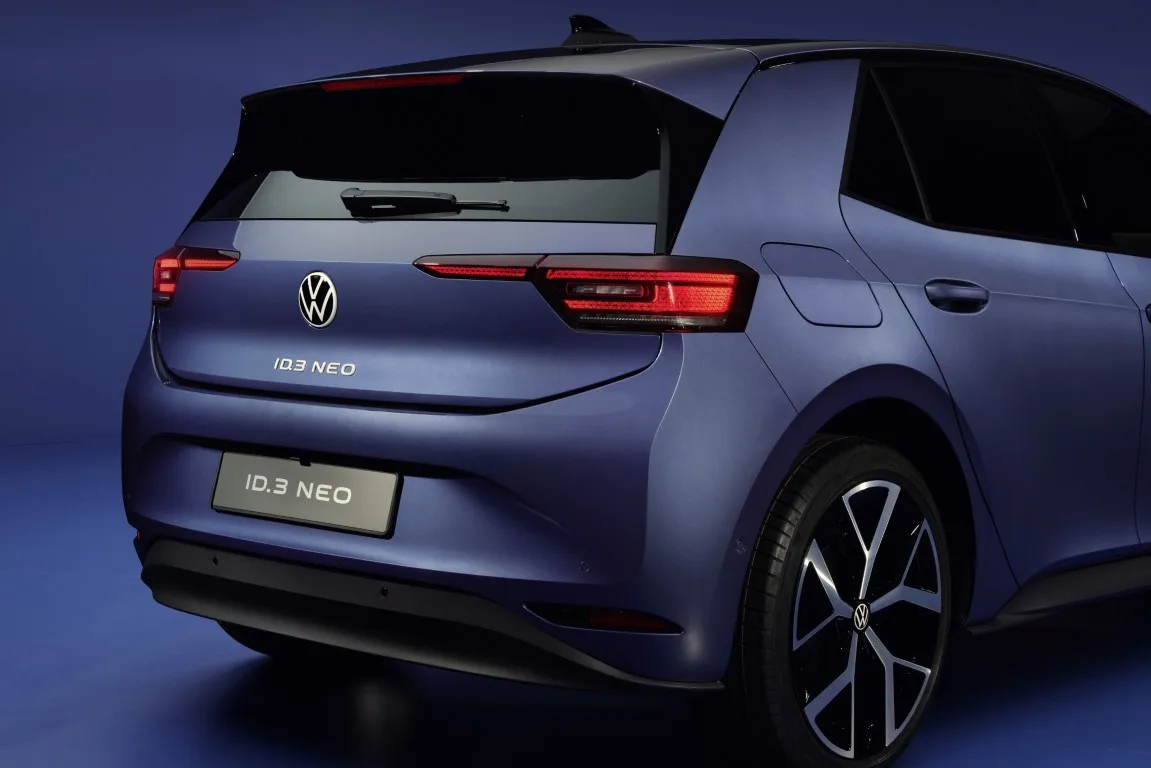





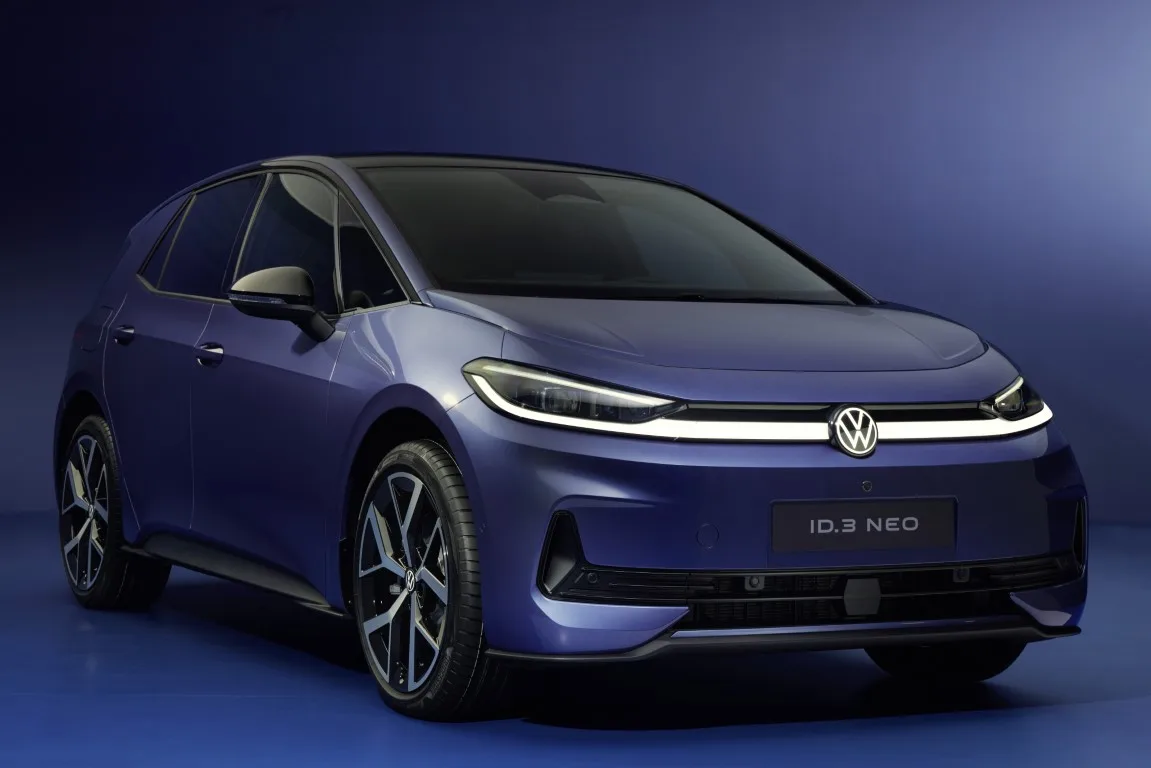
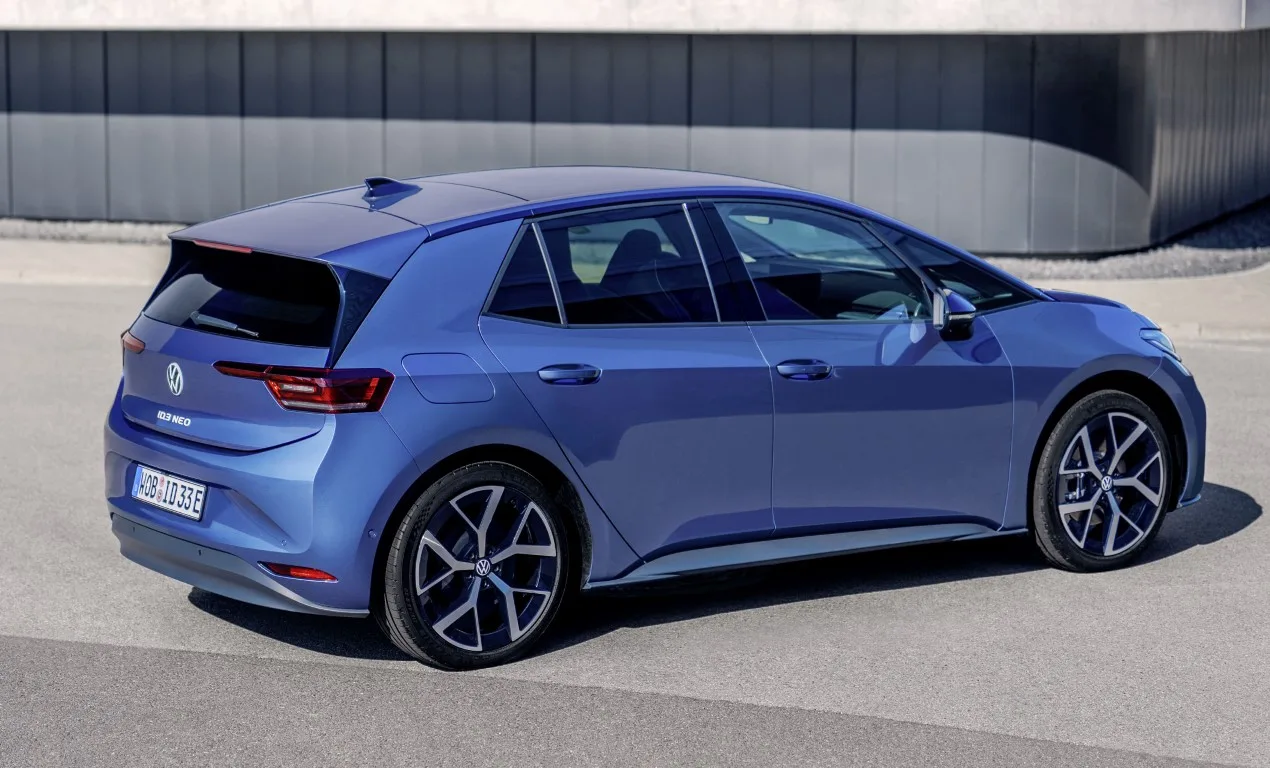
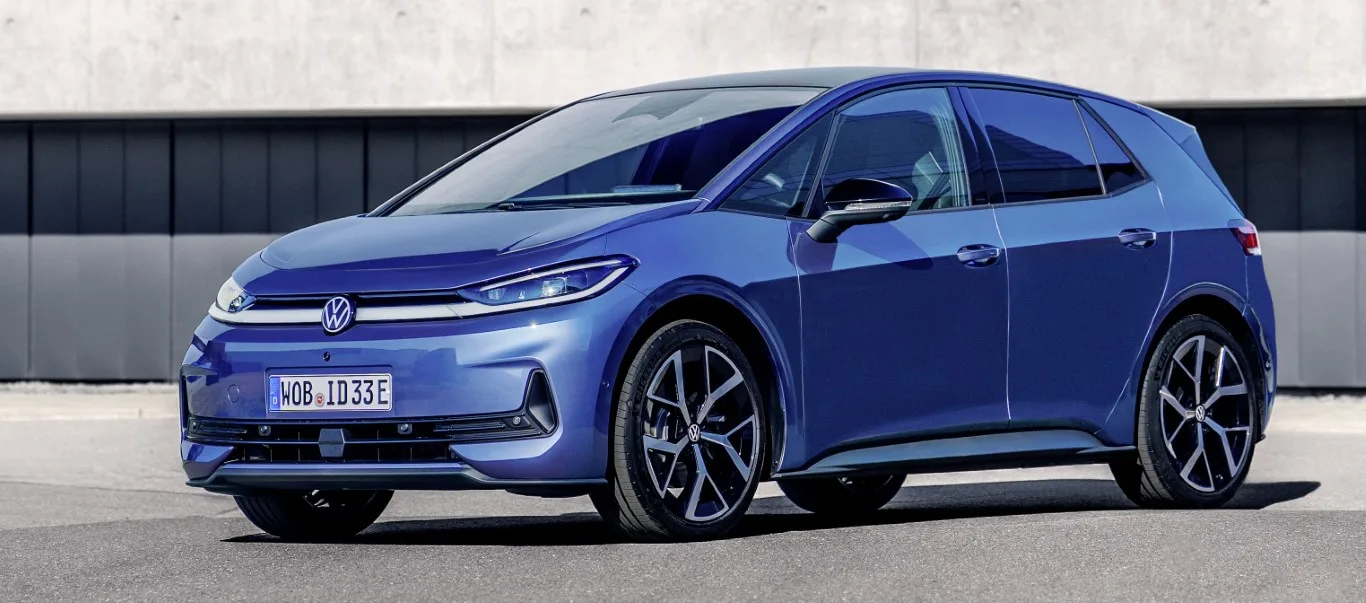
Volkswagen has taken the wraps off the ID.3 Neo, giving its compact electric hatchback a new name, a fresh face and a longer claimed range as it tries to keep the model relevant in an increasingly crowded EV market.
The ID.3 Neo is effectively the successor to the existing ID.3, and Volkswagen said the changes go well beyond a routine facelift.
There is a redesigned front end based on the brand’s latest design language, a new lighting signature and a reworked cabin that aims to look and feel more upmarket than before.
Priced from €33,995 (RM159,000) in Germany, pre-sales have started in its home market and other European countries today.
There is, however, a bigger backdrop to this launch.
The ID.3 Neo looks very much like a car bridging Volkswagen to its next move rather than defining it.
The company has already teased a ninth-generation Golf that will go fully electric, reportedly as the ID. Golf, before the end of the decade.
That model is widely expected to take over from the ID.3 line, which leaves the Neo feeling a little like an upgraded placeholder, even if it is a substantially improved one.
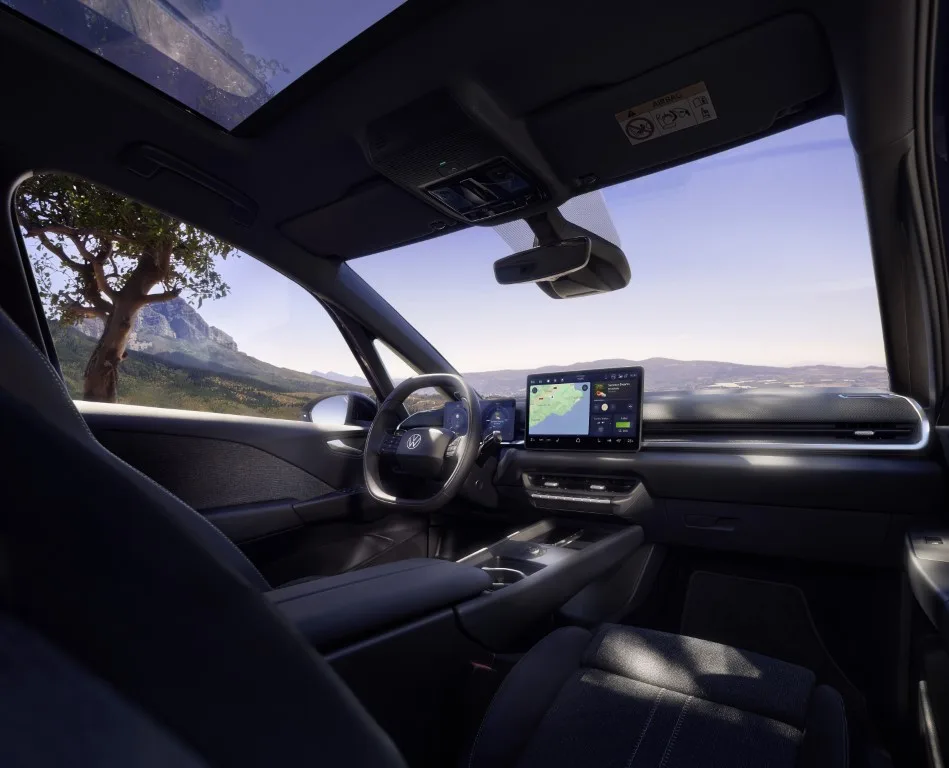
Inside, Volkswagen appears to have focused heavily on usability after earlier criticism of its touch-heavy interfaces.
The ID.3 Neo gets a redesigned steering wheel, simpler controls and a new infotainment layout with a 10.25-inch Digital Cockpit and a 12.9-inch central touchscreen.
The company is also adding an in-car app store, allowing owners to download functions and services much like they would on a smartphone.
Given that reset, expectations will only rise for the eventual return of an electric Golf with a better-sorted cabin and cleaner controls.
What really counts is what Volkswagen has changed under the skin. Volkswagen said the ID.3 Neo uses a newly developed drive system with higher torque and lower energy consumption than before.
In its most range-friendly version, paired with the largest 79kWh net battery, the car is claimed to cover up to 630km on the WLTP cycle. Three battery sizes are offered: 50kWh, 58kWh and 79kWh net, with outputs of 125kW, 140kW and 170kW respectively.
DC charging tops out at up to 105kW for the smaller two batteries and up to 183kW for the largest pack.
Volkswagen is also adding newer software functions, including one-pedal driving, optional Connected Travel Assist with traffic light recognition, and vehicle-to-load capability of up to 3.6kW for powering external devices.
That last feature feels especially telling. Carmakers are no longer just selling transport. They are trying to make EVs look useful even when parked.
Optional kit includes an augmented-reality head-up display, panoramic roof, Harman Kardon audio, 360-degree camera and massage seats, suggesting Volkswagen wants the ID.3 Neo to edge a little further upmarket without abandoning the compact-hatch formula.