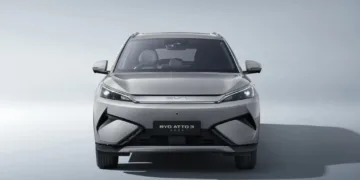





BYD is tightening control of its battery factories as it tries to ramp up sales of more packs to other carmakers, not just feed its own booming EV range.
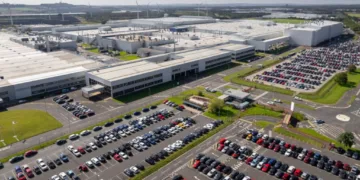
According to Chinese media outlet Jipian Lab, the company has launched a “flawless operation” drive across its battery plants from the third quarter of this year.
The concept sounds simple enough: every battery cell should be as close to perfect as possible, with zero defects from the day it is built to the day it retires.
To get there, BYD is pushing its factories to raise efficiency and cut mistakes in production, quality checks and after-sales support. Internally, the targets are punchy.
Within three to five months, management standards are meant to match the industry’s best.
By 2026, BYD wants its factories to satisfy the strict demands of major global clients and, over time, reach the benchmark set by Japanese players such as Toyota.
Batteries have powered BYD’s rise.
As China’s EV and plug-in hybrid market took off from 2021, its annual vehicle sales jumped from about 730,000 units to 4.27 million. While rivals struggled with shortages, BYD controlled its own supply and now holds roughly one-third of China’s new energy vehicle market.
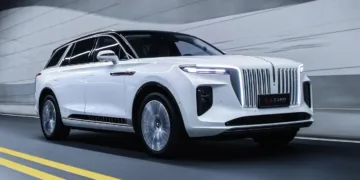
Until recently, most of those packs stayed in-house. BYD is the world’s second-largest power battery maker, yet only a few models from brands such as Hongqi and FAW Toyota used its cells. Capacity was kept mainly for BYD’s own badges.
That is changing fast. In the first nine months of 2025, BYD installed around 113GWh of power batteries in China, and about 21% went to other brands including Xiaomi’s SU7/YU7, the Xpeng Mona M03 and LeDao L60.
With global demand for both EV and energy-storage batteries still climbing, the “flawless” push is more than a tidy-up. It is BYD’s attempt to prove its packs are good enough for anyone’s badge, not just its own.