




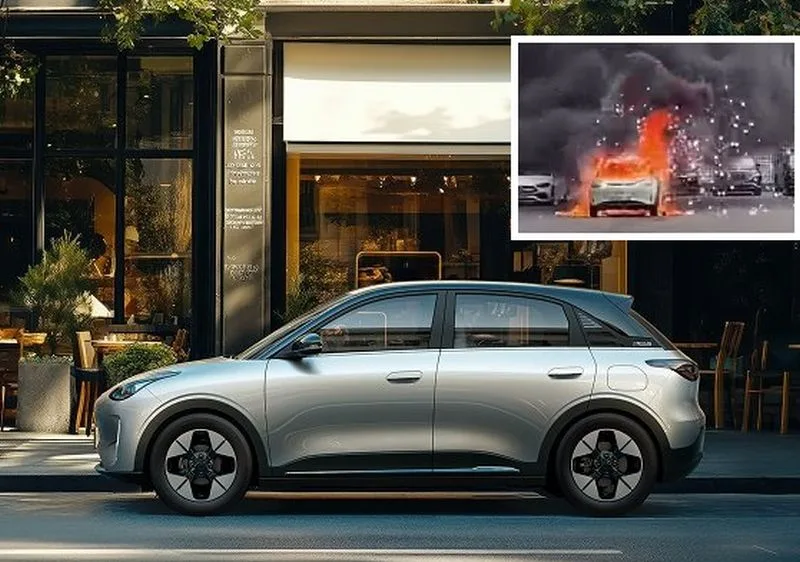
Authorities in China are investigating a fire that engulfed a Geely Xingyuan electric hatchback on Oct 23.
Local reports said the car ignited at an industrial park in Suzhou, Jiangsu, with witnesses describing “firework-like” pops before flames spread rapidly. No injuries were reported at the time of writing.
Unverified video clips circulating on Chinese social media show flames concentrated in the upper cabin area rather than beneath the floor.
If accurate, that would point to a cause unrelated to the traction battery, but officials have not issued findings and Geely has yet to release a statement.
The incident coincided with a separate fire involving a Li Auto Mega minivan in Shanghai the same day, which likewise resulted in no casualties.
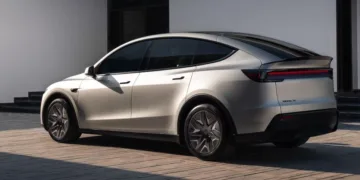
The Xingyuan is among China’s most popular battery-electric cars, positioned as a value-priced urban hatchback. Recent Geely Xingyuan updates put cumulative sales past the 400,000 mark roughly a year after launch, showing how common the model has become on Chinese roads.
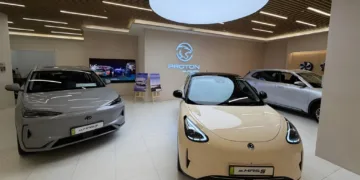
It also matters to Southeast Asia: Malaysia’s Proton e.MAS 5 is based on the Xingyuan/EX2, making any high-profile incident in China newsworthy for buyers here.
Context is essential.
National datasets and engineering guidance consistently show that battery-electric vehicles (BEVs) are statistically less likely to catch fire than petrol or diesel cars once adjusted for fleet size.
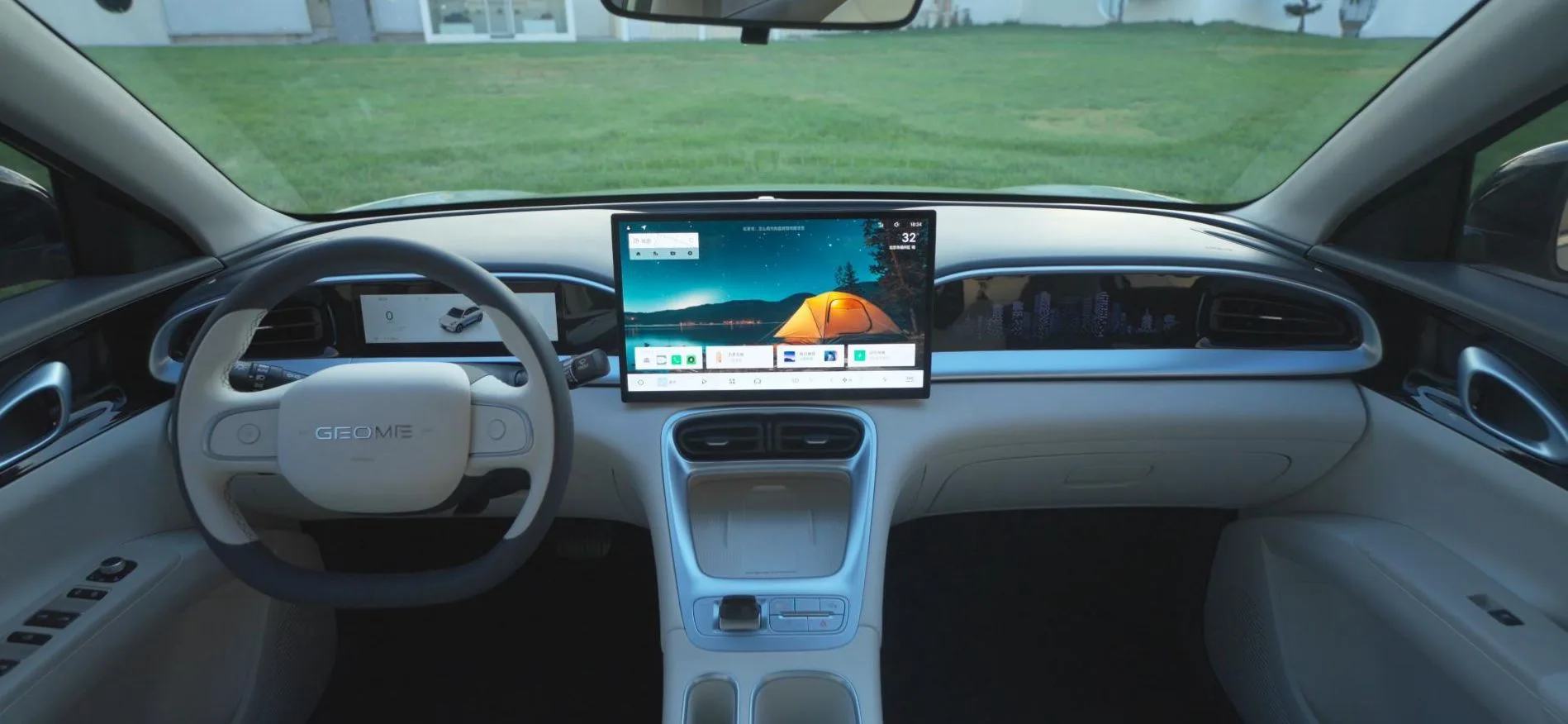
Sweden’s Civil Contingencies Agency (MSB), a widely cited government source thanks to its transparent incident reporting in a country with high EV penetration, records a far lower per-vehicle fire incidence for BEVs than for internal-combustion vehicles.
Engineers and first responders caution that when BEV fires do occur, they can be more complex to put out because of thermal runaway, but the overall likelihood of a BEV igniting remains lower than for an ICE vehicle.
Within that same evidence base lies an important nuance often missed in online debate: the category with the highest relative fire risk in MSB’s findings is plug-in hybrids (PHEVs).
PHEVs carry both a high-voltage battery pack and a liquid-fuel system, giving them two potential sources of ignition instead of one. That structural complexity helps explain why some incident datasets show higher relative risk for PHEVs than for either pure EVs or conventional petrol models.
Charging-related events also tend to draw outsized attention.
Verified case sets collated by specialist groups indicate that only a minority of EV battery fires occur while the vehicle is physically connected to a charger, with many linked to prior damage or defects rather than the act of charging itself.
(Geely Xingyuan fire in Suzhou – Video source from Weibo/Dianche Xiaopi via YouTube/CarNewsChina)
Claims circulating online that in-cabin static electricity is an emerging, EV-specific hazard are not supported by credible evidence. Safety literature treats static shocks from seats as a nuisance; recognised ignition concerns from static are typically associated with refuelling interfaces on liquid-fuel vehicles, not closed EV cabins.
For now, the Suzhou Xingyuan blaze remains a single, high-visibility case in a vast fleet.
Investigators will determine whether the cause traces to the high-voltage battery, auxiliary electronics, aftermarket items inside the cabin or something else entirely.
Until there are findings, the broader point stands: EV fires are rare in statistical terms, different in character to petrol fires, and best understood through evidence rather than virality.