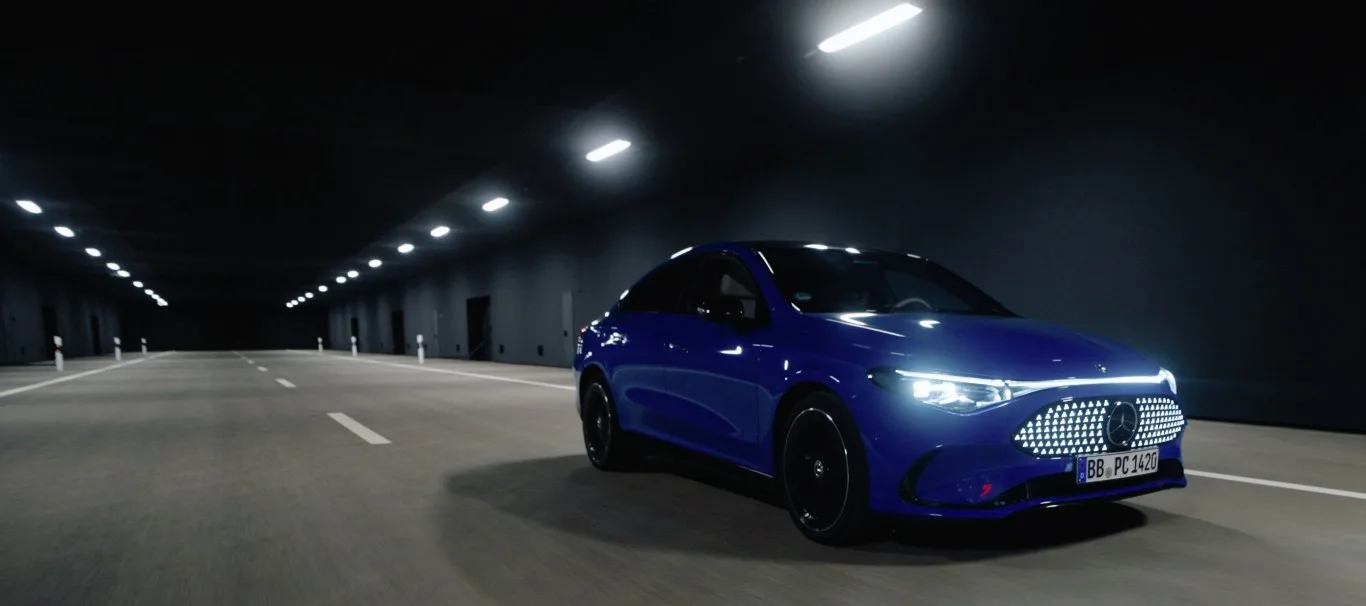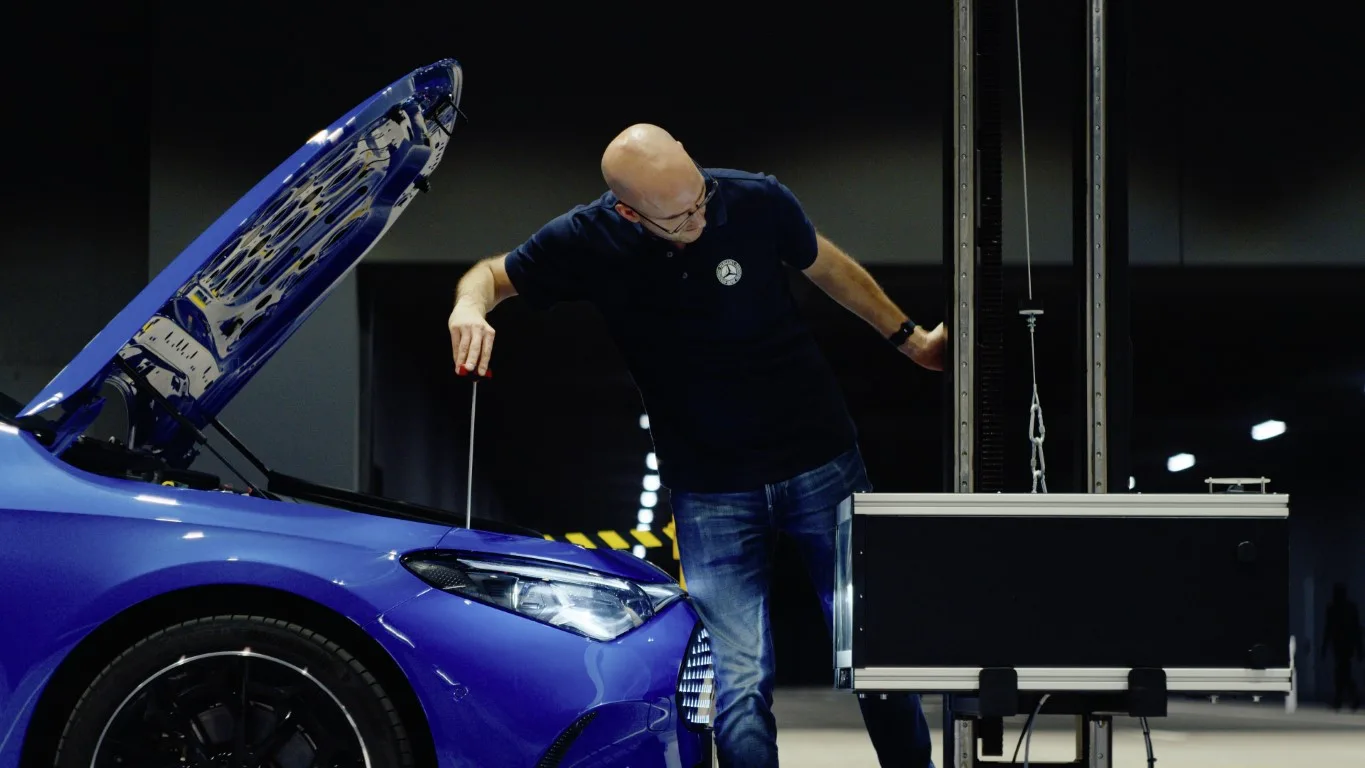











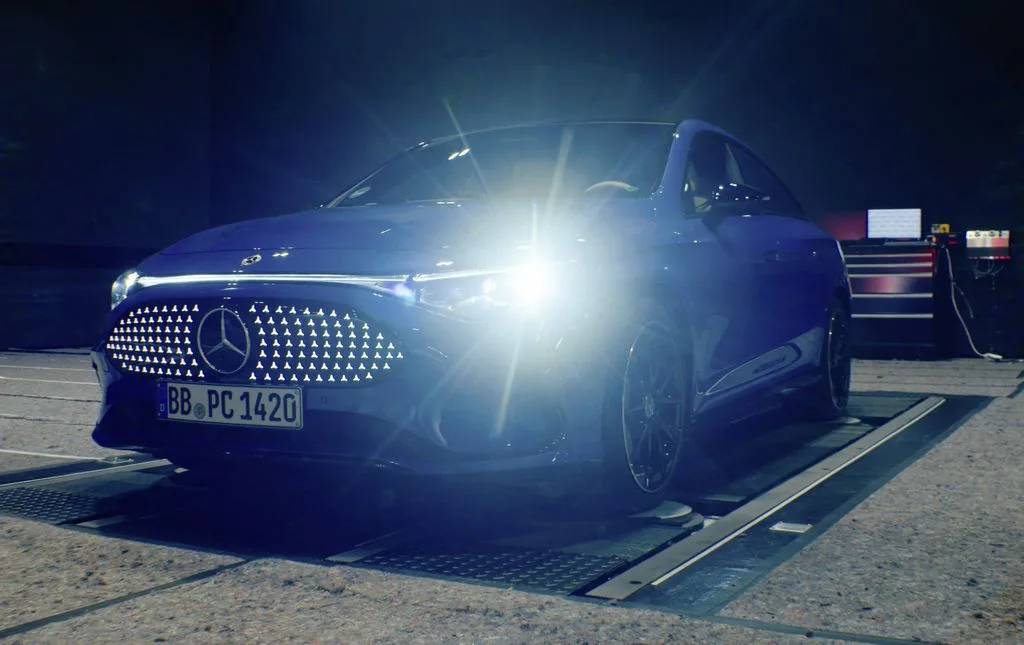
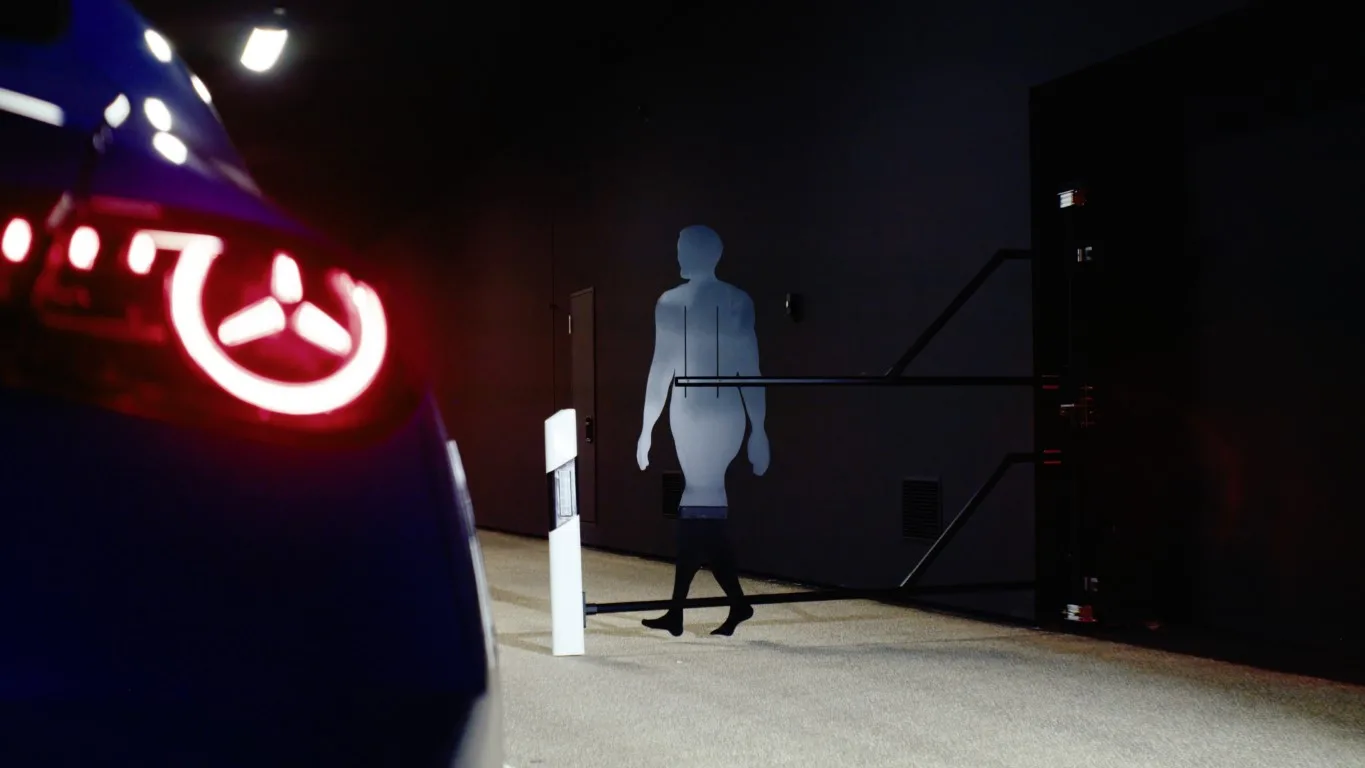
Mercedes-Benz has opened a 135-metre Light Testing Centre at its Global Proving Ground in Immendingen, Germany, adding capacity to trial headlamps in fully controlled conditions.
The 8-metre-high hall recreates a country road with reflector posts at 20-metre intervals, room to run five cars in parallel, simulated oncoming traffic and pedestrian dummies.
The asphalt blend is tuned to mimic the reflectivity of aged tarmac. The project cost €10.5 million (RM52mil) and took two years to build.
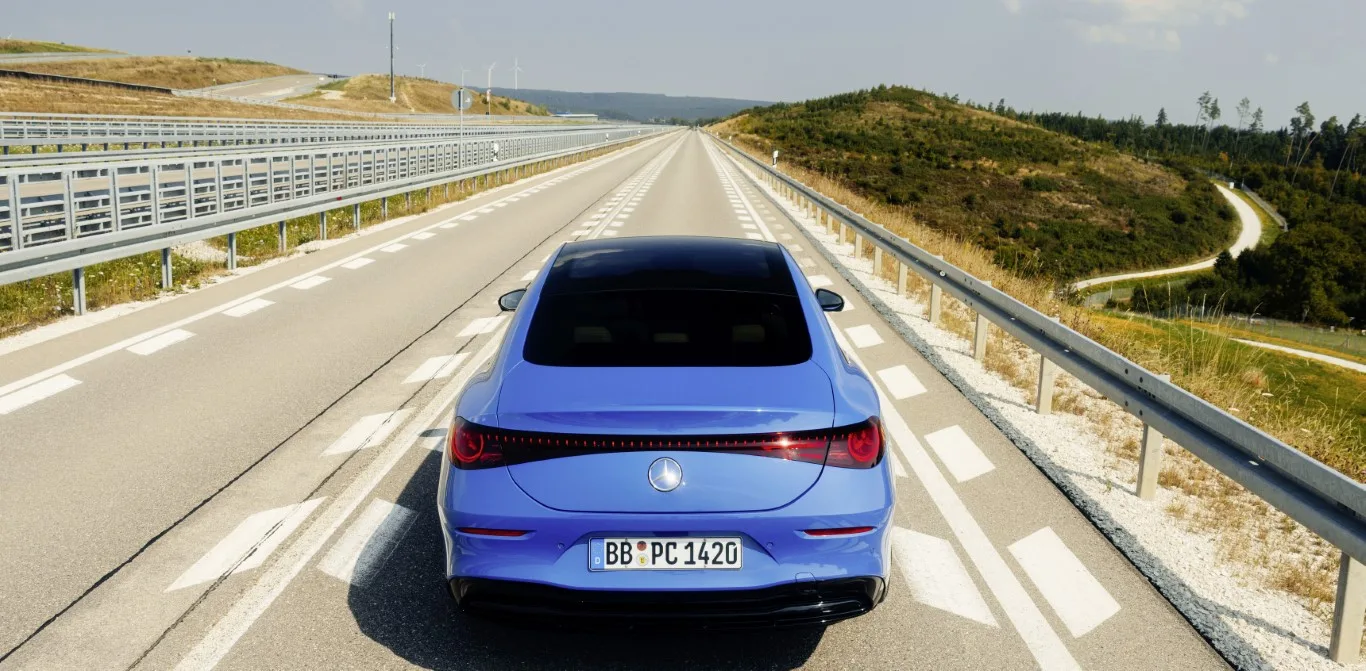
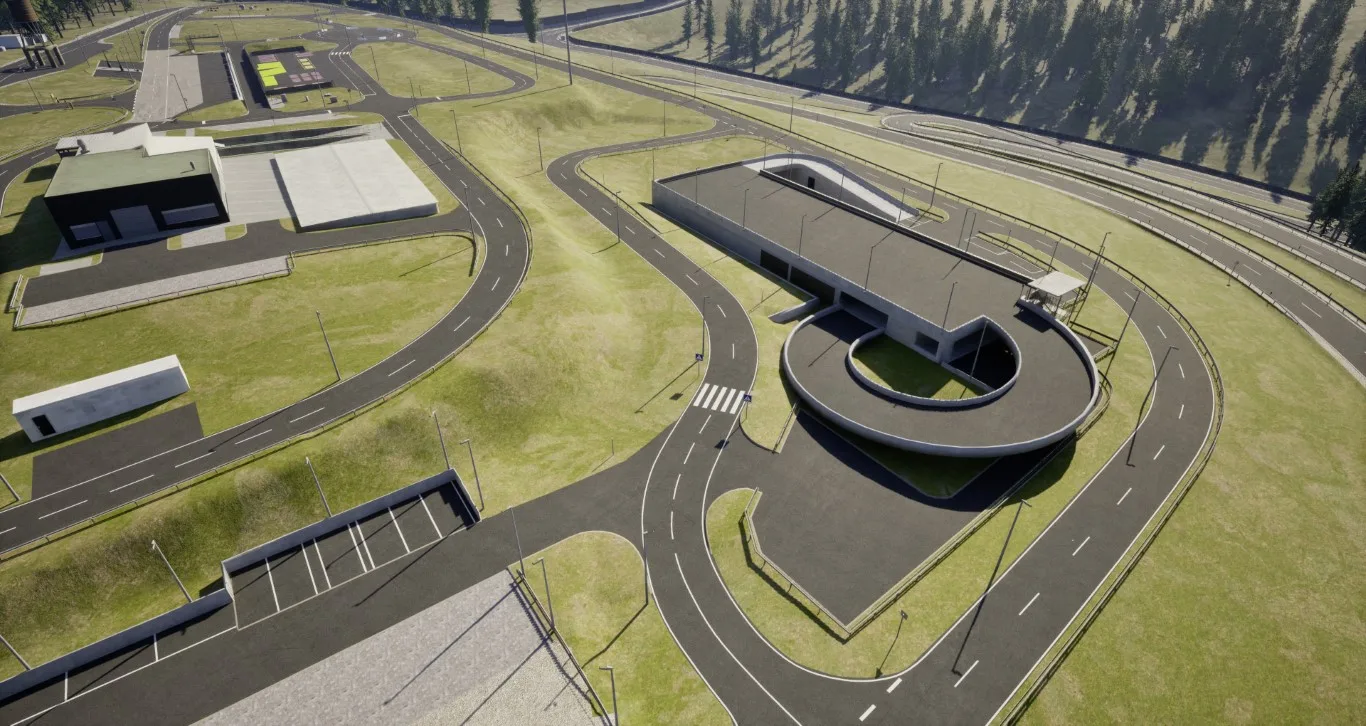
The site is now one of the brand’s core development hubs. Spread across 520 hectares, Immendingen packs more than 30 test modules and 86km of road-simulating tracks with 256 junctions.
Layouts cover city grids, mountain passes with 180 metres of elevation change, rough-road sections, highways and off-road routes.
Markings and designs from Europe, the United States, China and Japan are replicated, and up to 400 vehicles can be on track at once. Special gradients run from 30% to 100%.
Lighting and weather can be staged, including an “artificial sun” from high-output mobile lights used on Arctic vessels, plus heavy rain and spray rigs.
Automation is central to durability work. On the Heide circuit, robots drive vehicles over potholes, bumps and cobbles around the clock.
The approach improves repeatability, eases strain on human drivers and shortens test cycles.
Depending on model, cars complete up to 6,000km here; each kilometre on this loop can equal as much as 150km of real-world rough-road use.
Digital tools made the programme possible. The entire proving ground is mapped to sub-millimetre accuracy and mirrored as a digital twin.
Engineers run extensive simulations and feed load data to test benches before prototypes turn a wheel. In chassis tuning alone, more than 100 set-ups are screened virtually, with only the best fitted to cars for on-site checks.
Opened on a former military site in 2015, Immendingen has hosted about 30,000 test vehicles covering over 100 million kilometres.
Mercedes-Benz has invested €400 million (RM1.9bil) to date, including €200 million (RM985mil) on expansions after opening.
Around 250 staff are based on site, with capacity for a further 2,100 employees during peak programmes.
The company said consolidating most test needs at a single location has cut development time and travel while reducing its carbon footprint. Conservation areas and managed grazing also form part of the site’s land stewardship.