



Hyundai Motor has indicated it wants a role in Indonesia’s plan to build a nationally made car within three years, a move Jakarta hopes will anchor more manufacturing and electric-vehicle investment in the country.
Indonesia’s economic ministry said the South Korean group expressed “strong interest” during talks in Gyeongju this week, following President Prabowo Subianto’s pledge that funding has been allocated and land prepared for factories.
Officials see the project as a test of Indonesia’s ability to move from a major car market to an automotive producer with deeper local content.
The government sees the initiative as a full domestic manufacturing effort, with timelines pointing to production before the end of the decade.
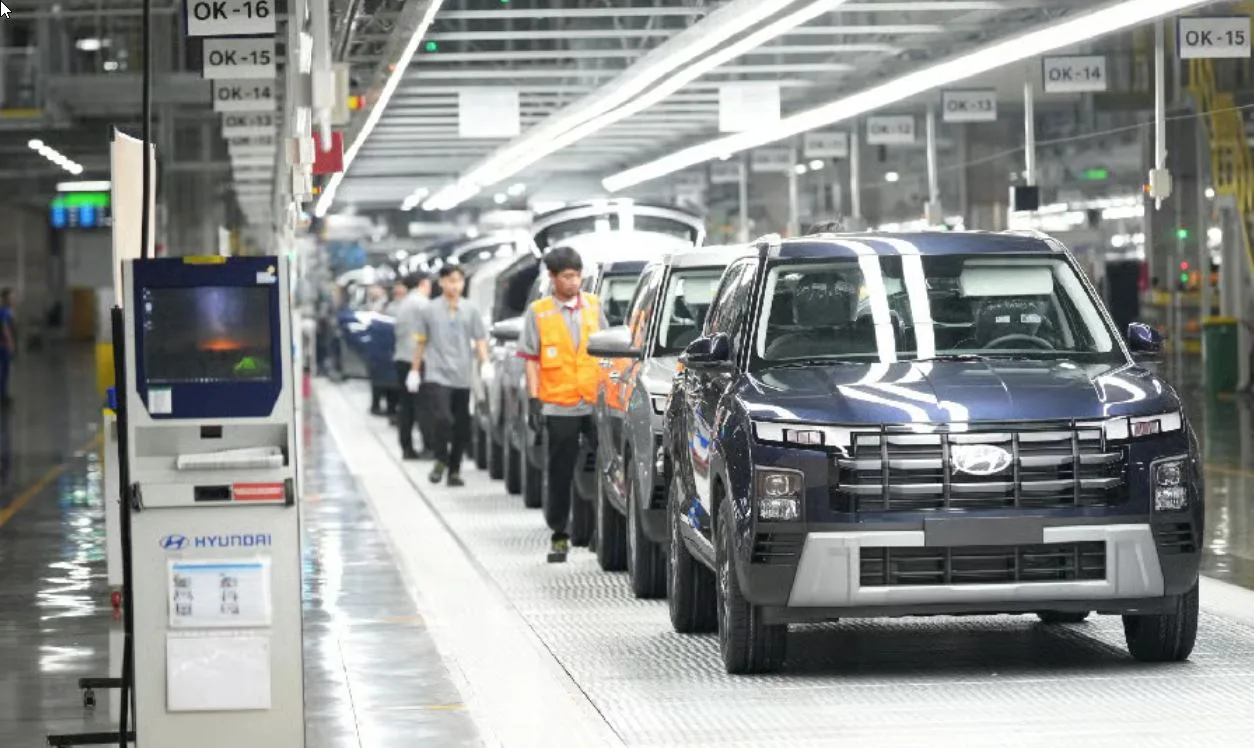
Hyundai, the world’s No. 3 carmaker by sales together with affiliate Kia, already operates an assembly plant in West Java and is expanding its EV footprint through partnerships in the country.
Industry watchers say Hyundai’s presence gives the plan immediate credibility.
The company last year inaugurated a battery cell plant in Indonesia with LG Energy Solution, targeting 10 GWh of annual capacity — an asset that is in line with the government’s push to localise the EV supply chain from minerals to modules.
While detailed production targets and model specifications have not been disclosed, Indonesia’s goal is clear: secure technology partners, maximise domestic value add and reduce reliance on imports.
The economic ministry did not provide timelines beyond the president’s three-year horizon, and Hyundai has yet to comment publicly on potential commitments or products.
Analysts note that Indonesia’s large car market, growing EV incentives and access to battery minerals could make the venture attractive if policy remains predictable.
For now, the message from Jakarta is one of intent and momentum: the money and land are in place, and talks with a global manufacturer are advancing.
Whether the national car emerges as an EV from the outset, or a mix of powertrains, will depend on the shape of the eventual partnership and Indonesia’s ability to deliver on its industrial ambitions.