




Toyota has unveiled the ninth-generation Hilux in Bangkok, introducing the nameplate’s first battery electric variant alongside conventional diesel and future fuel cell options as part of its multi-pathway strategy for carbon neutrality.
The new model, branded Hilux Travo in Thailand, will be rolled out across Asian markets from 2026, with Japan to follow with a diesel variant, while a hydrogen fuel cell version is planned for Europe and Oceania from 2028.
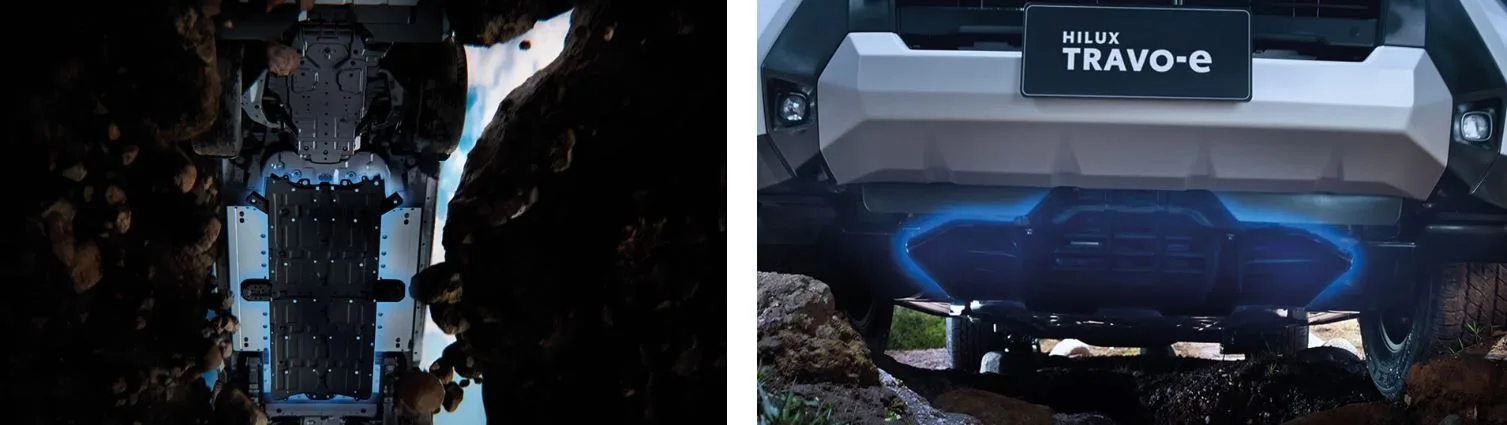
The Hilux BEV prototype pairs a 59.2 kWh lithium-ion battery mounted within the ladder-frame with dual eAxles for four-wheel drive, targeting more than 300km of range on NEDC and a system output of 144 kW, while maintaining the truck’s off-road brief with underbody battery protection and dedicated control systems.
Thai launch coverage confirms the BEV as a double-cab-only offering, positioned at 1,491,000 baht (about RM192,000), with Toyota Thailand’s wider Hilux Travo line-up spanning 17 variants in single, extended and double-cab forms powered mainly by a 2.8-litre turbodiesel.

Externally, the ninth-gen Hilux adopts a more assertive “tough and agile” design, with a one-piece grille and integrated light signature on ICE models, while the BEV switches to a closed front treatment and unique aero detailing.
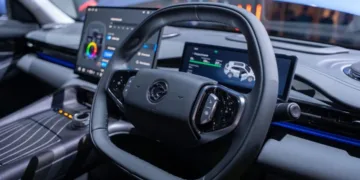
Inside, Toyota moves the workhorse closer to SUV territory with a horizontal dashboard, up to 12.3-inch infotainment and digital cluster, wireless smartphone mirroring, connected services via the MyToyota app, electronic parking brake and improved storage.
Technical upgrades underline a push to refine on-road manners without sacrificing load-lugging ability. The new Hilux retains its ladder-frame construction but gains retuned suspension, electric power steering and Multi-Terrain Select drive modes.

Pre-homologation figures cited in Thai reports indicate the BEV variant is engineered for around 240km WLTP range, payload of about 715kg and towing capacity of 1,600kg, signalling that Toyota is targeting real-world utility rather than a lifestyle EV showcase.
By combining diesel, battery electric and upcoming fuel cell options in a single global pick-up platform, Toyota positions the Hilux Travo as a strategic test case for low- and zero-emission workhorses in key markets such as Thailand, Australia and, potentially, Malaysia, while defending the long-running model’s reputation for durability in more demanding commercial roles.