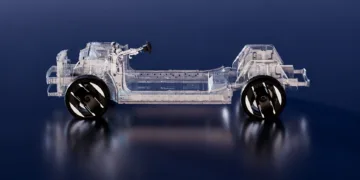







BYD has unveiled its Super e-Platform, a groundbreaking technology that promises to eliminate charging anxiety by matching the refuelling speeds of gasoline vehicles.
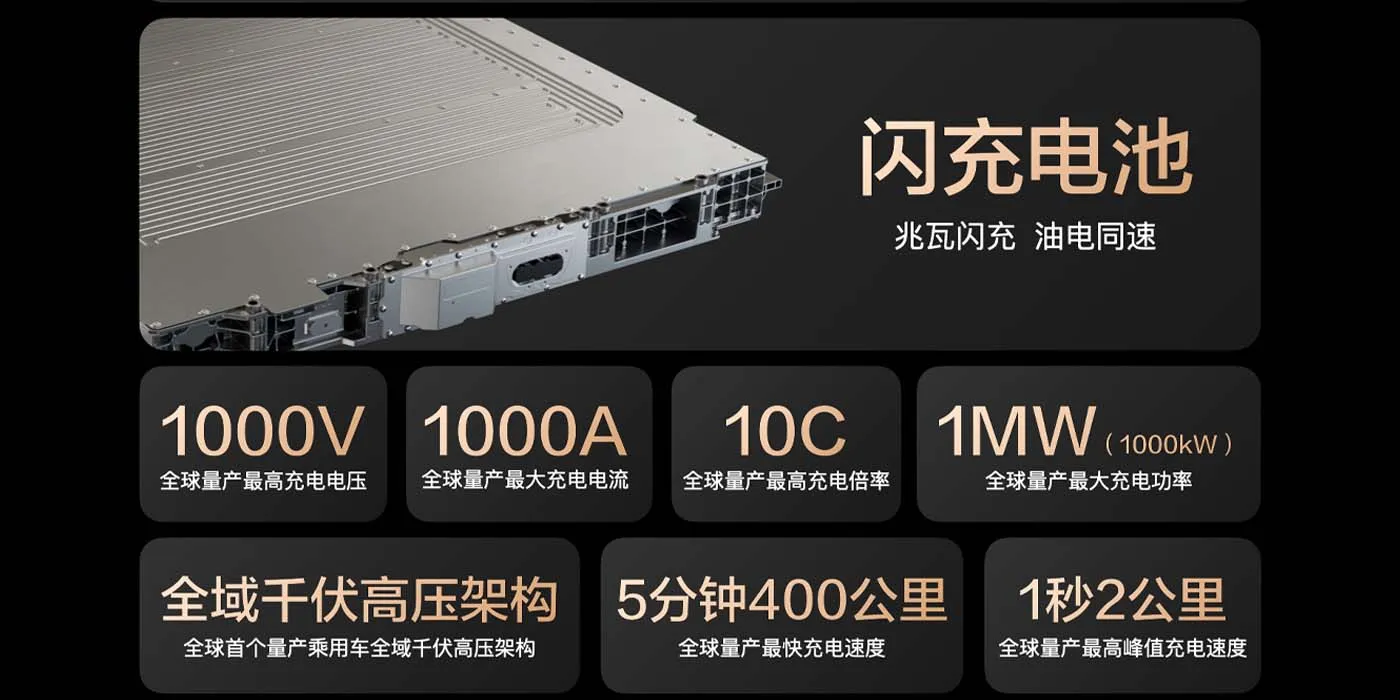
The new platform delivers an industry-first 1,000kW peak charging speed, enabling a five-minute charge to provide 400km of range — the fastest mass-production EV charging speed to date.
The 1,000kW charging capability allows for an impressive addition of two kilometres of range per second, setting a new industry standard.
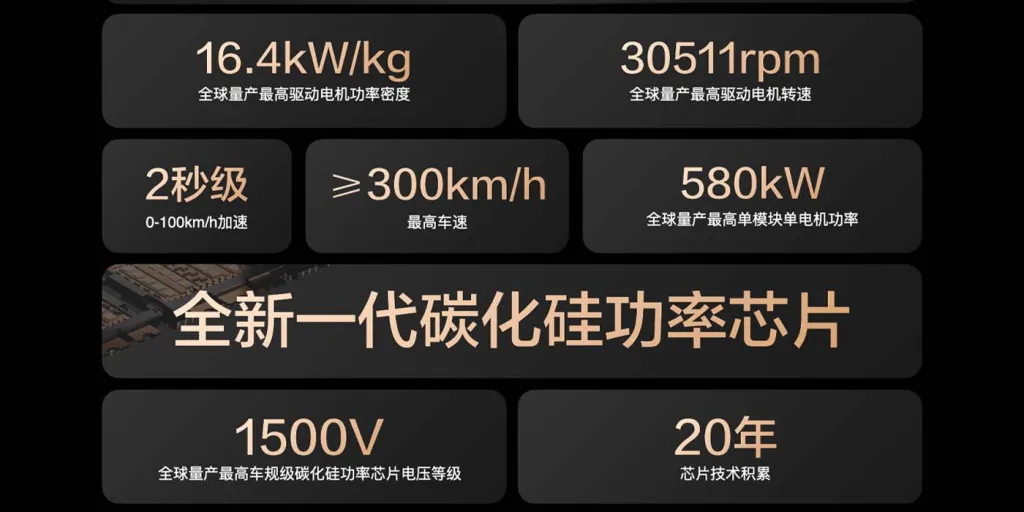
The platform features a single electric motor output of 580kW, allowing vehicles to achieve speeds exceeding 300kph. This is powered by a motor capable of running at 30,000 rpm, the highest for a mass-production EV.
BYD has developed automotive-grade SiC power chips with a voltage rating of up to 1,500V, improving charging efficiency and performance.
In addition, the Flash Charging Battery features an ultra-fast ion channel, supporting a maximum charging current of 1,000A and a charging rate of 10C, breaking previous industry records.
A big caveat
As of now, BYD has not publicly disclosed whether the 1,000kW charging speed achieved with its Super e-Platform was conducted using a battery-to-battery setup or through direct connection to the national grid.
In real-world applications, achieving such high charging speeds would depend on various factors, including the capacity of the local electrical infrastructure, the efficiency of power conversion systems, and the thermal management of the vehicle’s battery. These factors can introduce energy losses and reduce the overall charging rate.
Actual peak charging rates in public stations will likely be lower than 1,000kW, possibly around 600-800kW, depending on grid capabilities and charger efficiency.
Alongside the Super e-Platform, BYD introduced two new vehicles that will be the first to benefit from the ultra-fast charging speeds. They are the Han L sedan and Tang L SUV. These models will spearhead BYD’s transition towards ultra-fast charging and high-performance EVs.
‘Oil-electric parity’
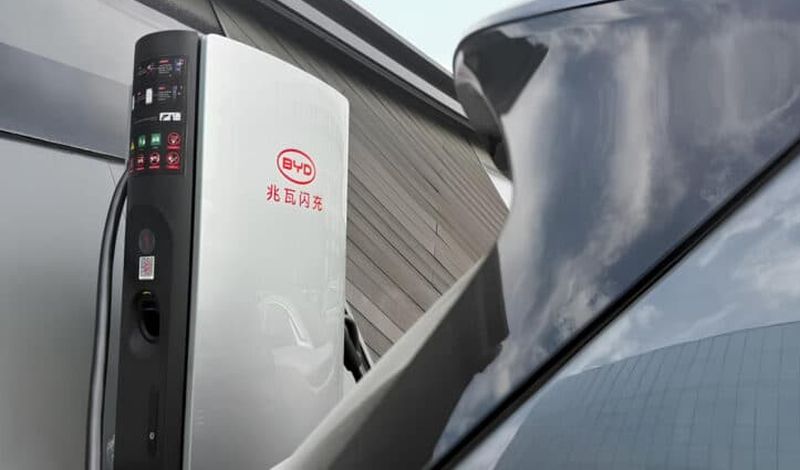
To support its new technology, BYD is set to build over 4,000 ultra-fast charging stations across China. Additionally, the company has developed “dual-gun charging” technology, which can upgrade existing public fast chargers into ultra-fast chargers.
BYD’s move into ultra-fast charging is driven by the need to eliminate one of the biggest hurdles in EV adoption — charging time. By achieving “oil-electric parity” in charging speed, BYD aims to make EVs as convenient as gasoline cars, further accelerating the shift to electrification.
With its 1,000kW peak charging speed, BYD’s Super e-Platform is set to be the world’s fastest mass-production EV charging system in 2025. This surpasses competitors like Tesla, whose Superchargers currently peak at 500kW.