






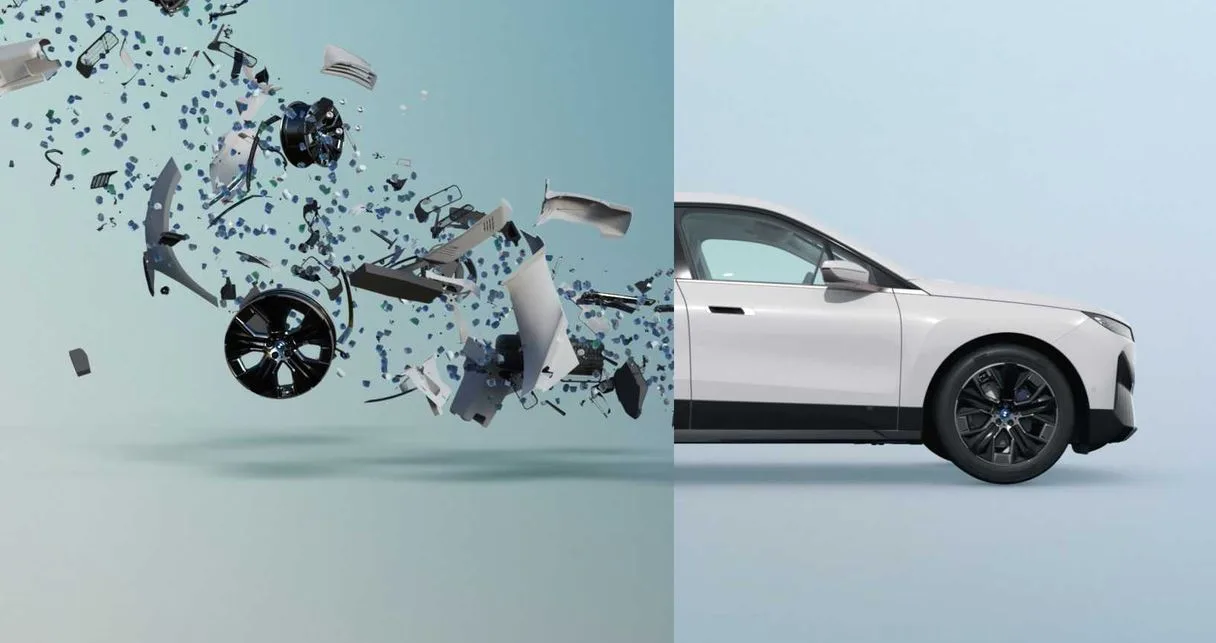
BMW Group’s Car2Car research project has lifted the share of material from scrapped vehicles that could be recovered at sufficient quality for reuse in new automotive applications from 6% to 51% under expanded processing and sorting conditions.
BMW calls this figure the “Car2Car rate”. It is not a conventional recycling rate. Instead, it measures material that can, in principle, return to automotive or other industrial applications at a sufficiently high quality.
The strongest gains came from metals. Steel rose from a Car2Car rate of 1% using standard market processes to 81% with additional processing. Aluminium increased from 23% to 52%, while copper climbed from 48% to 68%.
The research tested improved pre-sorting, modified shredding, classification, sensor-based sorting and more precise separation of aluminium alloys. BMW said the results show that extra processing can recover substantially more useful material without requiring dismantling beyond the compulsory steps normally carried out before vehicle recycling.
Steel provided the clearest demonstration. Copper contamination from cables, connectors and other components can prevent scrap steel from meeting the requirements for new automotive sheet metal.
RELATED: Second-life BMW EV batteries power UM charger, rural Pahang project next
Car2Car added a sorting stage to remove more of those copper-bearing impurities. The resulting scrap was used to produce flat steel that passed material and quality testing.
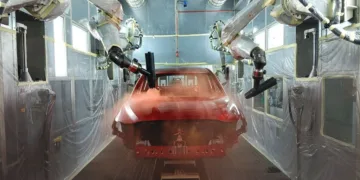
BMW then put the material into an industrial trial at its Leipzig plant, where more than 100,000 series-production parts were made from the recovered steel and fitted to vehicles. The field test involved 433 end-of-life vehicles covering 60 BMW Group models, including some test vehicles less than five years old.
That does not mean half of every scrapped BMW can already be turned directly into a new car. The 51% figure was achieved under research conditions with expanded sorting and processing, and BMW said wider industrial use will require investment in dismantling, recycling infrastructure and scalable processing chains.
Plastics and glass remain more difficult. Their varied compositions, composite structures and strict automotive quality requirements make it harder to produce recycled material suitable for high-grade vehicle applications.
BMW said the Car2Car findings will be used in its Design for Circularity work and future vehicle development. The project also provides data for the wider recycling industry as Europe develops new rules covering end-of-life vehicles.
The consortium included BMW, universities, research institutes, recyclers and materials companies including thyssenkrupp Steel Europe, Aurubis and Novelis Germany.
However, BMW cautioned that technical feasibility alone will not determine whether these material loops become viable.