





Electric vehicle tyres play a bigger role than many people realise.
They affect how safely the car stops and corners, how far you can travel on a charge, and how often you end up spending money on replacements. EVs may be mechanically simpler than petrol cars, but their tyres still take a beating.
In Malaysia, they have to cope with scorching roads, heavy downpours, puddles that appear out of nowhere, potholes, steep parking-ramp angles and all sorts of unexpected debris that somehow finds its way onto the road.
The short version: EVs do not always need a tyre labelled “EV”. They do need tyres that match the car’s size, load index, speed rating and usage. Get those wrong and the car may become noisier, less efficient, faster-wearing or, worse, unsafe.
What makes EV tyres different
Electric vehicles (EVs) place different demands on tyres mainly because they are heavy, quiet and very responsive off the line.
Battery packs add weight, and that extra mass has to be carried by the tyre carcass, sidewall and contact patch.
Tyre makers also point to instant torque as a key factor. An EV can deliver strong pulling force the moment the driver presses the accelerator, which can accelerate wear if the tyre compound and driving style are not well matched.
Rolling resistance is also a key consideration in an EV. This is the energy lost as the tyre flexes while rolling. Lower rolling resistance can help range, but it must be balanced against wet grip and braking.
A tyre that saves a few kilometres per charge but gives up too much wet-road confidence is not a clever choice for Malaysia.
Noise is another reason EV tyres get special attention.
Without an engine and exhaust masking road sound, tyre roar becomes more obvious in the cabin. Some EV-focused tyres use tread designs or foam layers to reduce cavity noise.
Useful? Yes, especially on coarse surfaces. Magic? No. Road texture, cabin insulation and wheel size still matter.
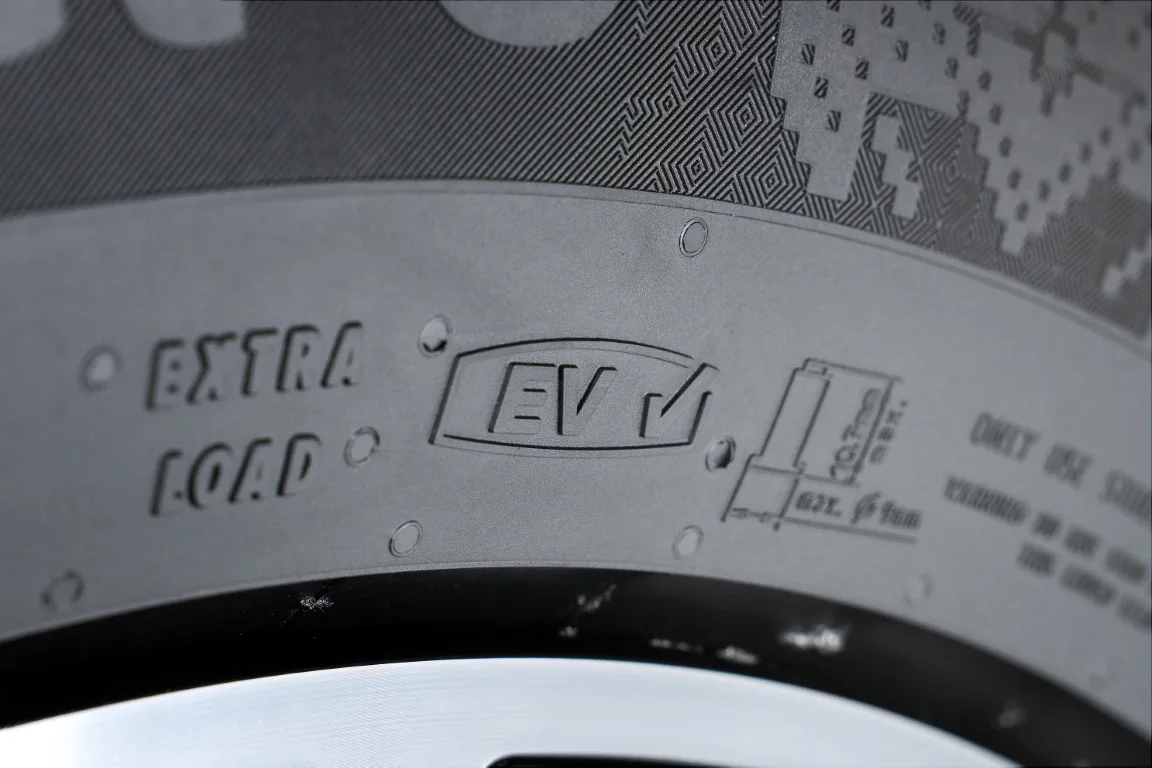
Load rating is the non-negotiable bit. Many EVs use XL, reinforced or even HL-rated tyres because they need higher load capacity. If your original tyre has XL or HL on the sidewall, the replacement should match that requirement, not merely “look about the same”.
EV tyre vs EV-compatible tyre
There is no single global badge that makes a tyre an “EV tyre”. The wording varies by brand.
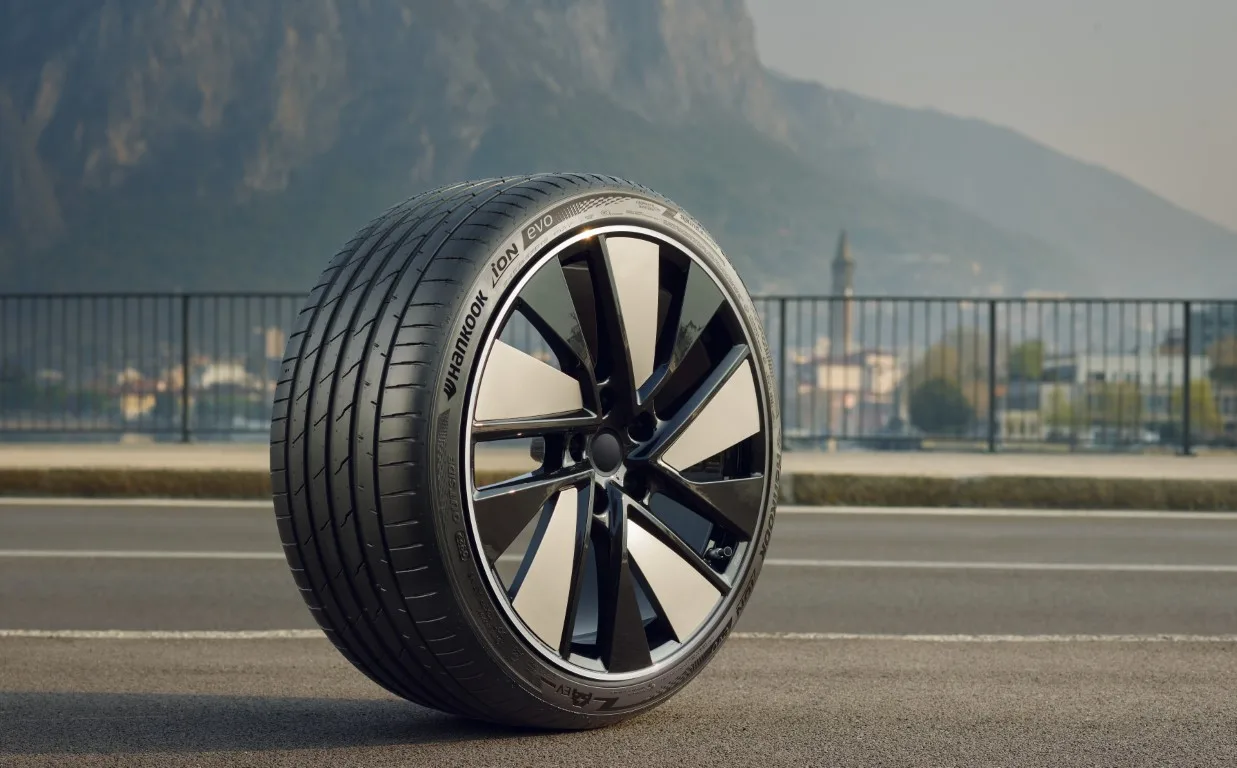
An EV-specific tyre is usually developed with EV priorities in mind: higher load capability, lower rolling resistance, quieter running and wear control.
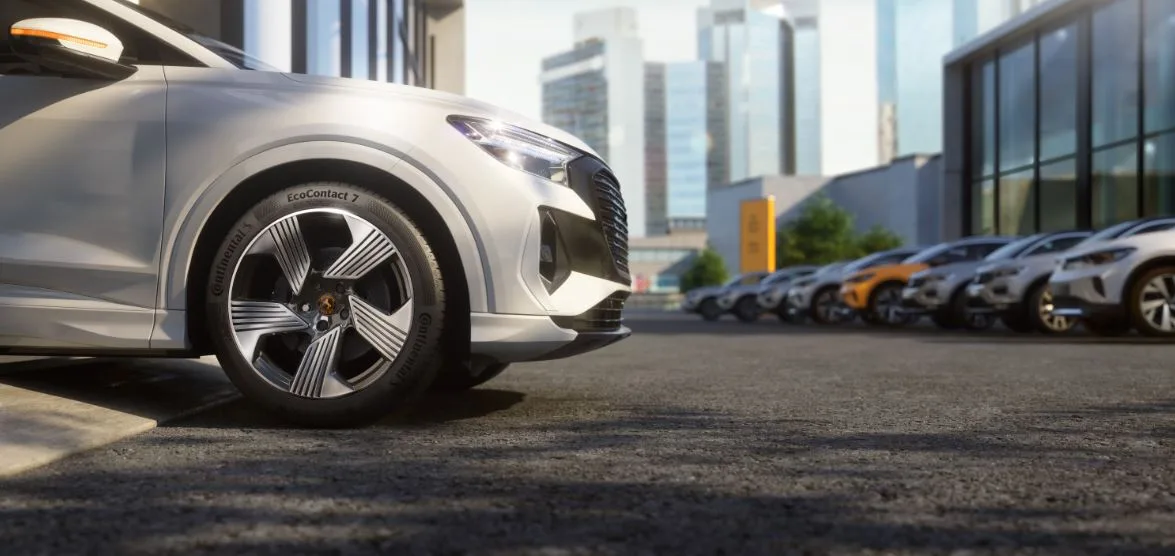
An EV-compatible or EV-ready tyre is broader. It may be a conventional tyre line tuned to work on both petrol cars and EVs. Continental Malaysia, for example, says its tyres are EV-compatible as long as proper load-capacity limits are observed.
Bridgestone Malaysia says “EV-ready” is not the same as “EV-specific”; it describes such tyres as regular tyres optimised for battery electric vehicle use.
So yes, some of the language is marketing. But it is not meaningless marketing. Treat the label as a clue, not proof. The sidewall markings and the technical ratings matter more.
What buyers should look for
Start with the owner’s manual or the tyre placard on the driver’s door frame. Match the tyre size exactly unless the car maker lists an approved alternative. Then check the load index and speed rating.
The load index tells you how much weight each tyre can carry; the speed rating tells you the maximum speed capability when the tyre is correctly inflated and loaded.
For EVs, look closely for XL, HL or reinforced markings. Do not downsize the load rating to save money. A cheaper tyre that cannot carry the vehicle properly is false economy.
Next, check wet grip. Malaysia is not a winter-tyre market; it is a heavy-rain market. Good wet braking and aquaplaning resistance should sit near the top of the buying list.
Independent tests have shown that tyre choice is a compromise: EV-specific tyres can be efficient and quiet, but some high-quality conventional tyres can match or beat them in grip, tread life or value.
Rolling resistance is a key factor too, but not at the expense of wet safety. The European tyre label is useful where available because it shows rolling resistance, wet grip and external rolling noise grades.
It is not a full tyre test, though. It does not tell you everything about pothole toughness, steering feel, tread life or cabin resonance.
Also check local availability. Some EVs use less common tyre sizes. A tyre that looks good on paper but needs a long wait for replacement is not ideal if you suffer a sidewall cut on a Friday evening before balik kampung.
Warranty, price and after-sales support matter. Ask whether the warranty covers manufacturing defects only, or whether there is a road-hazard programme.
Most tyre warranties will not save you from pothole damage, poor alignment or chronic underinflation.
Is it safe to fit normal tyres to an EV?
Yes, if the normal tyre matches or exceeds the size, load index, speed rating and any XL/HL/reinforced requirement specified by the vehicle maker. Michelin says EVs can use standard tyres, though it recommends EV-focused tyres to maximise the benefits of electric cars.
Tesla’s manual also states that tyres other than those specified should have load and speed ratings equal to or higher than the original specification.
The catch is performance. A normal tyre may be safe but noisier, less efficient or faster-wearing on an EV. That does not make it wrong. It means buyers should choose based on their driving pattern, not just the badge.
What matters most in Malaysia
For most Malaysian EV owners, the sensible priority order is: wet grip, correct load rating, heat and pothole durability, tread life, price, noise, then range efficiency.
The order can change if you do mostly urban driving or long highway runs, but wet grip should not be treated as optional.
Sudden storms, polished junctions, standing water and worn lane surfaces are part of local driving.
Heat resistance is partly about tyre construction, but maintenance plays a big role. Underinflation makes tyres flex more, build heat and wear faster. It can also reduce range.
In other words, an expensive EV tyre run at the wrong pressure is still a badly used tyre.
Maintenance tips
Check pressures when the tyres are cold, using the figure on the car’s tyre placard or owner’s manual, not the maximum pressure printed on the tyre sidewall. Tesla’s manual makes the same point and warns that underinflation can cause overheating, tread separation or blowout.
Rotate tyres at the interval stated by the car maker. Tesla recommends rotation every 10,000km, or sooner if tread depth difference reaches 1.5mm. Not every EV uses the same rotation pattern; staggered tyres, directional tyres and different front/rear sizes may limit what can be swapped.
Check alignment if the car pulls to one side, the steering wheel sits off-centre, or one edge of a tyre wears faster. Balance the wheels if there is vibration at speed. Inspect the inner shoulders too; EV tyre wear is not always obvious from a casual glance.
Finally, drive with some restraint. Hard launches, late braking, clipping kerbs and blasting through potholes will shorten tyre life. The car may make instant torque feel effortless. The tyres still pay for it.
When to replace tyres
The commonly cited legal minimum tread depth is 1.6mm. For commercial vehicle inspections in Malaysia, JPJ requires tyres to have at least 1.6mm of tread depth across the contact surface.
Michelin Malaysia describes 1.6mm as the legal tread-depth limit and says tyres should be changed once this limit is reached.
For wet-weather safety, do not wait until the tyres are bald. Tesla warns that tyres below 3mm tread depth are more likely to hydroplane in wet conditions. That is a useful practical advice for Malaysian drivers: at around 3mm, start planning replacement, especially if you drive highways in heavy rain.
Replace tyres immediately if there are sidewall bulges, exposed cords, deep cuts, cracking, repeated pressure loss or vibration after an impact. Age matters too. Tesla recommends replacing tyres every six years, or earlier if needed, even if tread depth remains above the minimum.
Short buyer checklist
1. Match the exact tyre size on the placard or owner’s manual.
2. Match or exceed the original load index and speed rating.
3. Keep XL, HL or reinforced specification if the car came with it.
4. Prioritise wet grip and aquaplaning resistance for Malaysia.
5. Check rolling resistance, but not at the expense of wet braking.
6. Ask about noise technology, warranty, stock availability and replacement cost.
7. Compare independent tests where available, not just brochure claims.
FAQs
1. Do EV tyres wear out faster than normal tyres?
They can, especially if the car is heavy, powerful and driven hard. But tyre life depends on alignment, pressure, compound, rotation and driving style.
2. Will EV tyres increase range?
A low-rolling-resistance tyre can help, but range gains vary by car, size, road and pressure. Treat large percentage claims as manufacturer claims unless backed by independent testing.
3. Are acoustic foam tyres worth paying for?
They can reduce certain cabin noises, but they will not fix coarse road surfaces or poor cabin insulation. Test-drive if noise is a major concern.
4. Can I mix EV and non-EV tyres?
Avoid mixing tyre types, brands or models across the axle. For best behaviour, use a matched set unless the owner’s manual says otherwise.
5. Should I choose the cheapest tyre with the right size?
No. Size alone is not enough. Load rating, wet grip, tread life and local support matter, especially on a heavy EV.
Closing advice
Do not buy tyres by buzzword. Buy by specification first, safety second and usage third.
An “EV” marking can be helpful, but the best tyre for a Malaysian EV owner is one that carries the car correctly, brakes well in the wet, survives local roads, stays available when you need a replacement and does not punish the range too badly.
It may not sound as impressive as promises of extra range, but day to day, most owners care more about how the tyre performs in real traffic, real weather and real road conditions.