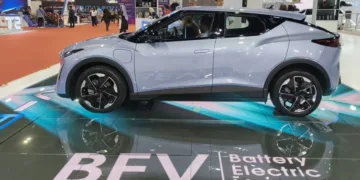







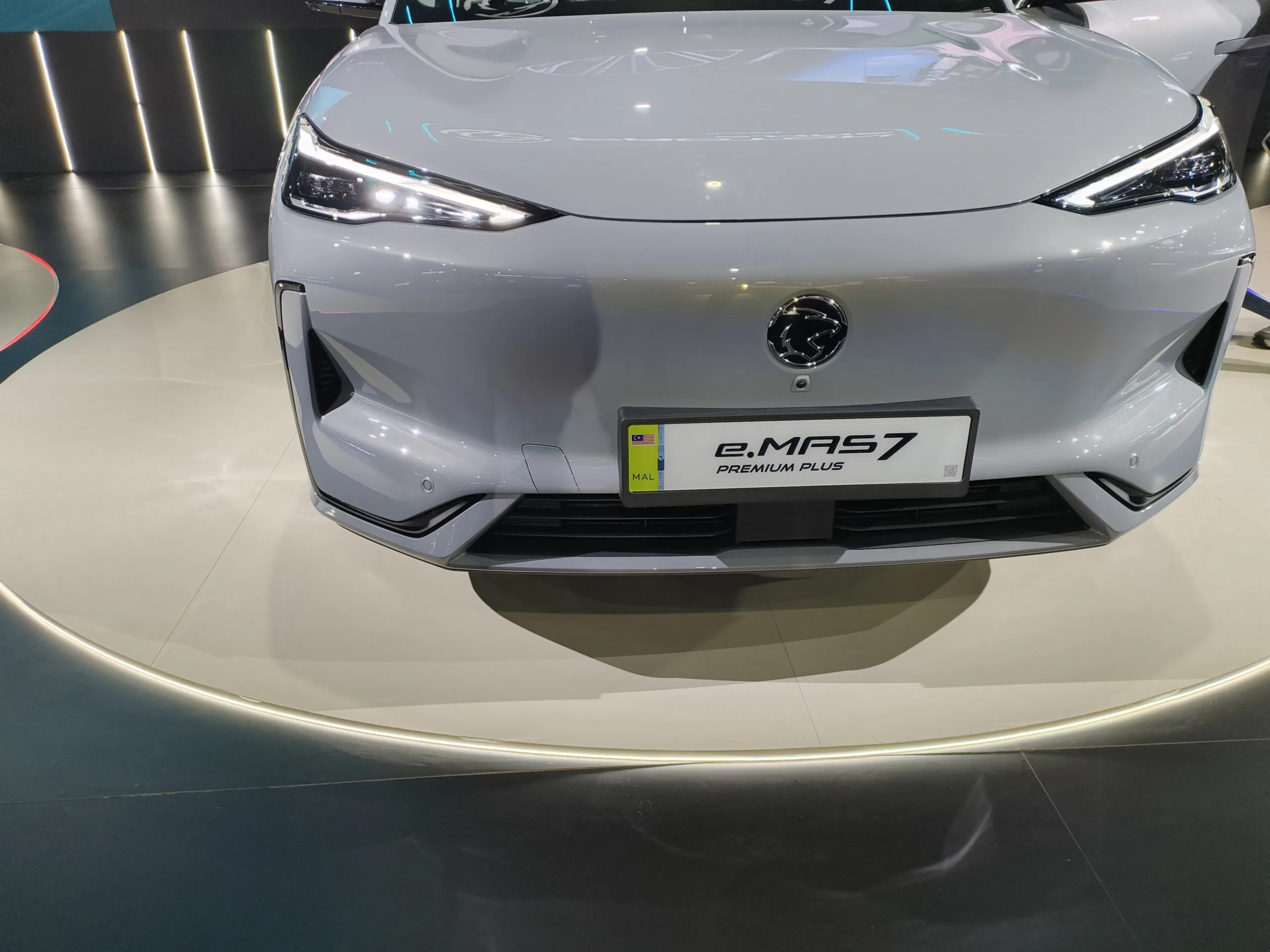
Proton e.MAS has expanded its electric vehicle line-up at the Kuala Lumpur International Mobility Show 2026 (KLIMS 2026) with the new e.MAS 7 Premium Plus, a longer-range and more comfort-focused version of Malaysia’s best-known national-brand electric SUV.
The Premium Plus now becomes the top variant in the e.MAS 7 family, sitting above the Prime and Premium.
Its main upgrade is a larger 68.39kWh AEGIS Short Blade lithium iron phosphate battery, giving the battery-electric vehicle (BEV) a claimed 450km range on the WLTP cycle.
It’s a step up from the existing Premium variant, which uses a 60.22kWh battery and offers 410km WLTP range. The entry Prime has a 49.52kWh battery and a 345km WLTP range.
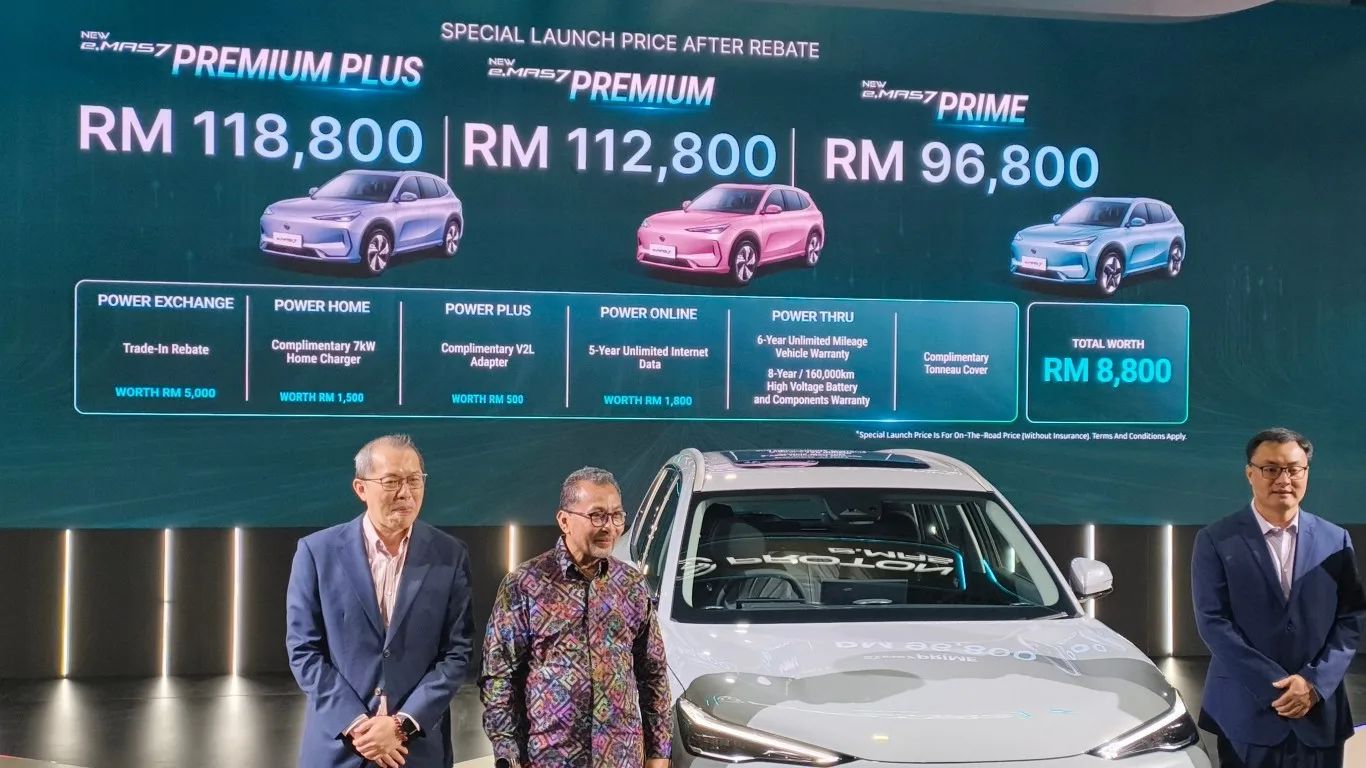
Pricing starts at RM125,800 on-the-road without insurance in Peninsular Malaysia. With a RM7,000 launch rebate, the Premium Plus drops to RM118,800 for a limited period. East Malaysia pricing is RM128,800 before rebate.
The wider e.MAS 7 range also gets the same RM7,000 launch rebate. That brings the Prime down from RM103,800 to RM96,800, while the Premium drops from RM119,800 to RM112,800.
Mechanically, the Premium Plus does not try to reinvent the e.MAS 7. The electric motor output remains 218PS and 320Nm, while DC fast charging stays at up to 115kW. Proton e.MAS quotes a 30% to 80% fast-charge time of about 20 minutes. AC charging remains at 11kW, with a 10% to 100% charge taking around seven hours.
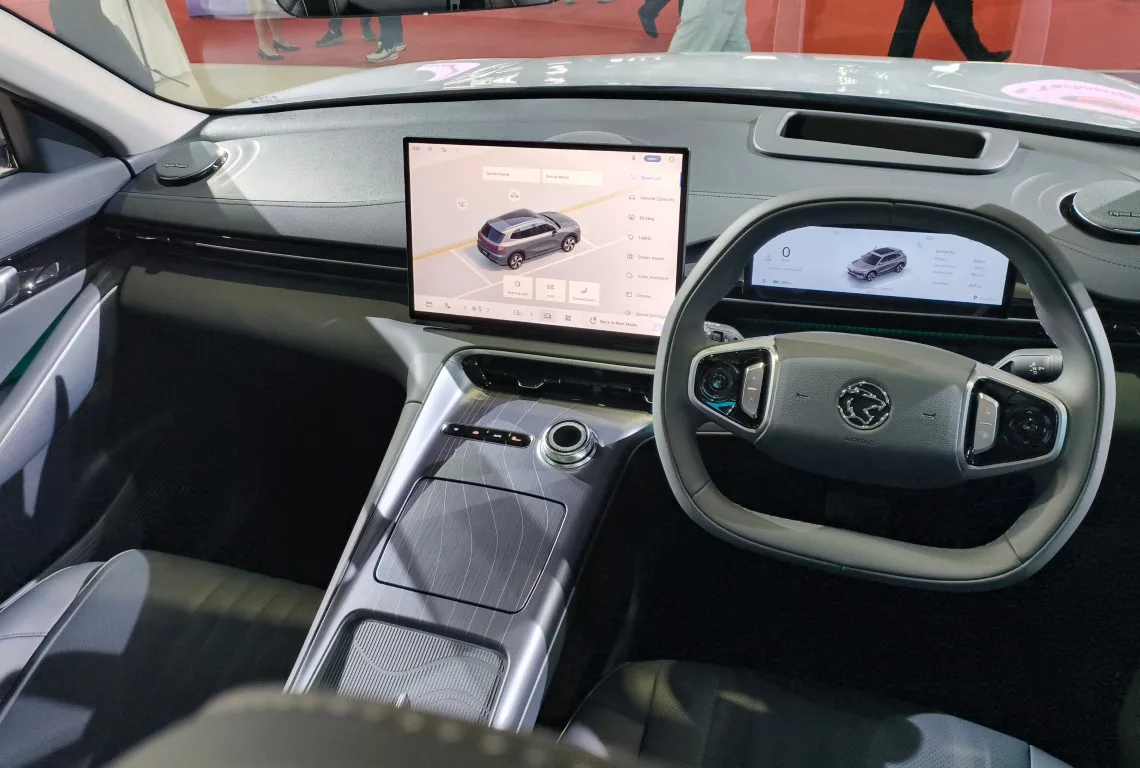
The cabin sees noticeable changes. The Premium Plus adds dual front massage seats, a powered front passenger seat with four-way adjustment and memory, plus an integrated passenger leg rest.
It is a clear comfort play, aimed at families using the e.MAS 7 for longer intercity runs rather than just Klang Valley commuting.
Proton e.MAS is also bundling the new variant with its Power Pack Plus package.
The package includes a complimentary 7kW home wallbox charger, a Vehicle-to-Load (V2L) converter, five years of unlimited internet data, a six-year unlimited-mileage vehicle warranty, and an eight-year or 160,000km warranty for the high-voltage battery and related components.
Existing Proton owners are also offered an additional RM5,000 trade-in top-up. That gives Proton e.MAS another way to move traditional Proton customers into its electric vehicle (EV) ecosystem instead of losing them to rival Chinese brands.
The timing is not accidental. Malaysia’s sub-RM150,000 EV space is getting busier, and range is becoming a more visible battleground.
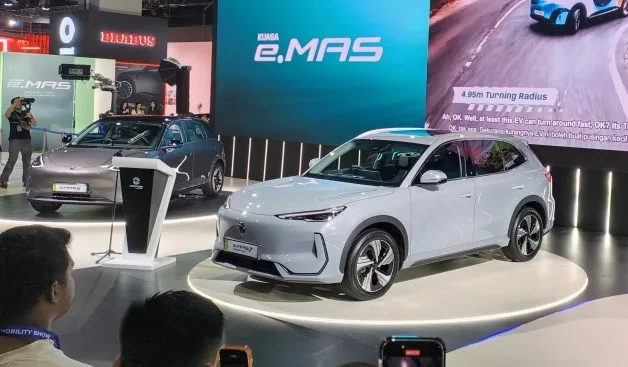
BYD has refreshed the Atto 3 in Malaysia, while brands such as Leapmotor, GWM, Chery and others are pushing aggressively into the same broad price band.
The Premium Plus is Proton e.MAS’s answer to that pressure. It keeps the same familiar body and general powertrain layout, but adds range and cabin comfort without moving too far from the existing price structure.
At KLIMS 2026, the e.MAS display also serves a bigger purpose for Proton New Energy Technology Sdn Bhd (Pro-NET).
The brand is showing its wider electrification ecosystem, including Global Modular Architecture, Cell-to-Body construction, the AEGIS Short Blade battery, an 11-in-1 electric drive system and dedicated hybrid powertrain technology.
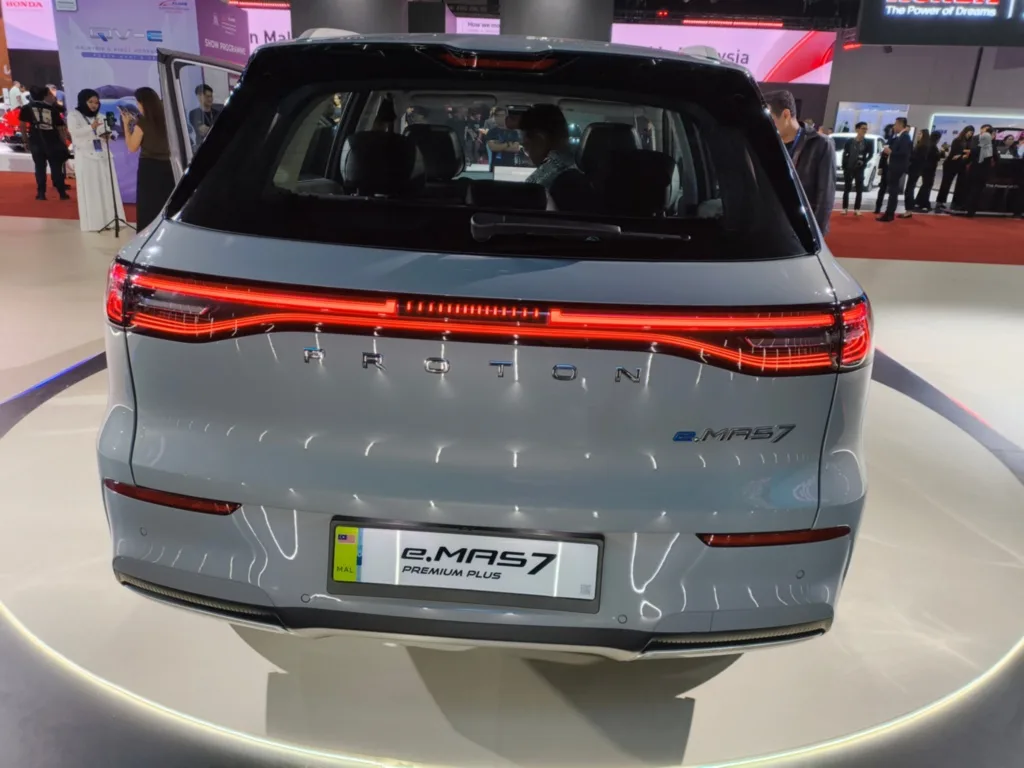
The e.MAS 7 has already given the national carmaker a credible electric SUV, while the smaller e.MAS 5 is expected to broaden the entry point for Malaysian EV buyers. The e.MAS 7 plug-in hybrid electric vehicle (PHEV) also gives Proton a bridge product for customers who still want petrol backup.
For now, the Premium Plus is a practical offering. It does not look wildly different, and it does not bring a huge power jump. But it gives buyers the one thing many still ask for when shopping for an EV in Malaysia: more range.
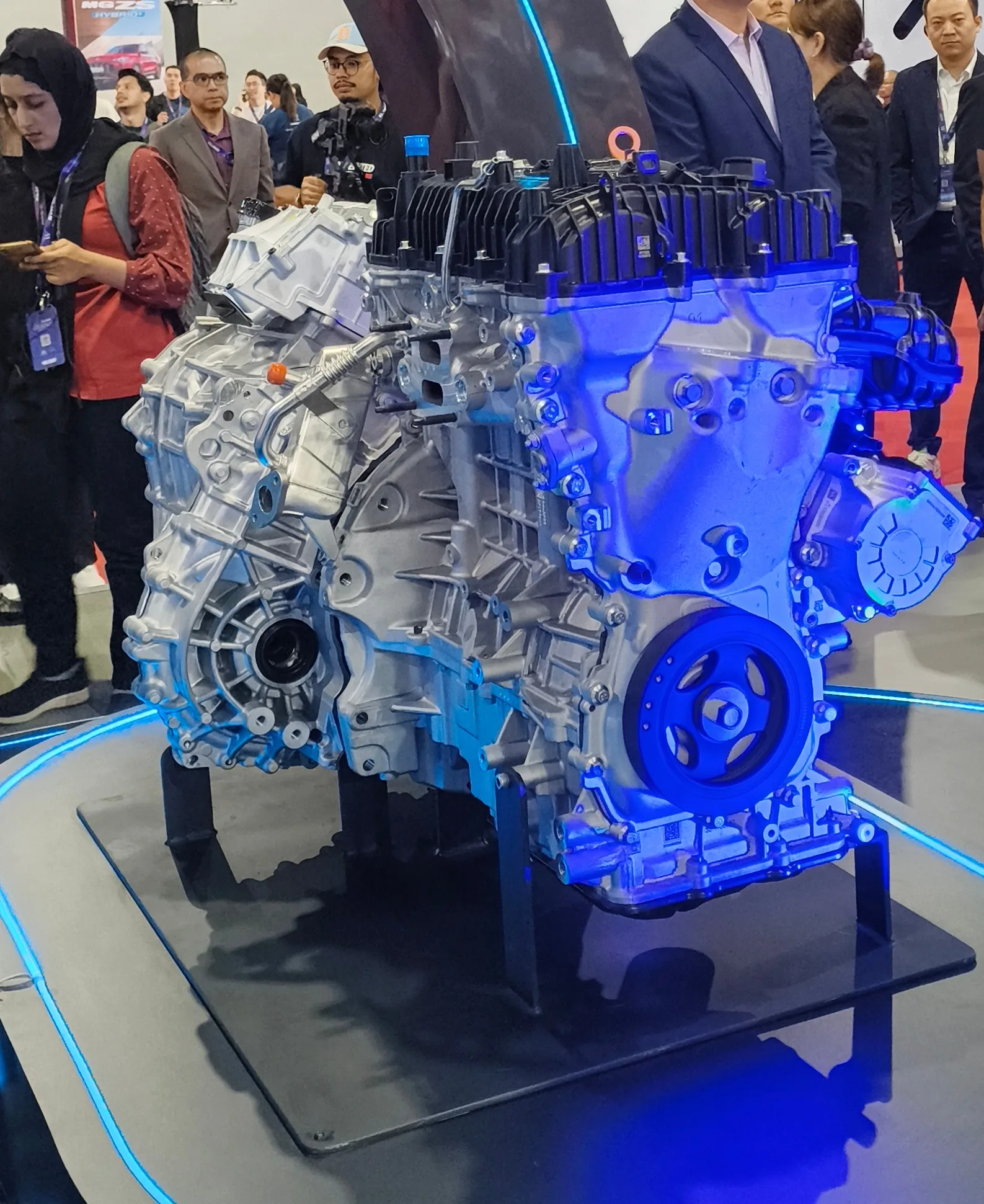
Proton’s HEV engine introduction
Away from the e.MAS 7 Premium Plus, Proton is also using KLIMS 2026 to introduce its latest hybrid electric vehicle technology.
The system combines a 1.5-litre Dedicated Hybrid Engine with a Dedicated Hybrid Transmission. The engine produces 82kW and 136Nm, uses a high 14:1 compression ratio, and is compatible with RON95 petrol.
Proton said the engine is engineered for up to 46.5% peak thermal efficiency, supported by Atkinson-cycle combustion, water-cooled exhaust gas recirculation and a smart electric water pump.
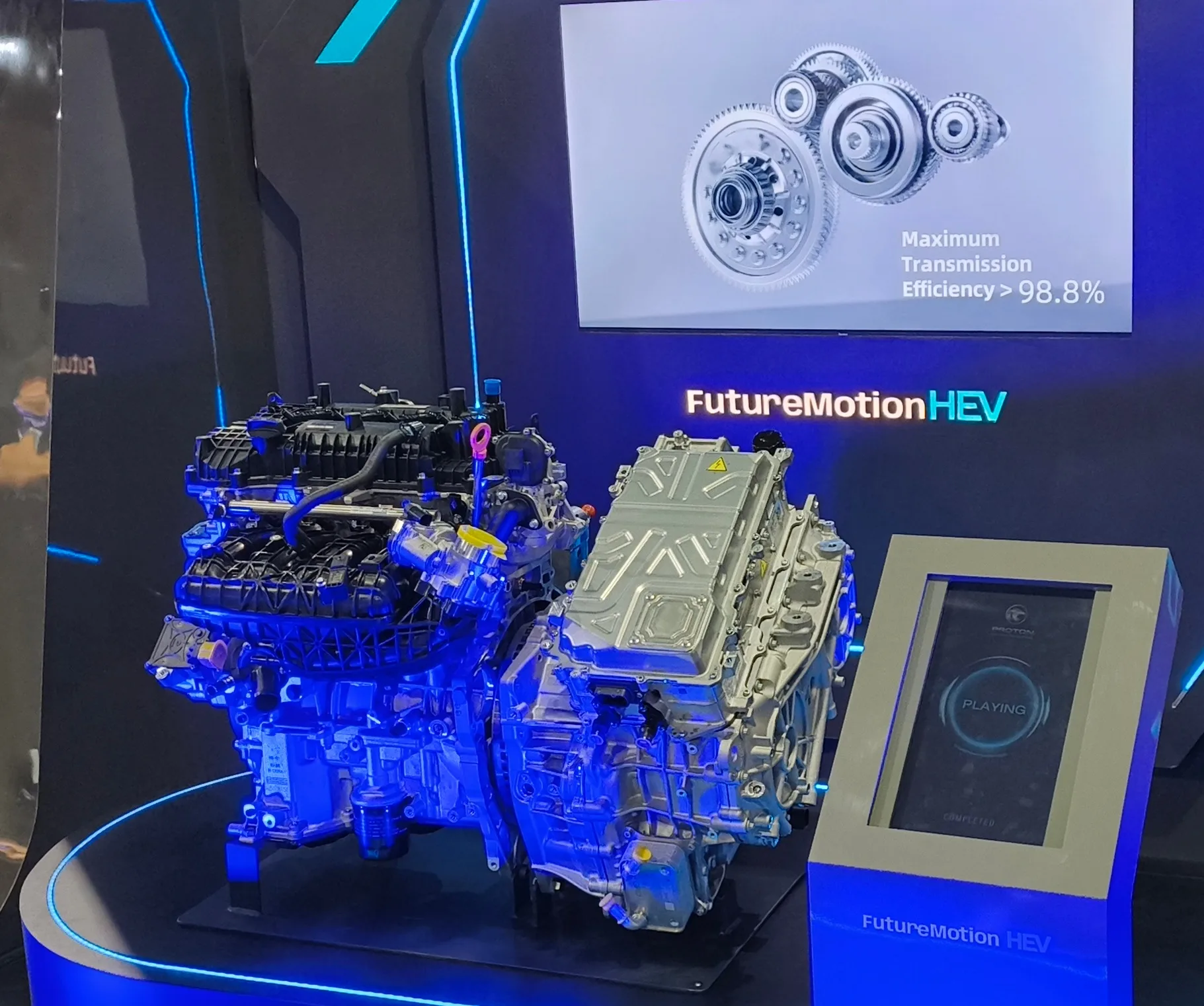
The hybrid system can switch between EV Mode, Series Mode, Parallel Mode and Direct Drive, depending on speed, battery condition and power demand.
The transmission uses a P1 and P3 dual-motor layout, with one motor helping with engine start-up and charging, while the other drives the vehicle and recovers energy during deceleration.
Proton is not treating electrification as an EV-only story. It wants battery-electric vehicles, plug-in hybrids and full hybrids in the same long-term plan.